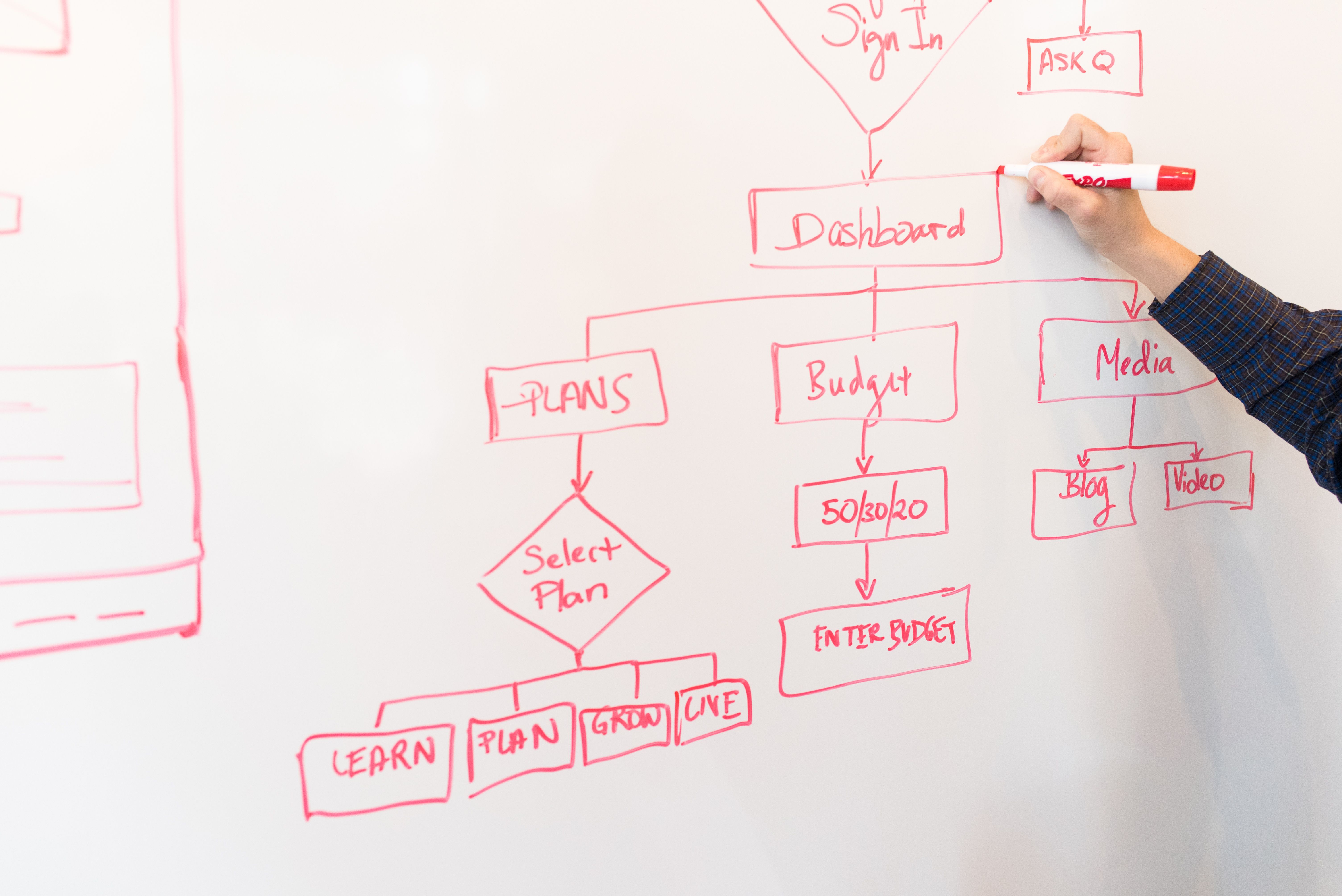
A workflow probably looks fine on the whiteboard right now. Intake is clear. Teams know their roles. Systems are connected. Nothing appears broken.
Then volume hits.
Requests start living in inboxes instead of systems. One approval waits on a person who's in meetings all day. A downstream team recreates data because the upstream handoff arrived in the wrong format. Leaders ask for status, and people spend more time reporting on work than moving it forward. That's usually the moment the question shows up: what is workflow optimization, really?
At enterprise scale, it isn't a synonym for automation. It's an operating discipline for redesigning how work moves across people, systems, and data so the business can deliver faster, with fewer errors, under real constraints. That distinction matters because companies don't get durable gains by digitizing a bad process. They get gains by removing waste, tightening decision paths, clarifying ownership, and then automating the parts worth automating.
This has become a serious enterprise category, not a side project. The global workflow automation market was valued at USD 23.77 billion in 2025, increased to USD 26.01 billion in 2026, and is projected to reach USD 40.77 billion by 2031, reflecting a 9.41% CAGR according to Mordor Intelligence's workflow automation market analysis. The size of that market matters less than what it signals. Leaders now treat workflow performance as part of operating architecture.
Why Workflows Break Before They Scale
A process can work well for twenty transactions a day and fail badly at two hundred. The failure rarely comes from one dramatic flaw. It comes from friction stacking up across small handoffs.
A common pattern looks like this. Sales submits a request through email because the intake form is too slow. Operations rekeys the request into another system. Finance waits for supporting documents that were attached to an earlier thread but never made it into the record. Someone creates a spreadsheet to track exceptions. For a month, people call it a workaround. By quarter end, it's the actual process.

Optimization starts before automation
Many teams get the definition wrong. Workflow optimization doesn't mean putting forms into software and calling it transformation. Current guidance is explicit that optimization means redesigning how work flows, not just digitizing the old path, and that the practical order is to remove waste, redesign, then automate, as outlined in Quandary Consulting Group's 2026 workflow optimization guidance.
If you automate a broken approval chain, you still have a broken approval chain. It just fails faster and at larger scale.
Practical rule: If a step has no clear business reason, don't automate it first. Challenge whether it should exist at all.
What workflow optimization actually means
In practice, workflow optimization is the structured redesign of execution flow. It asks questions automation projects often skip:
- Where does work wait? Delays usually hide between teams, not inside tasks.
- Who owns exceptions? Standard paths are easy. Edge cases expose whether the workflow is real.
- Which system is authoritative? When two platforms both claim truth, people become the integration layer.
- What should happen without human touch? Routine decisions should move automatically. Judgment calls should surface cleanly.
That's why the discipline has matured beyond departmental tooling. Industry reporting describes a shift from simple task automation toward broader process automation and orchestration across major sectors, tracked historically from 2021 through 2024 with newer forecasts showing rapid growth from USD 16.45 billion in 2025 and further expansion through 2031 in Emergen Research's workflow automation market report.
Measuring What Actually Moves the Needle
Optimization without measurement turns into opinion. Teams say a workflow feels smoother, but boards fund outcomes, not impressions.
The most useful scorecard is narrower than many dashboards suggest. Four metrics do most of the executive work: cycle time, throughput, error rate, and cost per task.
The four metrics that matter
MetricWhat it tells youWhy leaders careCycle timeHow long work takes from start to completionReveals delay, queue buildup, and customer impactThroughputHow much work the process can handleShows capacity under demandError rateHow often work needs correction or reworkExposes weak handoffs and poor controlsCost per taskWhat it costs to complete one unit of workConnects process design to margin
Cycle time is the anchor metric. In workflow research, it's the average time from process start to completion, and in cost-based workflow theory it is constrained by the critical path, meaning the longest dependency chain sets the minimum achievable duration, as described in this workflow optimization research reference.pdf). That's why serious optimization work starts by finding bottlenecks, unnecessary dependencies, and places where tasks that could run in parallel are still serialized.
Why benchmarking discipline matters
Throughput often gets overstated because teams compare before-and-after periods under different operating conditions. That's sloppy. If staffing changed, demand shifted, or upstream quality improved, the apparent gain may have little to do with the workflow itself.
Benchmarking frameworks emphasize reproducible conditions, including consistent CPU, memory, and I/O pressure, so changes in cycle time and throughput can be separated from noise. That principle matters outside engineering too. If the queue is cleaner, volume is lower, or experienced staff handled the second run, leaders should treat comparisons carefully.
Better process metrics aren't just about speed. They let finance, operations, and technology argue from the same evidence.
Where teams go wrong with dashboards
Most dashboards fail for one of three reasons:
- They measure activity instead of flow. Task completions don't show where work waited.
- They average away exceptions. A healthy mean can hide a broken escalation path.
- They separate operations from economics. Faster work that costs more to run may not be an improvement.
When someone asks what is workflow optimization in business terms, this is the answer. It is the disciplined pursuit of lower cycle time, stronger throughput, fewer errors, and a cost profile the company can defend.
Lean, Six Sigma, BPM, and AI Methodologies
No single methodology fixes every workflow problem. Lean won't solve data lineage gaps by itself. Six Sigma won't resolve fragmented orchestration. Agentic AI won't save a process with unclear policy rules.
The right approach depends on what's failing.

Where each methodology fits
MethodologyBest forWeak pointGood use caseLeanRemoving waste and delayCan underplay statistical variationApproval chains with too many touchesSix SigmaReducing defects and inconsistencyCan become heavy if over-formalizedBilling, claims, compliance-sensitive processesBPMEnd-to-end process governanceCan produce diagrams without adoptionCross-functional enterprise workflowsProcess miningExposing actual paths and deviationsDepends on event data qualityDiscovering hidden rework loopsRPAAutomating repetitive system actionsBrittle when underlying apps changeLegacy copy-paste operationsAgentic AIDynamic decisioning and exception handlingRequires strong governance and data qualityRouting, summarization, policy-guided triage
Lean is usually the fastest way to improve a cluttered workflow. It asks blunt questions: which steps create value, which approvals are ceremonial, and where are people compensating for broken system design?
Six Sigma becomes useful when the process already exists but produces too much variation. In healthcare, claims, and regulated service operations, that discipline matters because rework isn't just expensive. It can create operational or compliance risk.
BPM and AI change the scale of optimization
Business Process Management gives organizations a common language for modeling and governing end-to-end work. It's the layer that keeps process ownership from fragmenting by function.
Modern AI changes the conversation because optimization now includes workflow generation, validation, and recovery. Recent research on workflow optimization for LLM agents emphasizes benchmark families for workflow generation, executable validators, and operations-style environments because failure often comes from invalid structure, poor planning, and weak recovery under constraints, not just bad final answers, as detailed in this research on workflow optimization for LLM agents.
That's a useful enterprise lesson. A workflow can fail even when individual tasks are competent.
A short explainer is helpful here:
What works in the field
The most effective programs usually combine methods:
- Lean first to eliminate waste and pointless approvals.
- Process mining next to verify how work moves.
- BPM for control when many teams and systems are involved.
- RPA selectively where the task is repetitive and stable.
- Agentic AI carefully where context, routing, and exception handling matter.
That combination beats methodology theater. Leaders don't need ideological purity. They need a process that works under pressure.
A Practical Roadmap for Assessment and Implementation
Most workflow initiatives fail before tooling selection. They fail during diagnosis because the organization documents the intended process, not the one people use.
A better roadmap starts with evidence, not aspiration.
Step one through three
- Map the live process
- Follow real work from request to completion. Include inboxes, spreadsheets, side chats, manual reconciliations, and approvals outside the system. If a team says, “we usually fix that offline,” that's part of the workflow.
- Find the constraint
- Every process has one or two points that govern overall flow. Sometimes it's an approver. Sometimes it's bad master data. Sometimes it's a legacy system that forces staff into duplicate entry. Don't optimize ten things lightly when one thing is controlling the pace.
- Delete before you automate
- Remove duplicate approvals, unnecessary checks, and status meetings that exist only because systems aren't trusted. This is the step organizations rush past, and it's where a lot of value sits.
“Over-automating broken processes preserves inefficiency at scale.”
Step four through six
- Set a baseline that finance will accept
- Capture current cycle time, throughput, error rate, and cost per task before changing anything. If you skip the baseline, you'll end up debating perceptions after launch.
- Choose tooling by failure mode
- If the issue is visibility, start with process observability or mining. If the issue is swivel-chair work, use integration or RPA. If the issue is exception routing, use rules engines or AI-assisted triage. Faberwork LLC is one example of a consulting partner that works in this layer, combining Agentic AI workflows with Snowflake-centered data platforms and custom software where orchestration, governance, and analytics need to fit together.
- Pilot on a bounded workflow
- Pick a process with clear ownership, manageable dependencies, and visible pain. Prove that the new design holds up before expanding it across regions or business units.
A quick filter for prioritization
Use this sequence when deciding what to tackle first:
- High volume, low complexity usually suits automation early.
- High value, high friction deserves redesign attention from senior operators.
- High exception rates need policy clarity before AI or RPA.
- Customer-facing delays often justify investment fastest because business impact is obvious.
For leaders working through field operations or revenue execution, these boost rep productivity tactics are a useful complement because they show how process design affects frontline output, not just back-office efficiency.
Data Platforms and AI Readiness for Modern Workflows
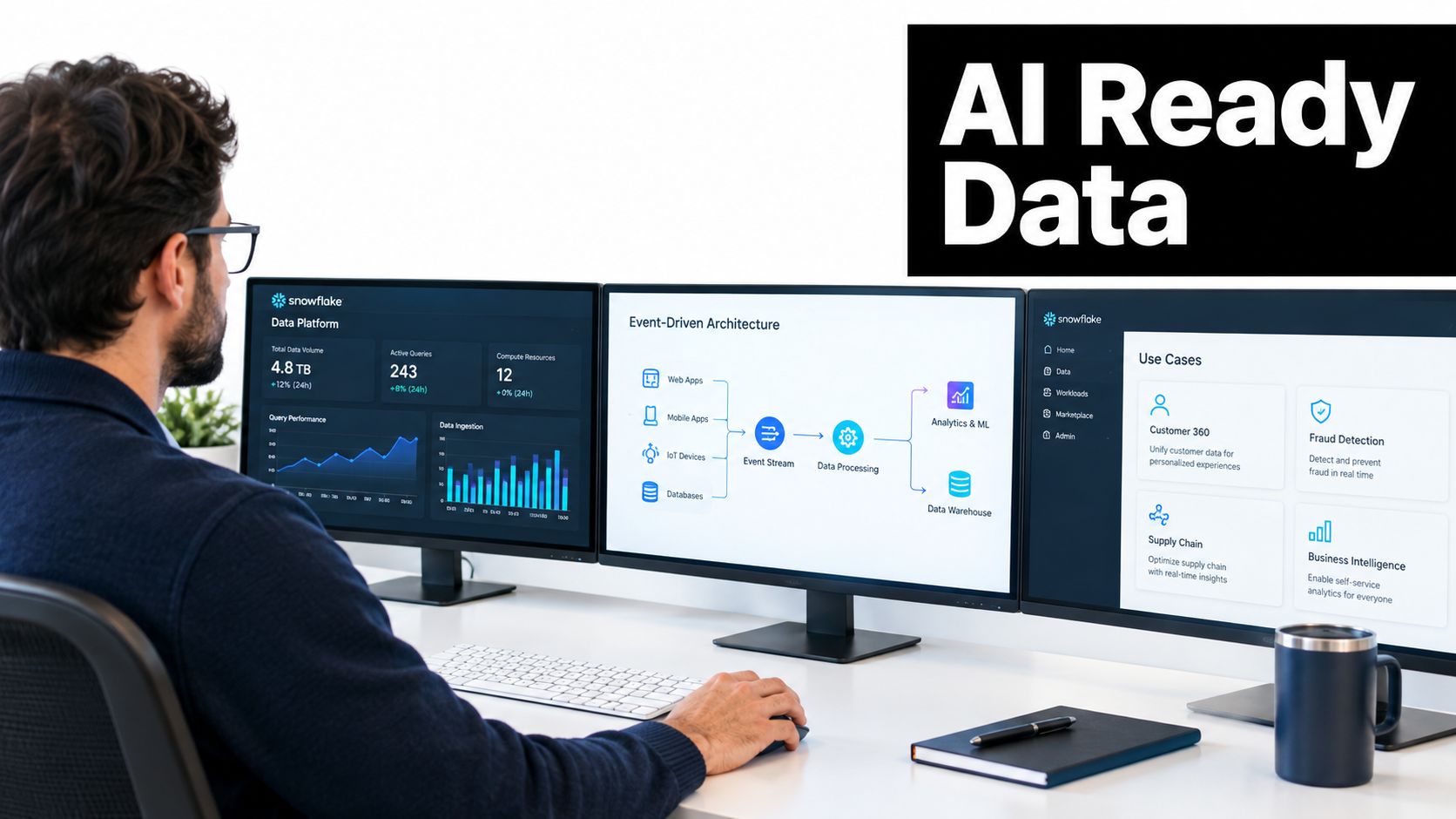
Workflow optimization now sits on top of data architecture whether teams acknowledge it or not. If events aren't captured cleanly, if entity definitions differ across systems, or if approvals can't be traced, optimization hits a ceiling.
That's why modern workflow work increasingly depends on observability, integration discipline, and event-driven design.
The real blocker usually isn't the model
In the AI era, teams often assume better tooling will solve workflow issues. In practice, enterprise success is often constrained more by data quality, integration complexity, skills gaps, and organizational resistance than by the tooling itself, as discussed in this analysis of the enterprise AI adoption and workflow automation gap.
That's why Agentic AI can disappoint in production. The agent isn't operating in a clean sandbox. It inherits the ambiguity of the enterprise around it.
A reliable AI-assisted workflow needs:
- Consistent inputs so routing and decisions aren't based on conflicting records
- Observable execution so operators can see what happened, why, and where it failed
- Governed escalation paths so exceptions reach humans with enough context to act
- Durable event history so teams can improve the process instead of debating anecdotes
Why Snowflake matters in this stack
Snowflake often becomes useful when the workflow spans application data, operational events, and historical analysis. It gives teams a way to consolidate the evidence needed for redesign and ongoing tuning. That matters most when operations need one place to correlate event streams, service behavior, and business outcomes.
This Snowflake time-series success story is a practical example of the kind of platform work that supports workflow optimization when time-sequenced events and analytics need to stay aligned.
The enterprise question isn't “Can AI automate this?” It's “Can our data platform support governed decisions at the point of work?”
When teams answer that, platform decisions become part of workflow design, not a separate infrastructure conversation.
Real Results From Logistics, Telecom, and Smart Buildings
Abstract definitions only go so far. Executives believe workflow optimization when they can see what it changes in live operations.
Logistics
In logistics, the recurring problem is fragmented execution. Dispatch, field teams, customer updates, proof of delivery, and exception management often live across separate systems and habits. The weak point is rarely one task. It's the handoff chain.
A well-optimized logistics workflow usually standardizes intake, routes work based on current conditions, and gives operations a clean exception queue instead of burying issues in calls and chats. The board-level outcome is predictable service, better asset utilization, and fewer labor hours spent stitching process together manually.
Telecom
Telecom workflows break in a different way. They typically involve alarms, service tickets, network events, engineering dependencies, and customer-impact decisions happening at once. If the workflow doesn't triage correctly, teams either overreact to noise or miss the issue that matters.
What works is disciplined event classification, clearer ownership, and orchestration that separates automated response from engineer review. Data platforms and observability matter a lot because service operations can't optimize what they can't reconstruct.
Smart buildings
Smart building operations make workflow design tangible because devices, alerts, occupancy signals, and maintenance actions all create a continuous operating loop. A useful pattern is to automate normal routing while reserving people for exceptions that require judgment or site context.
For teams evaluating physical operations workflows, examples like commercial property access control show how controlled entry, tenant operations, and property processes intersect. And this AI smart buildings success story illustrates how workflow thinking extends beyond software screens into building systems and operational response.
Concrete proof from healthcare workflows
The clearest published results often come from healthcare because timing and outcomes are measured tightly.
- In a radiotherapy setting, workflow optimization was associated with a 30% reduction in total admission-to-treatment duration, moving from 12.83 days before 2020 to 8.78 days in 2021 and 9.34 days by 2024, according to this PubMed study on radiotherapy workflow optimization.
- In endovascular stroke care, a standard operating procedure reduced median time from symptom onset to reperfusion from 264 minutes to 211 minutes, with improved clinical outcome reported in this stroke workflow study on PubMed.
- A workflow redesign for electronic health record documentation reported an 18.5% decrease in EHR time, 7% to 12% less time in flowsheets, and an 88% to 97% reduction in steps for reassessment documentation in this EHR workflow redesign study.
Those examples aren't from logistics or telecom, but they make the point cleanly. Workflow optimization is not cosmetic. It changes operational outcomes.
Common Pitfalls That Stall Enterprise Initiatives
The usual story says transformation stalls because teams chose the wrong tool. That's sometimes true. More often, the tool exposed a weak operating model that was already there.
The most common failure modes
- Automation before redesign
- Teams rush into bots, forms, and AI assistants before simplifying the path. The result is a more expensive version of the old mess.
- No exception design
- Happy-path demos look great. Production doesn't live on the happy path. If edge cases don't have clear routing, staff create side channels within days.
- Weak observability
- Once a workflow is live, leaders need to see queue buildup, rework, and failure points quickly. Without that, regression hides until customers or auditors find it first.
- Fragmented ownership
- If operations owns one step, IT owns the platform, and nobody owns end-to-end outcomes, improvement slows to committee pace.
Human adoption is usually the deciding factor
The hard part isn't persuading people that the current process is flawed. They usually know. The hard part is persuading them that the new process won't remove necessary judgment or leave them holding risk without control.
That concern is valid. Recent guidance around AI-era workflow optimization stresses that the target often isn't full replacement. It's a design where routine items are routed automatically while humans retain control over exceptions and approvals. Teams adopt those models more readily because they preserve accountability.
If employees don't trust the escalation path, they'll rebuild the old workflow in parallel.
A better test before rollout
Before launch, ask three blunt questions:
- Can a frontline user explain the new path in plain language?
- Can an operator see where work is stuck without opening five systems?
- Can a manager tell which exceptions require human judgment and why?
If the answer to any of those is no, the initiative isn't ready for scale.
Building an Ongoing Workflow Improvement Rhythm
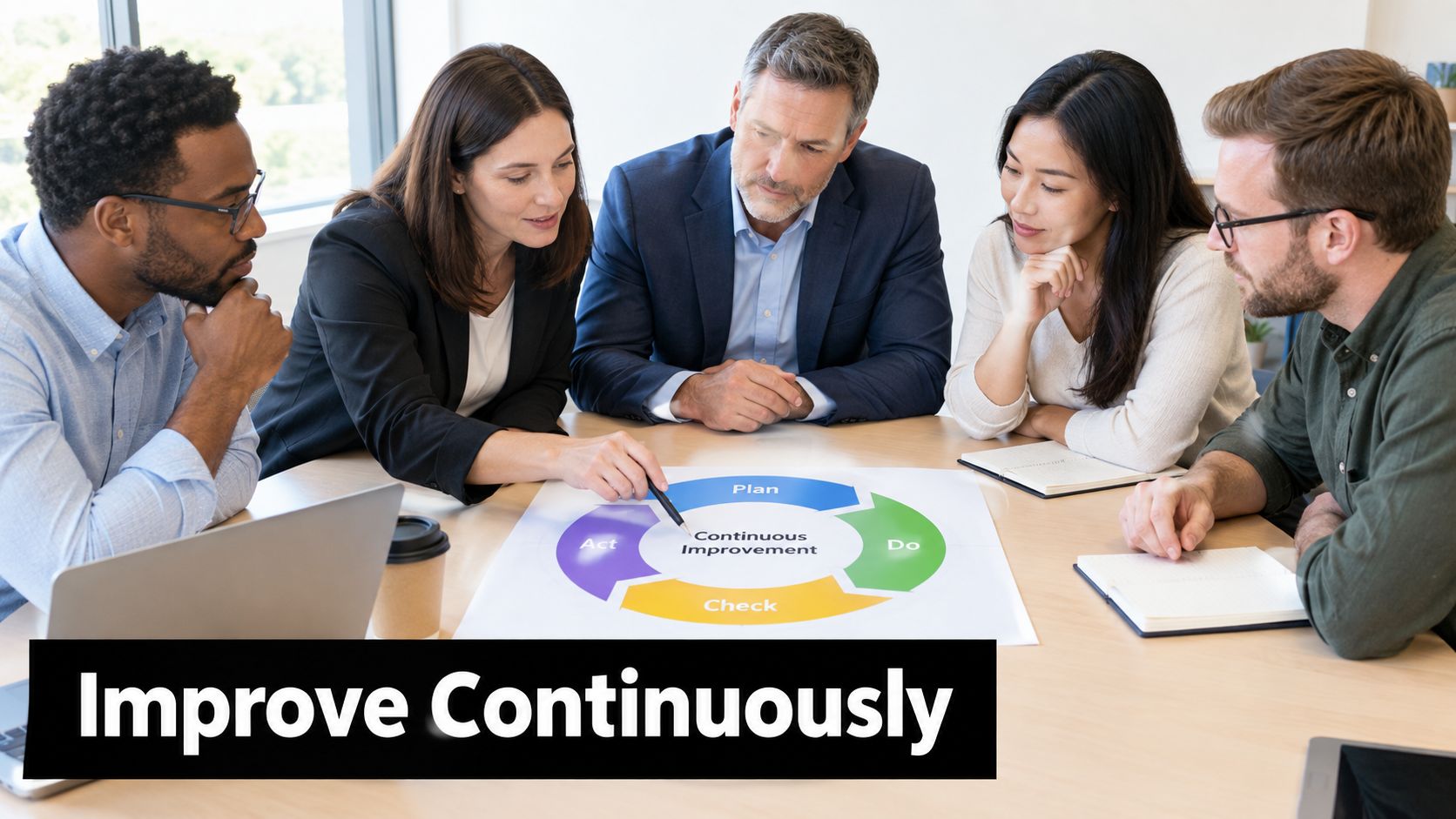
The companies that get lasting value from workflow optimization don't treat it as a one-time program. They run it as a management rhythm.
That rhythm starts with measurement. Not because metrics are fashionable, but because process quality drifts. New products appear, regulations change, staff rotate, systems get patched, and one local workaround slowly becomes global behavior. Without regular review, a clean workflow gets noisy again.
What the operating rhythm looks like
A durable cadence usually includes:
- Monthly process reviews focused on delays, exceptions, and rework
- Quarterly redesign decisions for workflows that no longer fit current demand
- Platform and data reviews to resolve integration, lineage, and observability gaps
- Controlled experimentation where teams test routing, sequencing, or approval changes on bounded slices of work
Why this discipline keeps expanding
Workflow optimization has grown into a major enterprise software category because organizations now use it to coordinate people, software, and data at scale, not just to trim isolated manual tasks. That's the larger shift behind the market growth and the reason this topic keeps moving closer to CIO and COO priorities.
One useful way to frame what is workflow optimization is this: it's the practice of making execution reliable. That includes process design, measurement, governance, AI readiness, and the data foundation underneath all of it.
The companies that do this well don't chase automation for its own sake. They build workflows that can absorb volume, route routine work automatically, surface exceptions quickly, and generate the evidence needed to improve again. That's what boards can justify. And it's what operating teams can live with after the launch deck is gone.
If workflow performance is becoming a board-level issue in your organization, the right starting point usually isn't another tool demo. It's a clear assessment of where work waits, where decisions break, and whether your data platform can support governed automation at scale.


