
Your Snowflake migration finished on schedule. The dashboards load, the data is in the cloud, and the project is technically complete. Then the bills rise, transformation jobs compete with business intelligence queries, pipelines fail without a clear owner, and security teams discover that access rules differ across domains.
That gap is where Snowflake consulting services earn their place. A capable partner won't only configure warehouses or move tables. It will decide whether your problem needs tuning, architectural change, stronger governance, or a more disciplined operating model, then leave your team with measurable targets and usable runbooks.
Snowflake has become a mainstream enterprise modernization target. Its fiscal 2026 results reported $4.683 billion in annual revenue, 13,328 total customers, and 733 customers generating more than $1 million in trailing-12-month product revenue. The company also reported 790 Forbes Global 2000 customers and 125% net revenue retention in those results. (Snowflake fiscal 2026 results)
Why Enterprises Bring in Snowflake Consultants
A technology leader usually doesn't call a consultant because Snowflake failed to start. The call comes after the platform works, but the operating model doesn't. Finance sees unpredictable consumption, analysts wait behind large transformation jobs, and engineering teams debate whether the root cause is SQL, warehouse sizing, data design, or ownership.
A consultant should turn that debate into decisions. The first deliverable isn't a generic list of recommendations. It's a baseline that connects business workloads to latency, reliability, access, and cost targets. Without that baseline, teams can make isolated improvements while the overall platform becomes harder to operate.
Snowflake's scale makes this a serious delivery market rather than a narrow vendor channel. By early 2024, the Snowflake ecosystem snapshot identified 468 consulting and implementation services partners worldwide, with those partners employing more than 5.6 million professionals and reporting roughly 7,400 Snowflake certifications. (Snowflake ecosystem reference) Buyers should use that maturity to demand specialization, references, and clear accountability.
The decisions that matter
A strong engagement answers four questions:
- Is this a tuning problem? Query profiles, warehouse sizing, clustering, caching, and workload isolation may be enough.
- Is this an architecture problem? Repeated duplication, brittle orchestration, poor domain boundaries, or competing workloads may require redesign.
- Is this a governance problem? Excessive privileges, unprotected sensitive fields, and unclear sharing rules need policy and ownership changes.
- Is this an operating-model problem? Teams may need chargeback rules, deployment standards, monitoring, and runbooks more than another platform feature.
The best outcome is not more Snowflake configuration. It's a platform that delivers trusted data at an understood cost, with owners who know what to do when workloads or policies change.
What Snowflake Consulting Services Cover
Snowflake consulting services span seven disciplines, from migration to governance. The right priority depends on the failure mode: tune warehouses when workload behavior drives cost, redesign architecture when boundaries create recurring friction, and tighten governance when access or policy gaps create risk. Treating every problem as a configuration task wastes time and can preserve the underlying design flaw.

The seven service lines
Migration covers dependency mapping, data validation, workload conversion, cutover planning, and legacy-platform retirement. Choose this line when continuity and reconciled results matter more than a rapid table copy.
Architecture defines environments, databases, schemas, roles, workload boundaries, data product patterns, and integration choices. Redesign is justified when reporting, data science, and operational workloads compete for the same resources or ownership remains unclear.
Data engineering builds ingestion, transformation, orchestration, quality checks, observability, and documentation. Snowflake describes its data engineering platform as supporting end-to-end pipelines, optimized storage, observability, and governance without infrastructure management. (Snowflake data engineering)
Analytics connects Snowflake with business intelligence tools and consumption layers. Assess whether users can locate and trust the right data before adding another connector.
Real-time, IoT, and time-series work supports telemetry, operational monitoring, and smart-building data. The priority is to choose ingestion, retention, modeling, and query patterns that fit event volume and access needs.
Cost optimization reviews compute, cloud services, workload management, SQL, serverless features, and accountability. Start with cost data and target the workloads producing the largest avoidable spend, rather than applying broad tuning changes.
Governance and security establishes role hierarchies, managed access schemas, masking, row-level policies, retention, sharing, AI-use controls, and exception handling. Snowflake's governance guidance emphasizes measuring and maintaining controls over time. (Snowflake governance guidance)
Consulting value is measured in outcomes, not hours billed. Track latency, cost per workload, pipeline reliability, policy coverage, and user adoption.
Set those measures before delivery begins. Snowflake's performance guidance recommends query profiling, clustering frequently filtered or joined columns, and avoiding SELECT * to reduce scanned data and I/O. (Snowflake performance guidance) Apply that advice to the actual workload mix, then decide whether tuning is enough or architecture and governance need attention.
Service Lines and Real-World Use Cases
The right service line depends on the failure mode. A migration team shouldn't redesign every downstream process by default, and a cost specialist shouldn't “optimize” a workload whose real problem is poor architecture.
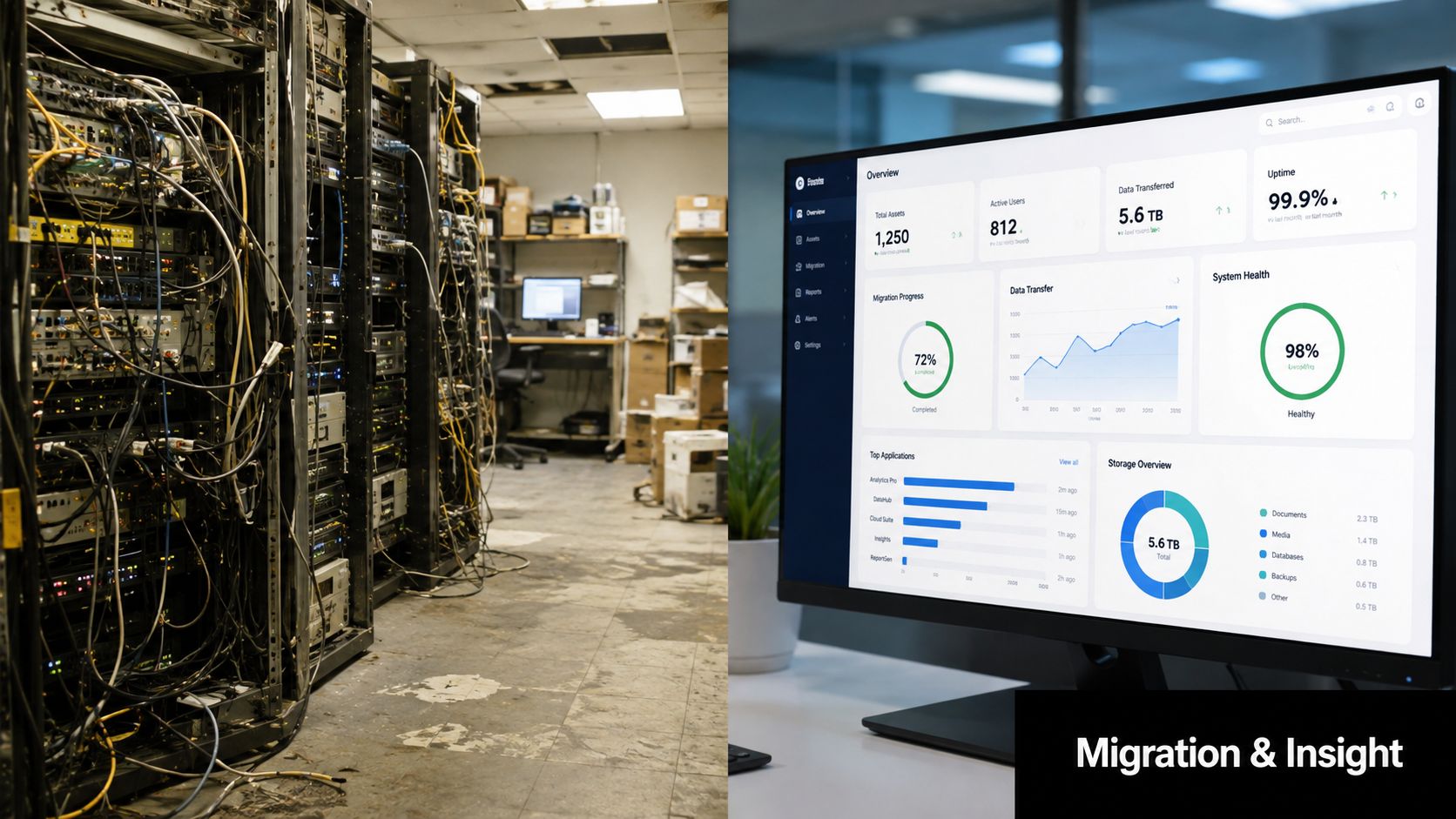
Migration and architecture
A retailer moving from a legacy warehouse may need a parallel validation process, dependency inventory, and controlled cutover rather than a direct table-by-table copy. The expected outcome is a stable transition with reconciled metrics and a retirement plan for redundant systems.
Architecture consulting matters when the migrated platform has become a shared bottleneck. A consultant can separate transformation, interactive BI, data science, and operational workloads, then establish environment and ownership boundaries that reduce interference.
Engineering and observability
An engineering team supporting customer, finance, and operational feeds needs more than ingestion scripts. It needs orchestration, quality checks, failure visibility, retry behavior, lineage, and runbooks that let internal staff resolve incidents without relying on one individual.
Snowflake's platform supports this end-to-end pipeline model, including ingestion, transformation, storage, observability, and governance. The buyer should expect less operational overhead and faster recovery, not a larger collection of custom maintenance tasks.
Analytics and time-series workloads
A telecom or energy operator may collect dense event data from network or building systems. The consulting challenge is to model time-series data for operational analysis, expose useful aggregates to analysts, and preserve the detail needed for investigations.
Faberwork's time-series data with Snowflake success story illustrates the kind of specialized platform work buyers should ask partners to demonstrate. Don't accept “we support IoT” as evidence. Ask which ingestion, modeling, observability, and analytics decisions the team has delivered.
The platform can also support data collaboration without creating another distribution pipeline. Snowflake secure data sharing lets organizations share selected data across accounts without copying or moving it, while listings and Marketplace access support private consumption of shared data. (Snowflake secure data sharing)
Governance and enrichment
A finance team may need analysts to work with customer data while protecting account identifiers and limiting access by role. A healthcare organization may require masked sensitive fields, documented ownership, and reviewable exceptions. The expected outcome is useful analysis without turning every request into a manual security ticket.
Snowflake Marketplace provides live, ready-to-query third-party datasets and data services from more than 100 data providers in one announcement, with secure bi-directional access that avoids copying files or moving data. (Snowflake Marketplace announcement) Consultants should show how enrichment, sharing, lineage, and policy enforcement fit together.
The following video provides additional context on Snowflake platform use and delivery considerations.
Engagement Models and What Deliverables to Expect
The commercial model should match the uncertainty and operational risk. A short assessment is appropriate when you don't yet know whether the main issue is cost, architecture, governance, or workload design. A fixed-scope project fits a defined migration or build. Managed services make sense when Snowflake is already business-critical and internal ownership is limited.
Compare the options
Engagement ModelTypical DurationKey DeliverablesBest FitAssessment2 to 6 weeksArchitecture review, workload baseline, risk register, prioritized roadmapTeams that need diagnosis before committing to implementationFixed-scope projectDefined by scopeMigration plan, target architecture, pipelines, policies, validation, handoverOrganizations delivering a migration or platform buildManaged services or advisoryOngoingMonitoring, optimization backlog, incident support, governance reviews, runbooksTeams that need continuous operational support
The duration of an assessment should be short enough to preserve urgency and long enough to inspect representative workloads. Require a written distinction between quick tuning, structural redesign, and governance remediation. If every finding is labeled “optimization,” the partner hasn't made the decision useful.
A fixed-scope project needs acceptance criteria. Ask for architecture diagrams, workload right-sizing plans, CI/CD pipelines, governance policy sets, test evidence, data reconciliation, and operational runbooks. These artifacts should appear in the statement of work, not only in a final presentation.
Hold the partner to operational handover
Managed services shouldn't become permanent dependency. The provider should define escalation paths, ownership boundaries, alert thresholds, change approval, documentation standards, and how the internal team will gain capability over time.
The ecosystem gives buyers negotiating power. The services market snapshot lists 468 partners and roughly 7,400 certifications, so request named engineers, relevant SnowPro credentials, and references for workloads similar to yours. (Snowflake services ecosystem snapshot) A logo on a partner page isn't enough. You need evidence of delivery in your industry and operating context.
Where ROI and TCO Gains Really Come From
A Snowflake bill can stay high even after teams tune individual warehouses. The right question is which intervention deserves priority: warehouse configuration, architecture changes, or stronger operating controls. Independent analysis reports typical savings of 30% to 50% across audits, driven by warehouse right-sizing, aggressive auto-suspend, query-result caching, materialized-view cleanup, and disciplined RBAC. (Snowflake cost optimization analysis)
Compute often represents 80% or more of spend, so start with workload behavior before buying more tooling. Snowflake's cost guidance separates compute, cloud services, and workload-management considerations. (Snowflake cost optimization documentation) That separation helps identify whether the remedy is a smaller warehouse, a redesigned data path, or tighter controls.
Sequence the work by impact
Begin with workload separation. Heavy transformation jobs and interactive BI queries have different concurrency, latency, and scaling requirements. Create separate warehouses only when usage evidence supports the split, then right-size each against measured demand instead of applying a broad default.
Query and data design comes next. Pre-aggregate repeated analytics, remove unnecessary scans, avoid SELECT *, and cluster on columns users frequently filter or join. Monitor clustering depth as data grows so pruning remains effective. A consultant should compare response time and consumption before and after each change. If the workload does not improve, reverse the change rather than preserving it for architectural consistency.
Operational controls make savings durable. Auto-suspend, caching, resource monitors, tags, and chargeback rules turn consumption into an accountable operating signal. RBAC belongs in the same review because uncontrolled access can create duplicate data, unmanaged workloads, and unclear ownership.
Test savings against their trade-offs
Aggressive suspension can reduce idle consumption while adding resume latency for interactive users. Measure the user experience and set policies by workload, not by the shortest possible timeout.
Materialized views can speed repeated queries, but refresh work adds consumption. Evaluate query frequency, refresh overhead, freshness requirements, and whether a simpler aggregate table provides the same result.
Chargeback can also distort behavior. Penalizing teams for shared data products may encourage duplication or discourage useful workloads. Allocate costs according to decisions each team controls, while keeping shared platform costs visible without assigning every consumption unit to one department.
The recommended sequence is direct: establish a baseline, correct high-impact operational behavior, test architecture changes where workload evidence supports them, and add advanced observability or AI optimization only when the business case is clear.
Common Pitfalls and Blind Spots to Avoid
Cost control fails when teams optimize only warehouse dashboards. Review serverless usage, governance, AI access, and ownership before choosing another tuning tool. As noted earlier, right-sizing, auto-suspend, and workload segmentation should precede advanced optimization layers.
Serverless spend disappears from classic warehouse views
Symptom: Warehouse consumption appears controlled, yet the total bill remains unclear.
Cause: Snowpipe, automatic clustering, materialized views, and search optimization can generate consumption outside classic warehouse reporting.
Prevention: Inventory serverless usage alongside warehouse compute. Assign an owner, define freshness requirements, and set review thresholds before broad enablement. If spend remains unexplained, audit these services before redesigning the architecture.
Governance stops after implementation
Symptom: Roles and masking policies exist, but exceptions multiply and access reviews lose reliability.
Cause: Governance was treated as a delivery milestone rather than an operating capability.
Prevention: Maintain least-privilege role hierarchies, managed access schemas, row-level controls, dynamic masking, access history, lineage, and recurring reviews. Snowflake identifies access, masking, retention, sharing, AI use, and exceptions as governance policy areas. (Snowflake data governance)
AI access bypasses established controls
Symptom: Teams test AI features, while security leaders cannot identify exposed data or approve exceptions consistently.
Cause: AI workloads were added after the governance model and excluded from classification, lineage, and access reviews.
Prevention: Set AI-use policies before production adoption. Connect approved data products with role controls, classification, lineage, and exception workflows. If controls require informal exports, fix the data product and access model before expanding AI usage.
Observability becomes the substitute for ownership
Symptom: Alerts increase, but incidents still move between teams.
Cause: Monitoring was purchased without service ownership, escalation rules, or recovery procedures.
Prevention: Assign an owner to every critical pipeline and workload. Each alert should specify the required action, response expectation, and documented recovery path. Review alert volume against resolved incidents, because more telemetry does not replace accountable operations.
How to Vet a Partner and Your Next Steps
Ask prospective partners direct questions before discussing a large implementation:
- Who will deliver the work? Request named SnowPro Certified engineers and their relevant workload experience.
- What will you measure? Require a baseline for cost, latency, pipeline reliability, and governance coverage.
- How do you prioritize? Reject generic tuning checklists. Ask which changes come first and which could backfire.
- Can you govern AI and sensitive data? Test their expertise with masking, role design, lineage, classification, and AI-use policies.
- What remains after handover? Require diagrams, CI/CD pipelines, policy sets, runbooks, ownership matrices, and training.
- How transparent are the terms? Clarify assumptions, exclusions, acceptance criteria, support boundaries, and change control.
Faberwork is one option for this evaluation. Faberwork LLC is a Snowflake Partner Network member with more than 20 years of experience, 50 dedicated engineers, and SnowPro Certified expertise, supporting deployments across healthcare, finance, telecom, energy, and other industries. Its Snowflake Partner collaboration model covers Snowflake-centered data platforms, analytics, time-series, IoT, and ongoing support.
Start with a scoped assessment. Define measurable targets, require a workload and cost baseline, and make the first deliverable a prioritized decision plan. The question for your next vendor call is simple: which problem should we fix first, and what evidence will prove that the fix worked?
Book a focused Snowflake assessment with Faberwork to baseline your workloads, identify the highest-impact cost and architecture decisions, and leave with a practical roadmap your internal team can execute.


