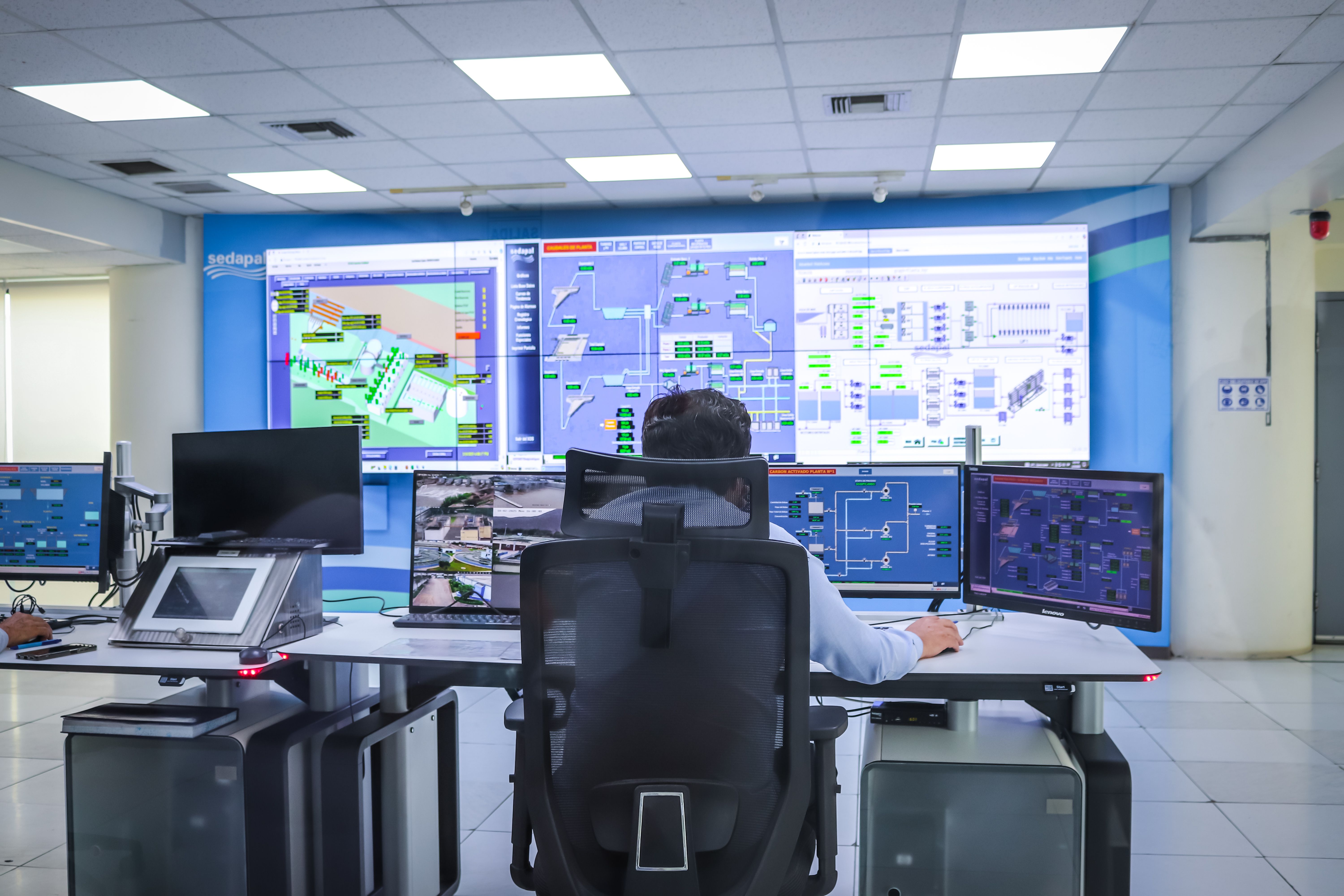
The smart building market is large enough now that architecture choices made in BAS projects have board-level consequences. The question for a CTO is no longer whether connected buildings matter. The question is whether building systems can be run as part of the enterprise stack, with the same discipline applied to data quality, security, governance, and automation.
That requires a different frame than the one used in many controls projects.
Buildings already have sensors, controllers, gateways, and protocols. What many portfolios still lack is a reliable path from that physical layer into a cloud data platform where telemetry becomes usable operating history, and where software can act on it safely. Without that foundation, facilities teams get alarms, data teams get exports, and executives get dashboards that explain yesterday without improving tomorrow.
I have seen the breakpoints repeat. Devices are specified by facilities. Integrators focus on BACnet, Modbus, and field commissioning. The data team receives inconsistent point names, missing context, and little asset lineage. Then the AI team is asked to predict failures or optimize energy with no clean time series, no governed semantic model, and no approved control loop back to the building.
The better model connects the stack end to end. Sensors and controllers manage local control where latency and safety matter. Snowflake serves as the shared operational memory across sites, vendors, and building systems. Agentic AI sits above analytics and executes bounded actions against business policy, whether that means adjusting schedules, creating maintenance work, or escalating anomalies to an operator.
That architecture changes the business case. Smart building automation systems stop being a collection of isolated engineering upgrades and start functioning as a managed digital asset. The gains show up in energy performance, maintenance planning, occupant experience, compliance evidence, and portfolio-wide operating consistency. For teams also exploring implementing digital twins for building projects, this is the missing connection between physical infrastructure and enterprise decision systems.
Smart Building Architecture From Sensor to Cloud
A modern BAS works a lot like a well-run company. The lowest layer senses what's happening on the ground. The next layer makes immediate operational decisions. Management coordinates across systems. The executive layer sets policy, reporting, and optimization logic.
That hierarchy matters because smart building automation systems fail when people expect the cloud to do everything. It shouldn't. Fast control belongs at the edge. Portfolio learning belongs in centralized applications.

The four layers that make a building think
At the bottom sits the Input/Output layer. These are the senses and muscles of the building. Temperature sensors, occupancy sensors, pressure transducers, dampers, relays, valves, and meters live here. They generate analog signals like 0-10 VDC and 0-20 mA, plus binary states, which are the raw facts of building operation according to the UCF BAS specification.
Above that is the Field Controller layer. This is the reflex system. It ingests sensor data, applies local logic, and actuates equipment without waiting for a round trip to a cloud service. That same UCF specification notes that modern Building Automation Systems use a four-layer Digital Direct Control architecture, and the Field Controller Layer acts as the critical edge processing node, executing real-time logic that can reduce energy waste by up to 50% in HVAC operations through approaches such as demand-controlled ventilation and fault detection.
The Supervisory layer is middle management. It coordinates zones, schedules, alarms, trends, and multi-device behaviors. If one air handler, one lighting bank, and one access control event need to influence each other, this layer usually brokers the conversation.
Then comes the Server/Application layer. In this layer, enterprise reporting, long-term storage, portfolio policy, digital twin integration, and cloud analytics belong.
Practical rule: Keep safety and deterministic control close to the equipment. Push learning, optimization, benchmarking, and portfolio orchestration upward.
Where protocols fit and where they don't
Protocols like BACnet/IP, MS/TP, ARCNET, Zigbee, and Bluetooth Low Energy matter because they determine how systems talk, but they aren't the strategy. They're transport and interoperability choices. Good architecture treats them as integration constraints, not as the business value.
One useful way to explain this to non-controls stakeholders is to map responsibilities clearly:
LayerJob in plain termsTypical concernInput/OutputDetect and actuateSignal quality, device healthField ControllerReact in real timeLatency, fail-safe logicSupervisoryCoordinate systemsAlarm handling, schedulesServer/ApplicationAnalyze and optimizeReporting, cloud integration
Digital twins become much more practical when this layering is respected. Teams exploring implementing digital twins for building projects usually get better results when they model assets and telemetry on top of a stable control hierarchy instead of trying to infer building behavior from fragmented exports.
What doesn't work is collapsing everything into one vendor UI and calling it transformation. That produces lock-in, weak data access, and limited room for enterprise analytics. A building becomes valuable when its architecture supports both local control and cloud-native intelligence.
Architecting the Data Flow on Snowflake
Software now captures more of the value in smart buildings than the devices alone. That changes the architecture decision. The controls path still keeps occupants safe and equipment stable, but the data path determines whether a portfolio can reduce energy cost, standardize maintenance, and give AI enough context to act responsibly.

The pipeline that supports operations, not just reporting
A Snowflake pattern that works in production usually starts above the field bus. Data comes from BAS supervisors, edge gateways, IoT brokers, utility meters, and adjacent enterprise systems such as CMMS, access control, and leasing platforms. The first objective is simple. Produce a trusted event stream with asset identity, timestamps, units, site context, and data quality flags.
That foundation is what separates a building analytics program from a collection of dashboards.
A practical pipeline usually includes five steps:
- Acquire at the edge. Capture BACnet objects, wireless sensor data, meter reads, controller trends, alarms, and command history.
- Normalize before loading. Standardize point names, units, time zones, asset identifiers, and site codes before analysts start joining data.
- Keep raw and curated layers separate. Preserve immutable landing data, then build governed models for operations, finance, and engineering use cases.
- Model telemetry as time series. Use append-friendly structures for readings, state changes, alarms, setpoint updates, and operator actions.
- Join telemetry with business context. Equipment hierarchies, maintenance history, occupancy patterns, tariff schedules, and service contracts are what turn raw points into operating decisions.
The common failure mode is treating BAS exports like ordinary enterprise data. Building telemetry arrives late, changes shape by site, carries uneven metadata, and often mixes sensor readings with operator commands. If the platform ignores those realities, teams spend their time fixing duplicate timestamps, chasing broken asset mappings, and arguing over which reading is authoritative.
Why Snowflake fits the enterprise operating model
Snowflake works well here because it can hold raw telemetry, curated asset models, maintenance records, energy data, and AI feature sets inside one governed environment. That matters for enterprise teams. Without a common platform, controls data stays trapped in BAS tools, work orders sit in CMMS screens, and finance gets a monthly spreadsheet that arrives too late to change behavior.
The design choice is less about picking a perfect schema and more about enforcing a few architectural rules:
- Use a canonical asset model so AHUs, VAVs, chillers, and zones map consistently across properties.
- Track event time and ingestion time separately so late controller uploads do not rewrite operational history.
- Preserve native point names while mapping them to semantic tags that analytics teams can query across sites.
- Store command events with sensor data because optimization efforts fail fast when nobody can see what changed, when, and by whom.
Faberwork's work on time-series data with Snowflake is a useful example of the centralization pattern large portfolios need once telemetry volume and site count start to climb.
Centralize the data model. Keep control decisions close to the equipment when latency and safety matter.
What strong architecture looks like in practice
Strong architecture gives each layer a clear job. Edge systems collect and buffer data. Integration services validate and normalize it. Snowflake becomes the governed system of record for history, semantics, and portfolio analysis. AI services then consume curated data products rather than scraping ad hoc exports from building tools.
That structure pays off in maintenance as much as in energy. Predictive models for pumps, fans, compressors, and valves only work when failure history, runtime, alarms, and work orders can be joined cleanly. Teams focused on eliminating unplanned downtime with machine learning already know the model is rarely the hardest part. The hard part is getting trustworthy event history and asset context into one place.
What fails is the familiar shortcut of exporting CSV files from each site and calling that integration. That creates a reporting stack, not an enterprise operating layer. CTOs should require lineage, semantic standards, access controls, and a data contract for every feed entering the platform. Once those controls are in place, Snowflake supports more than analytics. It gives Agentic AI a reliable memory of how the building operates, what the business cares about, and which actions stay within policy.
From Analytics to Autonomy with Agentic AI
Autonomy only becomes credible after the data foundation is trustworthy. Otherwise, AI just scales bad assumptions faster.
The true progression in smart building automation systems is straightforward: reporting first, diagnosis second, prediction third, action last. Many teams stop at dashboards because that feels safer. But the larger payoff arrives when software can recommend and then execute bounded changes against building systems.

The four levels of operational intelligence
A mature building data stack usually progresses through four layers of value:
LevelQuestion answeredExample in a buildingDescriptiveWhat happenedEnergy trend by floor or siteDiagnosticWhy it happenedSimultaneous heating and cooling caused excess loadPredictiveWhat is likely nextA fan or compressor is trending toward failurePrescriptiveWhat should changeAdjust schedules, airflow, or setpoints
Descriptive analytics are necessary, but they rarely change operations on their own. Diagnostic analytics start to matter because they expose root causes. Predictive models help maintenance teams act earlier. Prescriptive logic closes the gap between insight and intervention.
That last step is where many organizations need a more rigorous approach to maintenance and reliability engineering. Work on eliminating unplanned downtime with machine learning is useful because it shows how ML becomes practical when teams connect sensor history, failure modes, and maintenance action instead of treating prediction as an abstract data science exercise.
What Agentic AI actually does
Agentic AI is useful when it operates under explicit guardrails. In a building environment, an agent shouldn't improvise against life safety systems or write uncontrolled schedules. It should work inside policy boundaries, approval rules, and known equipment constraints.
That means an agent can:
- Evaluate occupancy and weather signals before adjusting airflow strategies.
- Prioritize alarms based on likely business impact rather than simple threshold breaches.
- Generate maintenance actions from fault patterns and supporting telemetry.
- Coordinate energy decisions with utility pricing, asset health, and comfort bands.
That's the right framing. Autonomy isn't a gimmick. It's operational delegation.
Here's a concise walkthrough of that progression in practice:
The control question every CTO should ask
The key distinction isn't AI versus no AI. It's advisory intelligence versus actionable autonomy.
If your system can detect a problem but still depends on a person to reconcile five dashboards, chase a vendor, and make a setpoint change, you haven't automated the operation. You've only improved observation.
What works is bounded autonomy. Let the agent recommend actions for sensitive domains first. Then allow automatic execution in low-risk, high-frequency scenarios such as schedule refinement, after-hours setback corrections, or anomaly-driven work order creation.
What doesn't work is handing over broad control to a black-box model. Buildings are physical systems with comfort, compliance, and safety consequences. Agentic AI should behave like a disciplined operator with perfect memory, not an unsupervised experiment.
Illustrating Outcomes With Real-World Use Cases
The strongest argument for smart building automation systems isn't theoretical architecture. It's operational efficiency.
An integrated approach consistently beats isolated upgrades. Deloitte analysts noted that an integrated approach to smart building systems could help realize 30 to 50 percent energy savings in existing buildings, while single component upgrades typically yield only 5 to 15 percent savings. That gap explains why piecemeal modernization often disappoints. Teams improve a subsystem, but they don't change how the building operates as a whole.
Use case one for a commercial office portfolio
A multi-site office operator usually starts with familiar symptoms. Hot and cold complaints cluster by floor. HVAC runtimes drift outside business hours. Maintenance teams spend too much time on reactive calls because they don't see equipment deterioration early.
The fix isn't one new device. It's an integrated model: controller data, occupancy signals, zone history, and work orders flow into one analytics layer. Diagnostic logic highlights persistent comfort failures, while predictive maintenance models rank units by likely failure risk. Operations then tune schedules and dispatch work based on evidence rather than complaint volume.
The business case gets stronger when the owner applies AI to portfolio-wide optimization patterns, such as the approach described in AI transforms smart buildings. The lesson is practical. Once buildings share a common data model, teams can reuse analytics and control policies instead of reinventing them by site.
Use case two for a manufacturing facility
Manufacturing sites care less about lobby comfort and more about production continuity. A ventilation fault, unstable temperature band, or power-quality issue can affect process reliability long before a conventional building dashboard marks it urgent.
In that environment, the BAS becomes part of the operating perimeter for production. Real-time telemetry from mechanical systems feeds anomaly detection, and the system flags deviations that could lead to equipment stress or shutdown conditions. Supervisors get earlier warning. Maintenance teams see the likely cause chain. Operators avoid avoidable disruptions because the building layer stops being invisible.
Integrated building intelligence pays off when it changes a business outcome, not when it adds another screen to watch.
What doesn't work in either scenario is a single-component retrofit pursued in isolation. A smarter thermostat can help. A better meter can help. But the larger returns come when HVAC, lighting, occupancy, alarms, maintenance, and analytics act like one system instead of five procurement categories.
An Enterprise Roadmap for Implementation and Security
Most organizations shouldn't begin with a portfolio-wide overhaul. They should begin with a controlled operating model.
The business rationale is already strong. Construct Two reports that building automation systems can reduce energy consumption by 15-30% and maintenance costs by 20-40%, often paying for themselves within 2-5 years through operational cost reductions alone. But those results depend on execution quality. Security, vendor access, data governance, and rollout discipline decide whether savings persist.

Phase one and two
Phase 1 is strategy and audit. Inventory controllers, protocols, gateways, vendor dependencies, and data gaps. Define a small set of KPIs that matter to the business, such as comfort exceptions, avoidable maintenance events, after-hours runtime, and compliance reporting latency. This phase should also establish identity, access, segmentation, and remote support policy.
Phase 2 is the pilot. Pick one building or one repeatable asset class, such as air handlers across a campus. Prove data quality first, then prove one or two operational use cases. Good pilots are narrow enough to govern and broad enough to expose integration issues.
A useful parallel for technology leaders planning broader AI adoption is this practical roadmap on how to automate services with AI. The pattern holds in buildings too. Start with bounded workflows, measurable outcomes, and clear human approvals.
Phase three and four
Phase 3 is phased rollout. Standardize the reference architecture, semantic tagging, and data contracts before scaling. Many programs lose control at this point. One site adds custom naming. Another allows unmanaged vendor access. A third bypasses central logging. Those shortcuts create long-term operating friction.
Phase 4 is optimization and AI integration. Once the estate is stable, layer in fault detection, predictive maintenance, digital twins, and bounded autonomous actions. At this point, the conversation shifts from installation to continuous improvement.
A CTO should require these security checkpoints across all phases:
- Secure endpoints: Patchable firmware, managed certificates where applicable, and approved device onboarding.
- Constrain remote access: Vendors need time-bound, auditable access paths rather than standing privileges.
- Separate networks by function: BAS traffic, enterprise analytics, and user applications shouldn't collapse into one flat trust zone.
- Protect sensitive data: Occupancy, access, and user preference data need retention and access controls aligned with privacy obligations.
The biggest implementation mistake isn't moving too slowly. It's scaling a weak standard across every site.
One mention is enough here: firms such as Faberwork LLC can support the Snowflake and AI side of this roadmap by building the telemetry pipeline, semantic model, and automation services around an existing BAS estate. That's useful when the controls layer already exists but the data and AI layers don't.
The Future Is an Asset That Manages Itself
Smart building automation systems have moved beyond controls engineering. They now sit at the intersection of facilities, data architecture, AI, and enterprise risk management.
The strategic shift is simple. A building used to be managed through manual oversight and fragmented systems. A modern building can sense continuously, coordinate locally, learn centrally, and act within policy. That changes asset value. It changes operating cost. It changes how fast teams respond to issues that used to stay hidden until tenants complained or equipment failed.
For technology leaders, this is not a side project for facilities. It's a model for how physical operations become software-defined. The strongest programs start with sound field architecture, route telemetry into a governed cloud platform such as Snowflake, and use Agentic AI where bounded autonomy can create business value safely.
The end state isn't a smarter dashboard. It's an asset that participates in its own performance, reliability, and compliance. That's why this belongs on the enterprise roadmap.


