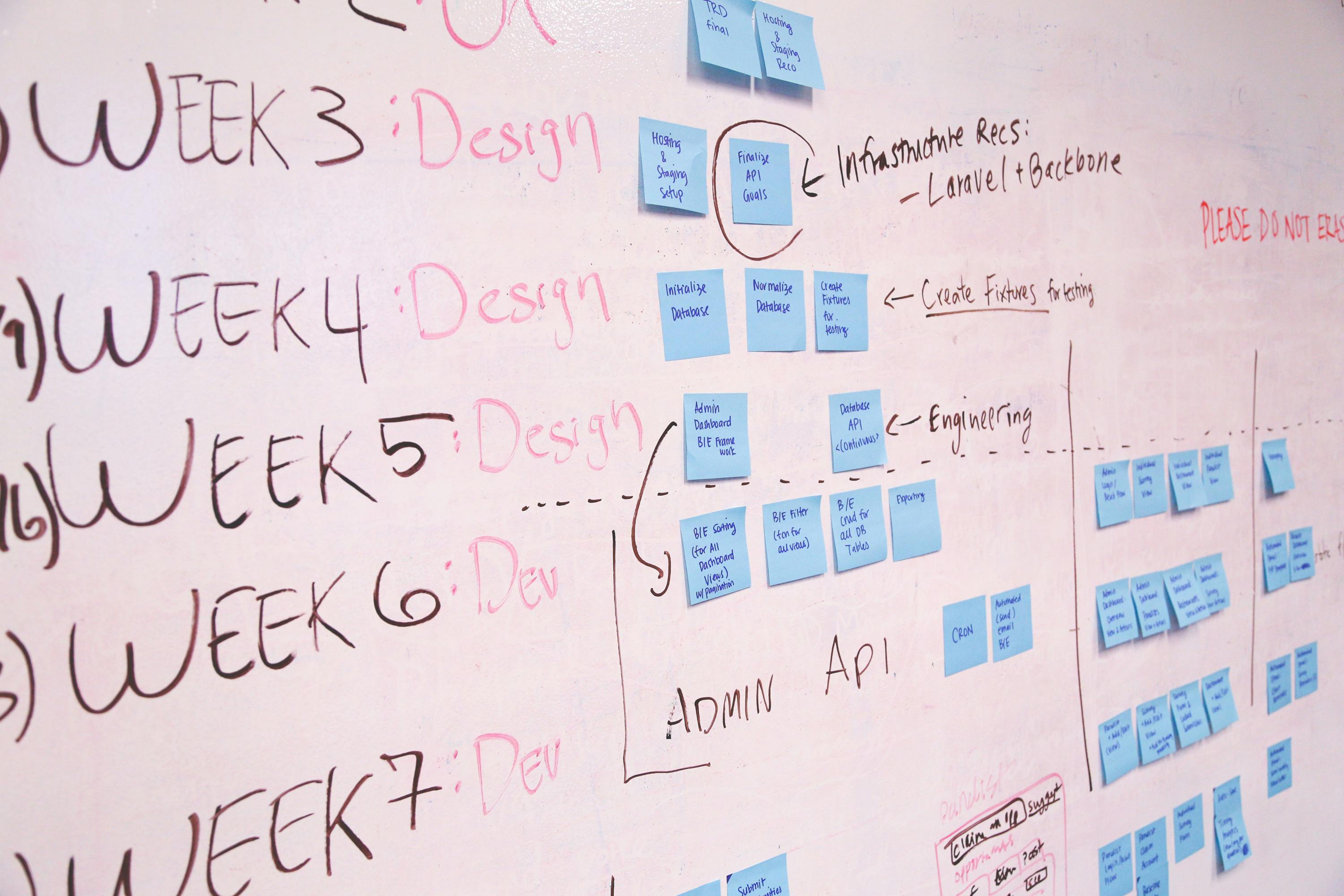
Project key milestones are not just tick-box exercises; they are significant checkpoints that signal a major outcome has been delivered. Unlike tasks, which represent effort, milestones represent tangible results, validating that a project is delivering real value and is on track to meet its final goal.
Why Milestones Matter More Than Timelines

It’s easy to confuse a timeline packed with tasks for a true roadmap. A timeline shows what to do and when, but it won't confirm if you're creating value. This is where outcome-focused project key milestones are critical. They shift the team's mindset from, "Are we busy?" to, "Are we delivering results?"
This distinction is vital for complex technology initiatives. A sobering IT project failure rates study highlights that 66% of technology projects end in partial or total failure. The numbers are worse for large-scale projects, which succeed less than 10% of the time. These statistics underscore why defining clear, outcome-based milestones from day one is non-negotiable.
From To-Do Lists To Value Checkpoints
Think of your project as a long road trip. Tasks are the miles you drive, but milestones are the major cities you pass through. You know you’ve arrived when you see the skyline, not just when the odometer hits 500. Milestones act as these value checkpoints, offering undeniable proof of progress.
Use Case: Data Platform Build On a Snowflake data project, a task might be "write ingestion scripts." A milestone, however, is "First Production Data Set Successfully Ingested and Validated." The first is an activity; the second is a verifiable outcome that unlocks the next phase, like building analytics dashboards.
A project without milestones is like a road trip without a map. You're moving, but you have no idea if you're getting closer to your destination. Milestones confirm you're on the right path and that the work being done aligns with the intended business value.
Keeping Stakeholders Confident And Teams Aligned
Fuzzy goals breed anxiety. When stakeholders only see a distant finish line, they get nervous. Hitting regular, meaningful milestones builds their confidence by showing that their investment is delivering value incrementally. Well-defined milestones bring powerful benefits:
- Improved Clarity: They provide concrete goals that everyone—from engineers to executives—can easily understand.
- Early Risk Detection: A milestone at risk is an early warning system, giving the team time to solve problems before they derail the project.
- Boosted Team Morale: Hitting a major milestone is a reason to celebrate. It gives the team a sense of accomplishment and keeps motivation high.
By concentrating on key achievements, you can transform a complex project into a series of manageable, value-driven sprints.
How To Define Meaningful Project Milestones

A real milestone isn't a task with a deadline; it’s a concrete checkpoint that confirms a significant piece of value has been delivered. To define them, work backward from your final business objective. If an app is meant to boost fleet efficiency, "build login screen" is just a task. A true milestone would be "Geofencing Prototype Triggers Alerts Correctly," proving a core part of the business value is achievable.
Get Specific With SMART Milestones
Vague milestones like "AI Model Developed" create ambiguity. The fix is to make every milestone SMART: Specific, Measurable, Achievable, Relevant, and Time-bound. This structure forces clarity and gives everyone a shared definition of what "done" means.
A SMART version is indisputable:
- Milestone: AI Model Prototype Complete
- Description: The initial machine learning model for predicting customer churn is trained and validated, ready for internal review.
- Acceptance Criteria: The model must achieve at least 85% prediction accuracy on the designated test dataset.
This leaves no room for debate; the outcome is clear and directly tied to the project’s purpose.
A well-defined milestone acts as a contract between the project team and its stakeholders. It clearly defines the deliverable and the exact criteria needed to declare success, preventing misunderstandings down the line.
Involve Stakeholders To Define Done
Defining what "done" looks like can't happen in an engineering silo. You must involve key stakeholders to ensure their expectations are being met, especially for user-facing features where success is subjective.
Use Case: UI/UX Design For a milestone like "User Interface Wireframes Approved," the acceptance criteria must include formal sign-off from the product owner, a lead engineer, and perhaps marketing. Understanding how wireframes connect concept to completion is key. This early buy-in prevents expensive rework later and ensures the milestone represents a shared understanding of progress.
A Simple Milestone Definition Template
A simple table is the most practical tool for documenting your project key milestones. It forces clarity and consolidates every critical detail into a single, scannable format.
Here is a template you can adapt:
Milestone NameDescription & Business ValueOwnerAcceptance CriteriaDue DateSnowflake Schema Design FinalizedEstablishes the foundational data architecture, enabling efficient data ingestion and future analytics.Data ArchitectAll data models are documented, peer-reviewed, and approved by the Head of Data.07/31/2024Mobile App Beta DeployedFirst user-facing version available on TestFlight for pilot group feedback.Mobile LeadApp installs successfully; core features (login, dashboard, geofencing) are functional.09/15/2024
Using a structured format turns milestone planning into a practical, repeatable discipline focused on measurable business outcomes.
Scheduling Milestones And Mapping Dependencies

Once milestones are defined, you must sequence them into a logical, realistic timeline. The core of this process is dependency mapping—understanding which milestones are blockers for others. This reveals the project's critical path and flags potential bottlenecks before they become emergencies.
Use Case: Data Engineering A milestone like "Build Data Ingestion Pipelines" is completely dependent on an earlier one: "Snowflake Data Warehouse Architected." You cannot pipe data into a destination that hasn't been designed. Mapping this dependency makes the project's logic clear to everyone.
Creating A Visual Roadmap
A visual roadmap or Gantt chart tells a story that a spreadsheet cannot. It displays the sequence, duration, and dependencies between key milestones, bringing clarity to both your team and stakeholders. This visual approach creates a single source of truth that keeps everyone aligned.
According to recent project management statistics, companies using project management software complete 61% of projects on time, compared to just 41% for those without. For enterprise projects like an OSS modernization or a Snowflake analytics build, this structured approach delivers tangible results, like hitting a beta release in 8 weeks or deploying a new environment in 12.
Accounting For Risks And Buffer Time
No project plan is perfect. Building buffer time into your schedule isn't a sign of weak planning—it's a realistic strategy that anticipates uncertainty. Identify your highest-risk milestones, often those with complex technical hurdles or external dependencies, and allocate extra time around them. This buffer acts as insurance for your delivery date, giving you the flexibility to solve problems without derailing the entire timeline.
Tracking Progress And Communicating Status

Defined project key milestones are useless without a system for tracking and communicating progress. The goal is to create total visibility and ownership without micromanaging. A simple yet powerful technique is the RAG status system—Red, Amber, Green—which instantly communicates the health of each milestone. This visual cue cuts through the noise, letting stakeholders see what’s on track and where to focus their attention.
Clear reporting is essential, as communication gaps can lead to significant delays and budget overruns.
The Rhythm of Reporting
A consistent reporting cadence is key. Whether weekly or bi-weekly, updates should be concise summaries focused on outcomes. A clear project status report keeps stakeholders informed without overwhelming them. A good update always covers three points:
- Progress: What did we accomplish?
- Problems: What roadblocks or new risks emerged?
- Plan: What are our immediate next steps?
This structure keeps the conversation focused on solutions, not blame. When a milestone is at risk, this format naturally guides the team toward proactive problem-solving.
Running Effective Milestone Reviews
Milestone review meetings are critical decision points, not just status updates. Hold them when a major milestone is due or is significantly off-track. The purpose is to either formally accept a deliverable or to create a new plan if a milestone is at risk.
The most productive milestone reviews answer two questions: "Is it done?" and "What's next?" If yes, celebrate the achievement. If no, the focus must shift to creating a clear, actionable recovery plan.
Use Case: System Decommissioning If the milestone "Phase 1 Decommission of OSS/EMS Complete" is trending amber (at risk), the review meeting must produce a concrete action plan. This could involve assigning more engineers to a dependency or formally adjusting the timeline for the next milestone. This proactive, transparent approach transforms milestone tracking from a box-ticking exercise into a powerful engine for project success.
Milestone Planning For Complex Tech Projects
Let's look at how project key milestones work in four complex tech initiatives. These examples turn high-level goals into concrete, measurable checkpoints, providing a practical blueprint for your own projects.
Agentic AI Initiatives
Building an agentic AI is about teaching a system to reason and act. Milestones must reflect its ability to perform real-world tasks, not just its performance on a static dataset.
- Initial Data Set Curation: The outcome is a fully labeled, validated, and scrubbed dataset. "Done" means a data quality score over 98% and formal sign-off from the lead data scientist.
- User Acceptance Testing (UAT) with Pilot Group: The outcome is proven business value. "Done" means a pilot group of five users can successfully execute a specific business process using the AI agent, achieving a task success rate of 90% or higher.
Snowflake Data Builds
For a Snowflake data platform, milestones must focus on building a solid foundation for analytics.
- Schema Design Finalized: The outcome is a comprehensive blueprint approved by data architects and business intelligence analysts. Hitting this milestone confirms the structure can support all planned analytics workloads.
- First Analytics Dashboard Live: This is often the first time the business sees tangible value. "Done" means the dashboard pulls live data from Snowflake, refreshes automatically within five minutes, and is validated by the head of analytics.
A project's success often hinges on its foundational work. For instance, in a modernization project, managing technical debt is as crucial as planning new features. You can explore our guide on managing technical debt in risk control to understand how to balance these priorities effectively.
Mobile Apps with Geofencing
For mobile apps with location-based features, milestones must prove that both the technology and the user experience work in tandem.
- Location Services API Integrated: The outcome is more than just code. "Done" means the app can request and receive location data on both iOS and Android test devices with accuracy under 10 meters.
- Beta App Deployed to TestFlight: This is a major checkpoint moving the project into the real world. "Done" means a stable build is distributed to 50 beta testers via TestFlight, with zero critical crashes in the first 48 hours.
OSS/EMS Modernization
Modernizing a core Operations Support System (OSS) or Energy Management System (EMS) is high-stakes. Milestones must ensure a flawless transition with zero disruption.
- Legacy System Analysis Complete: The outcome is a deep, documented understanding of the old system. "Done" means every data flow and hidden dependency is mapped and signed off by senior engineers.
- Phase 1 Decommission: This is a point-of-no-return milestone. "Done" means its replacement module has run in parallel with the legacy system for 30 days without error, and all critical data has been verifiably migrated.
For projects of this scale, selecting the right tools can make all the difference in successful milestone planning. Discover the best options with our guide to project management software for engineers.
Common Questions About Project Milestones
Here are concise answers to common, practical questions about using project milestones.
How Many Milestones Should A Project Have?
There is no magic number. The goal is to demonstrate meaningful progress without creating administrative overhead. A good rule of thumb for a six-month project is four to six major milestones, creating a rhythm of achieving a significant checkpoint roughly every month.
Focus on significant outcomes that signal a major leap forward, such as:
- Completing the discovery and requirements phase.
- Delivering a feature set to a pilot user group.
- Finalizing a foundational piece of infrastructure, like a data warehouse schema.
The goal is to track significant results, not just the tasks required to get there.
What Is The Difference Between A Milestone And A Task?
This distinction is crucial. A task is a specific activity that takes time to complete. A milestone is a point in time—a zero-duration marker that signifies a major chunk of work is done.
Here’s a simple way to think about it:
- Task: "Code the login page." This is an activity with duration and effort.
- Milestone: "User Authentication System Complete." This is the result. This milestone is hit only when all related tasks (coding, testing, security reviews) are finished and the deliverable is verified to work.
A milestone is achieved when a collection of related tasks is finished and the final outcome is verified. Tasks are the "how," while milestones are the "what" and "when."
How Should You Handle A Missed Milestone?
Milestones get missed. How you react defines the project's success. The first step is to communicate clearly and immediately. Hiding a delay erodes trust.
Next, diagnose the root cause. Was it a bad estimate, an unexpected dependency, or scope creep? You cannot fix the path forward until you understand why you veered off it.
Finally, build a recovery plan. This means re-planning subsequent milestones, being honest about the impact on the final deadline and budget, and showing everyone a clear, actionable path to get back on track. A missed milestone isn't a failure; it’s critical data that helps you build a more realistic plan.


