Generic spreadsheets and one-size-fits-all software don't work for a modern logistics operation. You end up bending your processes to fit the tool, creating friction, data dead-ends, and missed opportunities. Custom logistics software development flips that script.
It's the practice of building applications specifically for the way you do business. This creates a central nervous system for your supply chain, connecting warehouse inventory to final-mile delivery and turning your operational data into a competitive advantage.
Why Custom Logistics Software Delivers Better Outcomes
Instead of adapting to off-the-shelf software, you get a platform built around your unique challenges. It connects disparate systems—warehouse management, fleet tracking, order processing—into one cohesive ecosystem. This integration delivers end-to-end visibility and precise control, allowing you to make decisions based on real-time information, not guesswork. The result is a powerful engine built to drive tangible business outcomes.
Driving Measurable Business Value
A well-designed logistics platform is more than an operational tool—it's a strategic asset. Companies that invest in custom solutions achieve dramatic, measurable improvements. This focus on optimization is why the global logistics software market, currently valued at USD 17.73 billion, is projected to hit USD 39.66 billion by 2033.
This growth reflects an industry-wide shift toward using technology to solve complex logistical puzzles. You can explore these logistics software market trends on straitsresearch.com.
This guide provides a roadmap from initial concept to a fully deployed platform that delivers clear results:
- Reduced Operational Costs: Automation, optimized routing, and precise inventory control directly lower expenses.
- Accelerated Delivery Times: Real-time tracking and intelligent dispatching move goods from warehouse to customer faster.
- Improved Customer Satisfaction: Accurate ETAs, transparent tracking, and reliable service build customer loyalty.
A custom logistics platform transforms your supply chain from a cost center into a competitive advantage. It gives you the agility to respond to market changes, scale operations, and exceed customer expectations.
To connect the technology to the business impact, here's a breakdown of core software modules and the outcomes they produce.
Core Logistics Software Modules and Their Business Outcomes
This table links essential software modules to the specific business problems they solve and the tangible results you can expect.
Software ModulePrimary FunctionKey Business OutcomeTransportation Management System (TMS)Plans, executes, and optimizes the physical movement of goods.Reduces freight costs by 10-20%, improves on-time delivery rates, and streamlines carrier management.Warehouse Management System (WMS)Manages and controls day-to-day warehouse operations.Boosts inventory accuracy to 99%+, optimizes labor productivity by 20-30%, and accelerates order fulfillment.Fleet Management System (FMS)Tracks and manages all aspects of a commercial vehicle fleet.Lowers fuel consumption by 5-15%, improves driver safety, and maximizes vehicle utilization.Order Management System (OMS)Centralizes and streamlines the entire order lifecycle.Enhances customer satisfaction, reduces order errors by over 90%, and provides a single source of truth for all orders.
When these modules work together seamlessly in a custom platform, they create a unified system that drives efficiency across your entire operation.
Understanding the Core Logistics Software Modules
Successful logistics software isn't one monolithic application. It’s a set of specialized, interconnected modules working in harmony. Let's explore how these systems solve real-world problems and deliver tangible results.
Transportation Management System (TMS): The Route Optimizer
A Transportation Management System (TMS) is the command center for everything that moves. It plans, executes, and optimizes how goods get from point A to point B.
Use Case: A mid-sized distributor replaced their chaotic mix of phone calls and spreadsheets with a custom TMS. The system now analyzes shipping lanes, carrier rates, and capacity in real-time to automate booking.
This shift produced powerful outcomes:
- Automated Carrier Selection: The TMS instantly finds the best rate and service for every shipment, eliminating hours of manual work.
- Intelligent Route Optimization: It consolidates less-than-truckload (LTL) shipments into full truckloads and maps the most fuel-efficient multi-stop routes.
- Real-Time Visibility: Shippers and customers get a portal showing a shipment's exact location with trustworthy ETAs.
The Outcome in Action: Within six months, the distributor achieved a 15% reduction in freight spend and increased their on-time delivery rate from 88% to 97%. The TMS transformed transportation into a reliable, cost-effective part of the business.
Warehouse Management System (WMS): The Efficiency Engine
Once goods arrive, a Warehouse Management System (WMS) orchestrates every activity inside the distribution center—from receiving and putaway to picking, packing, and shipping.
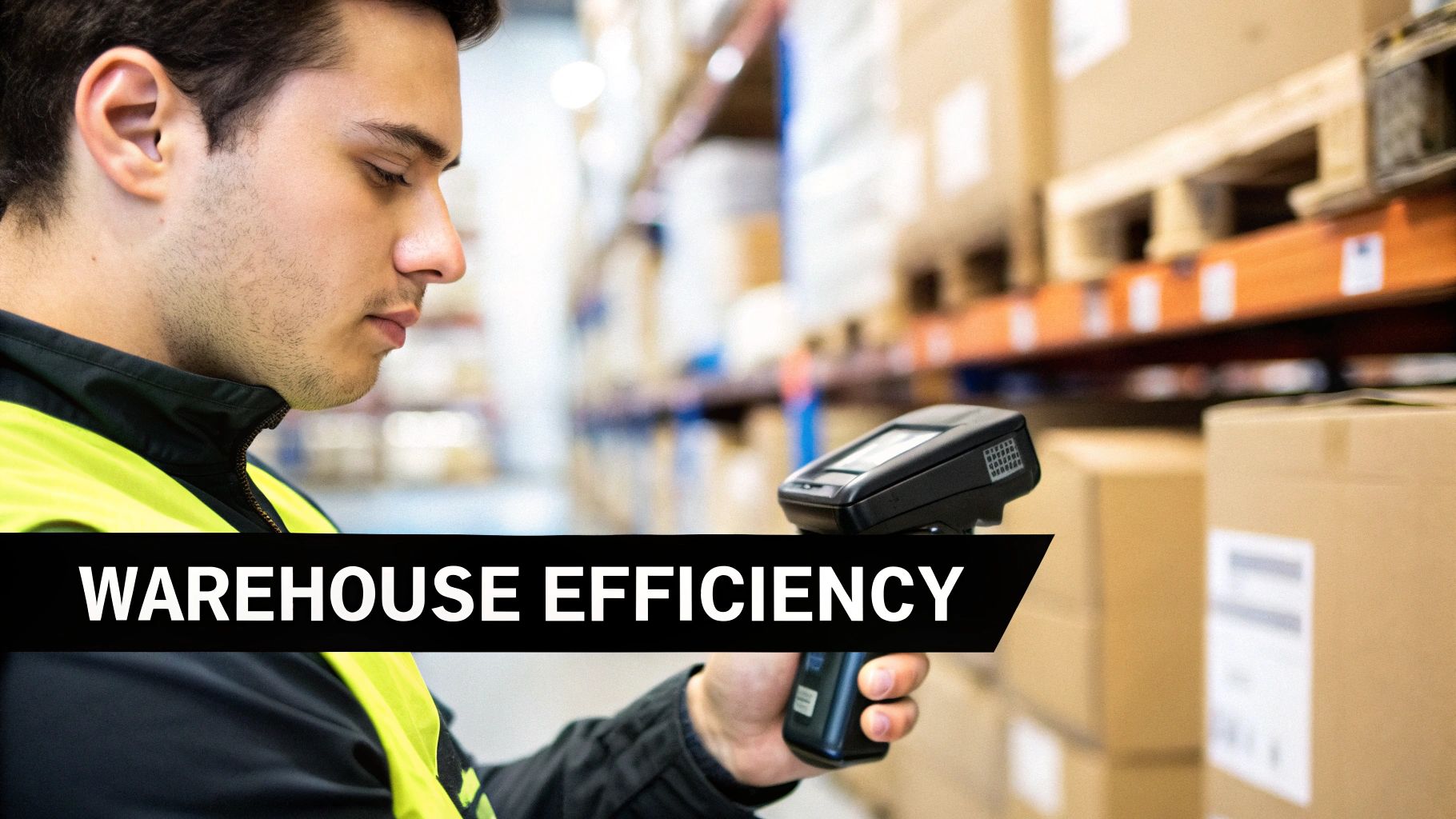
Use Case: An e-commerce company struggling with inaccurate inventory and high labor costs implemented a custom WMS integrated with handheld scanners. Learn more about such tools in these success stories with mobile apps in logistics.
Their new system introduced key functions:
- Directed Putaway: The WMS guides workers to the most strategic storage location based on sales velocity and available space.
- Optimized Picking Paths: The system generates picklists that guide workers along the most efficient warehouse route, slashing travel time.
- Barcode and RFID Scanning: Every item movement is scanned, pushing inventory accuracy to 99.9% and virtually eliminating picking errors.
The impact was immediate. The company reduced picking errors by over 98% and boosted order fulfillment capacity by 40% without hiring additional staff.
Fleet Management System (FMS): The Safety and Performance Guardian
For businesses operating their own vehicles, a Fleet Management System (FMS) is essential. It manages the entire fleet lifecycle, from maintenance schedules to driver performance and compliance.
Use Case: A last-mile delivery service aimed to cut fuel costs and improve driver safety. They built an FMS integrated with telematics devices in each vehicle, creating a constant stream of performance data.
The FMS turned raw data into actionable intelligence:
- Driver Behavior Monitoring: It flagged events like harsh braking and excessive idling, feeding into a driver coaching program.
- Predictive Maintenance Alerts: By monitoring engine diagnostics, the system scheduled maintenance before breakdowns occurred, preventing costly downtime.
- Fuel Efficiency Tracking: Analyzing routes and driver habits pinpointed fuel waste, leading to smarter fleet-wide practices.
This data-driven approach resulted in a 10% increase in fuel efficiency and a 30% decrease in preventable accidents, directly protecting both personnel and profit margins.
Choosing the Right Technical Architecture
After defining what your software must do, the next question is how to build it. The technical architecture is the system's blueprint, dictating scalability and integration capabilities. Getting this right is critical for long-term success.
Think of it like city planning. You could build a small town where everything is tightly connected (monolithic) or a modern metropolis with specialized districts linked by an efficient highway system (microservices). Both have their place.
Monolithic Architecture: The Small Town Model
A monolithic architecture bundles all software components—TMS, WMS, dashboards—into a single, unified application. Everything shares the same codebase and database. This approach is often faster and less complex for initial development and deployment.
However, this simplicity creates challenges as you grow. Updating a single feature requires redeploying the entire application, introducing risk and slowing innovation. A monolithic system can hit a scaling wall, much like a small town crippled by traffic.
Microservices Architecture: The Modern Metropolis
A microservices architecture builds each core function—route optimization, inventory tracking—as a separate, independent service. These services communicate through a network of Application Programming Interfaces (APIs), which act as the system's highways.
This model is built for scale and flexibility. If warehouse demand surges, you can scale the WMS service independently. This architectural choice is a key driver of the logistics software market's growth, which is projected to expand from USD 14.5 billion to USD 32.8 billion by 2032, fueled by demand for scalable, cloud-based solutions. Explore more on the logistics market growth on dataintelo.com.
The power of microservices lies in resilience and agility. If one service needs an update or fails, the others continue running. This empowers development teams to innovate faster without risking the entire platform.
The Critical Role of APIs
Regardless of architecture, APIs are the glue holding a modern logistics ecosystem together. They are the communication lines that allow your custom software to talk to other essential systems, ensuring seamless data flow.
Think of an API as a universal messenger. When your TMS needs a freight quote, it uses a carrier’s API. When a customer places an order, an API pushes that data into your Order Management System.
Common API integration use cases include:
- ERP Systems: Connecting to platforms like SAP or NetSuite to sync financial and order data.
- Telematics and IoT Devices: Pulling live location, temperature, and vehicle data from trucks and sensors.
- Carrier and Freight Marketplaces: Automating the booking, tracking, and payment of shipping partners.
A monolith can be a good starting point for an MVP. But for growth, a microservices architecture provides the foundation for a scalable, future-proof logistics platform.
Using AI to Automate Your Supply Chain
Artificial intelligence is no longer a concept; it's a practical tool delivering a significant return on investment in logistics today. Integrating AI into your logistics software development moves you beyond simple automation. It gives your supply chain a brain capable of predicting, adapting, and optimizing itself in real time. This turns complex decisions into automated, data-backed actions.
Predictive Route Optimization
AI delivers immediate wins in route optimization. While traditional software relies on static maps, AI algorithms create a living picture of the road ahead by processing a constant stream of live data, including:
- Real-time traffic patterns
- Weather forecasts
- Delivery time windows and vehicle capacity
- Road closures and local events
Use Case: A delivery fleet's AI-powered TMS analyzes these variables to calculate the most fuel-efficient and reliable route, not just the shortest one. The outcome is lower fuel costs, fewer late arrivals, and more stops completed per day. This can be enhanced by technology like our AI truck visual identification model to automate gate check-ins and reduce idle time.
Intelligent Demand Forecasting
Demand forecasting is another area transformed by AI. Instead of relying on last year's sales data, machine learning models analyze a much richer dataset:
- Historical sales and seasonal trends
- Current market activity and competitor actions
- Economic indicators and social media sentiment
By identifying subtle patterns, machine learning predicts future demand with high accuracy. This allows you to optimize inventory levels, preventing stockouts on popular items while avoiding overstocking slow-movers.
This shift to AI-driven platforms is reshaping the industry, as detailed in reports on AI-driven market shifts in logistics software on fortunebusinessinsights.com.
The Rise of Agentic AI
The next frontier is agentic AI—autonomous software "agents" that handle complex tasks without human intervention. This moves beyond basic automation to delegate decision-making.
Use Case: An agentic AI could manage carrier procurement. It would autonomously send quote requests to multiple carriers, negotiate rates based on budget and timeline, and book the shipment. If a snowstorm delays a shipment, the agent could automatically reschedule delivery, notify the customer with a new ETA, and even book an alternate carrier. This frees your team from firefighting to focus on strategic initiatives.
Planning Your Project Budget and Team
Transforming an idea into a value-driving platform requires the right people and a realistic budget. Before writing any code, you must map out the necessary talent and get a firm grip on costs to avoid scope creep and wasted investment. Building a software team is like assembling a high-performance race car crew—each role is specialized and critical.
Assembling Your Expert Development Team
A project's success hinges on having the right experts. A lean, effective team typically includes these key players:
- Product Manager: The project strategist who ensures every feature aligns with a business goal and delivers a clear ROI.
- UI/UX Designer: The user advocate who creates intuitive interfaces that minimize friction and training for warehouse staff, drivers, and managers.
- Backend Engineers: The architects of the system's engine, handling core logic, databases, and APIs.
- Frontend/Mobile Engineers: The team that builds everything users see and interact with, turning designs into fast, responsive applications.
- QA Engineers: The bug hunters who stress-test the software to ensure it can withstand real-world operational chaos.
These distinct roles ensure every aspect—from strategy to stability—is handled by an expert.
Estimating Costs and Timelines
The key question is always, "How much will this cost and how long will it take?" While every project is unique, we can outline common scenarios to provide clarity.
A common mistake is underestimating the complexity of integrations. Connecting to a legacy ERP system or multiple carrier APIs can significantly impact both the timeline and budget.
A focused Minimum Viable Product (MVP), such as a basic TMS for route optimization, typically takes 4-6 months with a budget of $75,000 to $150,000. This approach solves a specific problem quickly, allowing you to see an immediate return.
In contrast, a comprehensive enterprise platform with a full TMS, WMS, and AI-powered forecasting is a larger undertaking. Such projects often require 12+ months and budgets exceeding $500,000, accounting for a larger team, complex integrations, and advanced features.
The final cost depends on:
- Feature Complexity: Simple barcode scanning vs. AI-driven slotting recommendations.
- Integration Needs: Modern, API-first ERP vs. a 20-year-old legacy system.
- Platform Requirements: A web app vs. native iOS and Android apps for drivers.
Breaking down your vision helps you work with a development partner like Faberwork to build a transparent budget and a realistic timeline, setting your project up for success.
Building a Secure and Compliant Platform
A successful logistics platform must be secure, compliant, and reliable. In an industry governed by strict regulations and sensitive data, cutting corners on security is a massive business risk that can lead to crippling fines and a loss of customer trust. Smart logistics software development integrates these priorities from the start.

Navigating Key Industry Regulations
Compliance is non-negotiable. Your software must be built to meet standards governing data privacy and operational logging. Two key regulations include:
- GDPR (General Data Protection Regulation): If you handle data of any EU-based customers, you must comply with strict rules for collecting and processing personal information. Violations can cost up to €20 million or 4% of your global revenue.
- ELD (Electronic Logging Device) Mandate: For U.S. trucking operations, federal law requires commercial drivers to track their Hours of Service (HOS) with an ELD. Your FMS must integrate with compliant devices.
Implementing a Practical Quality Assurance Strategy
A robust Quality Assurance (QA) strategy ensures your platform can handle the realities of logistics. It must remain stable not just in ideal conditions but also when things go wrong.
A great QA process stress-tests your operation. It simulates worst-case scenarios—like a network outage during a critical delivery or a massive order spike—to ensure the system remains stable and recovers gracefully.
Your QA team should simulate server failures to verify that data backup and recovery plans work as intended. This proactive testing builds a platform that you and your customers can depend on.
Adopting Modern DevOps for Continuous Improvement
In logistics, standing still means falling behind. Modern DevOps practices, particularly Continuous Integration/Continuous Deployment (CI/CD), allow you to release updates quickly and safely. A CI/CD pipeline automates the build, test, and deployment process, minimizing human error.
This automation enables your team to ship new features or security patches without system downtime. By combining secure design, relentless testing, and an agile deployment process, you create a resilient platform built for the long haul.
Logistics Software FAQs
Here are answers to common questions about logistics software development.
Should I Build Custom Software or Just Buy Something Off-The-Shelf?
Off-the-shelf software is a good choice for standard processes and quick implementation. However, if your unique operational methods provide a competitive advantage, custom software is the superior option. It molds perfectly to your workflows, integrates seamlessly with other systems, and scales with your business. If your logistics process is your secret sauce, build it yourself.
What Are the Biggest Headaches in Building This Stuff?
Successfully launching a logistics platform means anticipating and planning for key challenges:
- Complex Integrations: Connecting with legacy ERPs, carrier APIs, and telematics devices can be a significant hurdle.
- Real-Time Data Overload: The architecture must handle a constant flood of data from GPS and IoT sensors without performance degradation.
- Massive Swings in Scale: The system must perform reliably during both slow periods and peak seasons like Black Friday.
- Getting People to Use It: User adoption is crucial. A powerful tool is worthless if it's too complex for warehouse crews, drivers, and managers to use effectively.
Successful projects anticipate these challenges. They plan for architectural flexibility and prioritize the end-user experience from day one, avoiding costly rework later.
How Do I Keep My New Software from Becoming Obsolete in a Few Years?
To ensure your platform has a long lifespan, start with a flexible, microservices-based architecture. This allows you to upgrade or replace individual components without overhauling the entire system.
Use APIs for all integrations to ensure compatibility with future technologies. Build in a robust data analytics layer from the beginning to power future AI and machine learning features. Finally, adopt a cloud-native approach to gain the scalability and power needed to adapt to future market demands.


