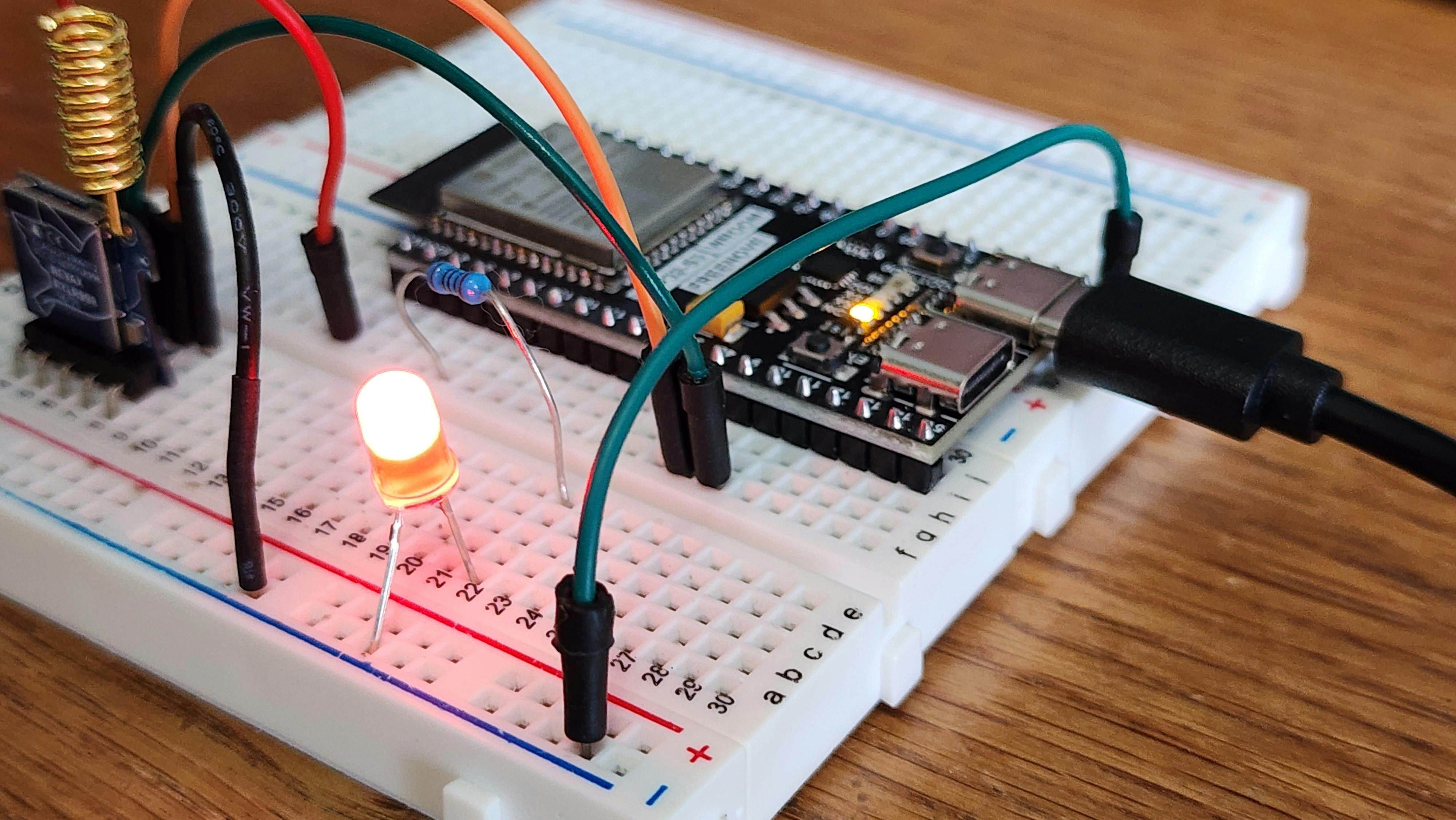
For developers diving into the Internet of Things (IoT), it's about much more than connecting a device to the internet. The real work is building intelligent systems that turn raw sensor data into bottom-line business outcomes.
This guide is a developer-focused look at the entire IoT landscape, from the chips on the factory floor to cloud analytics. We’ll map out a clear path for building solutions that deliver measurable value.
From Sensor to Insight: The Modern IoT Landscape

The Internet of Things is no longer a futuristic concept—it's here, and it's creating massive opportunities. The core job for developers is to transform a relentless stream of data into actionable insights.
This path from a sensor reading to a smart business decision is the fundamental challenge in IoT for developers. It means being comfortable with the entire technology stack, from the physical hardware in the field to massive analytics platforms in the cloud.
The Scale of the Opportunity
The number of connected devices is staggering. We're on track to hit 18.8 billion IoT devices by the end of 2026, ballooning to 39 billion by 2030. These devices will generate over 79 zettabytes of data annually by 2026 alone.
This data tsunami creates huge demand for developers who can build systems to tame it. The goals are practical and have clear business impact:
- Logistics: A fleet of delivery trucks uses GPS and engine sensors to find optimal routes, slashing fuel costs by 15% and reducing delivery times.
- Manufacturing: Predictive maintenance alerts from machinery prevent a million-dollar production line from grinding to a halt, saving costly downtime.
- Smart Buildings: HVAC systems automatically adjust based on real-time room occupancy, cutting a building's energy bills by up to 25%.
Turning Data into Decisions
The magic of IoT happens when data triggers a decision. A single temperature reading is just a number. Understanding the nuances, like knowing the differences between various temperature sensor types, is where the engineering begins.
The ultimate outcome for an IoT developer is a system where data doesn't just sit in a database. It actively shapes business strategy, streamlines operations, and opens up new revenue streams.
This is where modern data platforms are indispensable. A platform like Snowflake provides the power to ingest, process, and analyze enormous volumes of device data efficiently.
By mastering these tools, you move from simply connecting "things" to building genuine business intelligence. A great example of this in action is explored in our guide on using simulation and IoT to mitigate risks in growing systems.
Before we go deeper, it helps to have a mental model of how all the pieces fit together. This table breaks down the main layers of an enterprise IoT solution.
Core Components of an Enterprise IoT Solution
Component LayerDeveloper Focus AreaExample TechnologiesPhysical DevicesFirmware, hardware integration, power managementESP32, Raspberry Pi, NVIDIA Jetson, ArduinoConnectivityProtocol implementation, security, data transmissionWi-Fi, Bluetooth LE, LoRaWAN, Cellular (5G/LTE-M)Edge ComputingLocal data processing, real-time analytics, filteringAzure IoT Edge, AWS IoT Greengrass, KubeEdgeCloud IngestionScalable data endpoints, message queuing, authenticationAWS IoT Core, Azure IoT Hub, Google Cloud IoT CoreData PlatformStorage, transformation (ETL/ELT), analytics, MLSnowflake, Databricks, BigQuery, RedshiftApplicationsDashboards, APIs, business logic, user alertsGrafana, Tableau, custom web/mobile apps
Think of this as your roadmap. Each layer has its own challenges and requires specific skills, but they must all work together seamlessly to deliver the promise of IoT.
Understanding Core IoT Concepts for Developers

To build a scalable IoT system, you must understand the architecture—the flow of data from a physical sensor to a valuable business insight. For any developer entering this space, three concepts are critical: edge computing, cloud infrastructure, and telemetry. They represent distinct roles within a modern IoT solution. Knowing how they fit together is key to designing powerful and efficient systems.
The Power of the Edge
Edge computing moves processing power out of the central cloud and directly onto the device. Instead of streaming all raw data to a server, the device analyzes information locally and makes real-time decisions. Think of it as putting a small, specialized brain right where the action is happening.
- Use Case: Quality Control in Manufacturing. A smart camera on a factory floor runs an AI model to spot defects on an assembly line. It instantly identifies a flawed part and triggers a robotic arm to reject it. This happens in milliseconds—a delay for a cloud round-trip would be too slow. The outcome is higher product quality and reduced waste, with no network latency.
This immediate feedback is impossible with a cloud-only model. Processing data at the edge means faster responses, less network load, and continued operation even if the internet connection is spotty.
The Central Intelligence of the Cloud
While the edge handles immediate, tactical decisions, the cloud infrastructure is your strategic command center. This is where you aggregate data from thousands of devices to see the big picture, run complex analytics, and manage your entire fleet.
The cloud transforms an ocean of individual data points into strategic business intelligence. It’s where you uncover patterns and trends that no single device could ever see on its own.
This centralized intelligence drives long-term value.
- Use Case: Fleet Management. A logistics company collects GPS and fuel data from its entire fleet of trucks. By analyzing this data in the cloud, the company pinpoints the most fuel-efficient routes, predicts when a truck needs maintenance before it breaks down, and optimizes delivery schedules. The result is millions saved in operational costs.
Telemetry: The Language of Devices
Telemetry is the actual data your devices send. It’s the language they use to report their status and observations. As a developer, one of your most important jobs is to define this language. What data is essential? How often should it be sent? What format will it use?
This isn't about collecting everything; it's about collecting the right things. A well-designed telemetry stream is lean, secure, and packed with the information your backend needs.
The IoT landscape is exploding. By 2026, trends like edge AI and digital twins will be mainstream, all built for a world with over 17 billion connected devices. Developers must build secure, real-time applications that can handle this scale. You can learn more by exploring the top IoT development trends on Sumatosoft.
Choosing Your IoT Development Toolkit

Starting an IoT project requires picking the right mix of hardware, protocols, and SDKs. The wrong choices can lead to an over-engineered, expensive solution that fails at scale. As a developer, your job is to build a decision-making framework that prioritizes the project's end goals.
This starts with a fundamental question: how will your devices talk to the cloud? The protocol you select directly impacts battery life, data costs, and system reliability. This choice is foundational for IoT for developers.
Selecting the Right Communication Protocol
Think of the communication protocol as the language your devices speak. The right choice matches the language to the device's limitations and the application's needs.
Your choice of protocol is a trade-off between features, power consumption, and data overhead. A lightweight protocol is perfect for battery-powered sensors, while a more feature-rich one might be better for a device with a stable power source.
Let’s compare two common options: MQTT and HTTP.
- MQTT (Message Queuing Telemetry Transport): Born for efficiency, its lightweight publish/subscribe (pub/sub) model is perfect for small, battery-operated devices with limited bandwidth. Use Case: A remote soil moisture sensor in a field that reports data once an hour. MQTT's low overhead ensures the battery lasts for months or years.
- HTTP (Hypertext Transfer Protocol): The engine of the web, HTTP is too "chatty" and power-hungry for many IoT devices. However, it's a great fit for devices with a steady power supply and reliable Wi-Fi, since every web developer already knows it. Use Case: An industrial gateway in a factory that aggregates data from other sensors and sends a summary report every few minutes.
Here’s a practical breakdown to help you decide.
Comparison of Common IoT Communication Protocols
ProtocolBest ForKey AdvantageConsiderationMQTTLow-power, battery-operated sensors with unreliable connections.Minimal data overhead and power consumption; efficient one-to-many communication.Requires a central broker, which adds a component to your architecture.CoAPSimilar to MQTT, designed for constrained devices on low-power networks.Works well over UDP, which can be faster than TCP-based protocols.Less widely adopted than MQTT, meaning fewer available tools and libraries.HTTPDevices with consistent power and network access, or for simple request/response needs.Simple to implement with existing web development skills and tools.High overhead, which drains batteries faster and uses more bandwidth.
Ultimately, your choice should be guided by your device's constraints and your application's demands.
Choosing Your Hardware Platform
Once you know how your device will talk, you need to pick the hardware it will run on. The options are vast, from tiny microcontrollers to powerful single-board computers for edge AI. Avoid over- or under-provisioning.
- Arduino: The classic starting point. If your job is to read a sensor and blink an LED, an Arduino is a low-cost, effective platform for simple projects.
- Raspberry Pi: A true workhorse. As a single-board computer running a full Linux OS, it’s fantastic for projects needing more processing power, network features, or the ability to run apps in Python or Node.js.
- NVIDIA Jetson: Your go-to for edge AI. For real-time video analysis or running machine learning models locally, the Jetson family delivers the necessary GPU horsepower.
By starting with a clear vision of your project's destination, you can work backward to select a toolkit that’s cost-efficient and ready for the long haul.
Architecting a Scalable IoT Data Pipeline with Snowflake

The true value of IoT for developers isn't just getting a device online; it's what you do with the resulting data firehose. A sensor pinging a temperature every second is just noise until a backend can absorb millions of messages, find patterns, and turn them into a business asset.
Your data pipeline is the foundation of your IoT solution. You can't afford a system that chokes when you add more devices. This is where a modern data platform like Snowflake becomes a game-changer, offering a blueprint for handling massive scale without performance hits.
Designing a Modern IoT Pipeline
A solid pipeline breaks the journey from device to dashboard into distinct stages.
- Ingestion: This is the front door. A highly available endpoint receives all incoming device data. Services like AWS IoT Core or Azure IoT Hub act as a secure entry point to authenticate devices and route MQTT messages.
- Streaming and Buffering: Push data into a streaming service like Amazon Kinesis or Azure Event Hubs. This creates a buffer, decoupling ingestion from processing and preventing data loss during traffic spikes.
- Transformation and Loading: Raw telemetry is rarely ready for analysis. A serverless function like AWS Lambda can parse, clean, or enrich the data before loading.
- Storage and Analytics: All cleaned-up, structured data lands in Snowflake. It’s now ready for data scientists, BI tools, and applications to start asking questions.
Why Snowflake for IoT Data
Snowflake’s unique architecture is tailor-made for chaotic IoT workloads. Its separation of storage and compute gives developers two huge advantages.
You can ingest petabytes of raw JSON data without paying for a massive, always-on compute cluster. When it's time to run a complex query, you can spin up the exact processing power needed and then spin it down, paying only for what you use.
This model changes the economics of managing large-scale IoT data. Additionally, Snowflake's native support for semi-structured data like JSON is a massive win. You can dump raw telemetry directly into a VARIANT column without a rigid schema, giving you the freedom to evolve your telemetry format later. Learn more about tackling large-scale time-series data with Snowflake.
A Practical Use Case: Smart Building Sensors
Imagine building the backend for a smart office with thousands of sensors tracking temperature, humidity, and room occupancy.
- Ingestion Pattern: Sensors publish small JSON payloads to a cloud MQTT broker. A serverless function triggers on each message, performs quick validation, and forwards the data directly into a Snowflake table using the Snowpipe Streaming API for low-latency ingestion.
- Schema Design: You create a simple table with three columns:
DEVICE_ID(VARCHAR),TIMESTAMP(TIMESTAMP_NTZ), andPAYLOAD(VARIANT). The entire raw JSON payload from the sensor is dropped into thePAYLOADcolumn.
This approach is both simple and powerful. Analysts can immediately query specific values like SELECT PAYLOAD:temperature::float FROM sensor_data. Data engineers can then build materialized views that flatten the JSON into a clean structure for BI tools. The outcome is a scalable, cost-effective backend that turns a flood of sensor readings into insights that optimize building operations and reduce energy costs.
Building Secure and Compliant IoT Systems
In IoT development, security can't be an afterthought. It is the absolute foundation. A single vulnerability can cascade, compromising the entire network and leading to data breaches, operational failure, and a complete loss of trust. You must think defensively at every layer, from device silicon to cloud dashboards.
The stakes are high. The IoT market is projected to swell to $862.75 billion in 2026. This growth attracts unwanted attention; we saw 112 million IoT attacks in 2022 alone, an 87% jump from the previous year. You can dig into the numbers behind this growth in this market demand forecast.
A "security-by-design" mindset isn't just best practice—it's non-negotiable.
Securing the Device Itself
Your security posture starts at the most vulnerable point: the physical device. This process, called device hardening, involves critical, non-skippable steps.
- Disable Unnecessary Ports and Services: Every open port or running service is a potential doorway for an attacker. Strip the device's OS down to the bare essentials required for its job.
- Implement a Hardware Root of Trust (RoT): This is the device’s unforgeable birth certificate. An RoT is dedicated, secure hardware that anchors the boot process, guaranteeing that only cryptographically signed firmware can execute. This is your primary defense against malicious code.
A hardware Root of Trust is the ultimate anchor for your device's identity. Without it, you can never be 100% certain that the device sending you data is actually your device.
Safeguarding Data in Transit
Once the device is locked down, you must protect the data it sends. The rule is simple: encrypt everything, both in transit and at rest. This is not optional.
Modern security protocols are your workhorses. Implementing Transport Layer Security (TLS) is the industry standard for creating an encrypted tunnel between your device and the cloud. Pair this with strong authentication, like X.509 certificates, which let your cloud backend definitively verify the identity of every connecting device.
Cloud Security and Compliance
Security doesn't stop when data hits the cloud. Securing your cloud infrastructure and governing data access is just as critical. A huge part of this is defending against common web application vulnerabilities, which often apply to IoT backends. The OWASP Top Ten with practical IoT examples is an essential read.
The principle of least privilege must be your mantra. No user or service should have more access or permissions than the absolute minimum required. Enforce this rigorously through your Identity and Access Management (IAM) policies.
Finally, operate with a keen awareness of the regulatory environment. If your devices handle personal data of anyone in Europe, you're bound by GDPR. If they touch patient health information in the US, HIPAA rules apply. Building compliance into your architecture from day one will save you from legal and financial pain later.
Your First Steps in Enterprise IoT Development
Getting your hands dirty with a working prototype is where the real learning begins. We’ve covered everything from edge and cloud to security and data pipelines. Now it’s time to put that knowledge to work.
The goal isn't to build a production-grade system on your first try. It's about starting small, getting a quick win, and having something tangible to show for your efforts. This is how you prove the value of IoT and build confidence. This is the core of effective IoT for developers: applying what you know to solve a real problem and delivering a measurable result.
Kickstart Your Learning with a Pilot Project
The best way to make these concepts stick is to build something. A simple home environmental monitor is a fantastic first project that touches every part of an IoT solution.
Here’s a blueprint to get you started:
- Hardware: Grab an ESP32 or a Raspberry Pi Pico W. They're cheap, have built-in Wi-Fi, and are well-supported.
- Sensors: Wire up a BME280 sensor module to measure temperature, humidity, and barometric pressure.
- Code: Use MicroPython or C++ to read the sensor data every minute. Then, use the MQTT protocol to send that data as a JSON object to a free broker like HiveMQ's public broker.
- Backend: A simple Python script on your machine can subscribe to your MQTT topic and print the data to the console as it arrives.
This small project forces you to learn the fundamentals: flashing firmware, integrating a sensor, handling network connections, and sending data—skills you'll use on every IoT project.
Frame Your Business Case
Once you have a working prototype, use it to build a convincing case for a larger project. Connect your tech demo to a clear business outcome. Forget the tech jargon; focus on the results.
When talking to leadership, speak their language. Don't talk about MQTT message queues. Talk about cutting operational downtime, creating new revenue, or improving safety. Your prototype is the physical proof that makes your pitch believable.
Let's say you want to propose a predictive maintenance system for factory equipment. Frame it like this:
- Problem: "Last quarter, two major equipment failures cost us $250,000 in lost production."
- Solution: "By putting low-cost vibration sensors on our critical machines—like the one in this prototype—we can stream live data to a central dashboard. This lets us see the signs of failure before it happens."
- Outcome: "A pilot program would cost about $20,000. If it prevents just one major failure, we're looking at an ROI of over 10x in the first year alone."
When you start with a small success and tie it directly to a business problem, your technical experiment becomes a smart strategic investment.
Frequently Asked Questions
Jumping from traditional software into IoT can feel like a big leap. It’s a world where hardware, networking, and the cloud must all work together. Here are common questions from developers making that transition.
What Is the Biggest Challenge for Developers Starting in IoT?
The biggest hurdle is the sheer breadth of the field. Unlike web development, where you can specialize in the front or back end, IoT for developers requires a working knowledge of everything: hardware, embedded systems, network protocols, cloud architecture, and data analytics.
A common pitfall is diving deep into a familiar area, like cloud services, while underestimating the complexity of device firmware or unreliable network connections.
The best way to start is to build a complete, end-to-end flow. Don't try to master every component at once. Focus on a simple project that gets data from one sensor to a basic dashboard. This gives you a solid framework to build upon.
How Do I Choose Between Edge and Cloud Processing?
This comes down to latency, bandwidth, cost, and privacy. A hybrid approach often works best.
- Go with Edge Processing for:
- Split-Second Decisions: An emergency stop on a factory machine needs a millisecond response that can't wait for a cloud round trip.
- Spotty Connections: Devices in the field with unreliable internet must function autonomously.
- Data Privacy & Cost Savings: Processing sensitive data locally or reducing data transmission can be a huge benefit.
- Go with Cloud Processing for:
- Big Picture Analytics: Crunching historical data from thousands of devices to spot trends requires the cloud's power.
- Training AI Models: Complex machine learning model training requires massive computing power only the cloud can provide.
- Fleet-Wide Management: The cloud provides a single pane of glass to monitor and manage your entire fleet.
Can I Use My Existing Web Development Skills for an IoT Project?
Yes, and you absolutely should. Your web development background is incredibly valuable. Your core engineering skills are what really count.
Backend developers will feel at home building the APIs, databases, and cloud services that form the backbone of an IoT platform. Frontend developers are essential for creating the dashboards and mobile apps that let users visualize data and control devices. You might have to learn a new protocol like MQTT, but the fundamental problem-solving skills are the same.


