Imagine a store where shelves restock themselves and checkout lines don't exist. This isn't a far-off concept; it's the new reality being built by the Internet of Things (IoT) in retail. By connecting physical items—from products to shelves—to the internet, retailers are creating an intelligent, efficient shopping ecosystem that boosts profits and delights customers.
How IoT Is Reshaping The Shopping Experience
At its core, IoT in retail is about embedding sensors, cameras, and smart tags into physical assets. These devices act as a store's nervous system, sending real-time data about its health and activity. This continuous flow of information gives retailers a clear, moment-by-moment picture of what’s happening on the sales floor and in the stockroom.
This shift moves store management from reactive guesswork to proactive, data-driven decisions. Instead of waiting for a customer to complain about an empty shelf, a smart shelf automatically signals that stock is low. Rather than relying on tedious manual counts, RFID tags provide a perfect inventory snapshot in seconds. The result is a store that anticipates customer needs and solves problems before they happen.
The Business Outcomes of a Connected Store
The real value of IoT comes from the tangible results it produces. This isn't about adopting new gadgets; it's about building a more resilient and profitable business. The market reflects this value: the global IoT in retail market is projected to grow from USD 14.5 billion in 2020 to USD 35.5 billion by 2025. You can explore more about these IoT in retail market projections and find additional insights.
This growth is fueled by clear business outcomes:
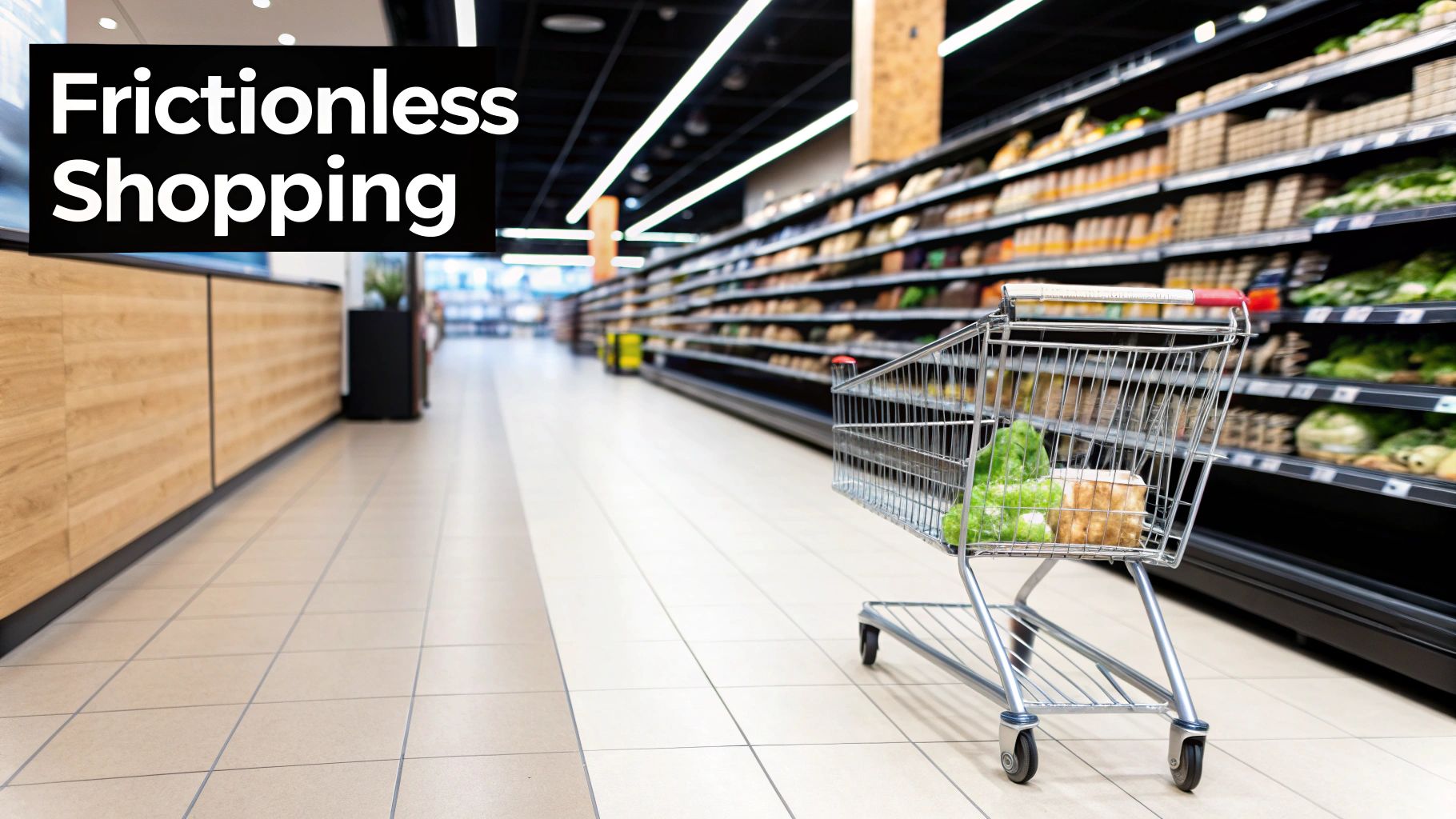
- A Frictionless Customer Journey: IoT enables seamless experiences like grab-and-go checkout, eliminating the single biggest frustration for shoppers—waiting in line. The outcome is higher customer satisfaction and increased visit frequency.
- Optimized Inventory Management: Real-time tracking reduces stockouts and overstock, ensuring capital isn't tied up in unsold goods while maximizing sales opportunities. The outcome is improved cash flow and higher revenue.
- Enhanced Operational Efficiency: Automating tasks like inventory counts and price updates frees up employees to focus on high-value activities, like helping customers. The outcome is lower labor costs and better service.
By transforming static objects into sources of live data, IoT gives retailers the ability to understand and react to their environment instantly. This creates an agile operation that can adapt to changing customer demands and supply chain dynamics.
Ultimately, the Internet of Things in retail creates a smarter, more responsive shopping environment. It empowers retailers to make better decisions, reduce waste, and build stronger customer relationships through superior service and convenience.
High-Impact IoT Use Cases on the Retail Floor
Let's move past theory and look at how the internet of things in retail solves everyday problems on the sales floor. These are practical tools that solve classic retail headaches: endless manual inventory counts, dreaded empty shelves, and checkout lines that snake through the aisles. This directly boosts efficiency, lifts sales, and builds customer loyalty.
Automated Inventory Management
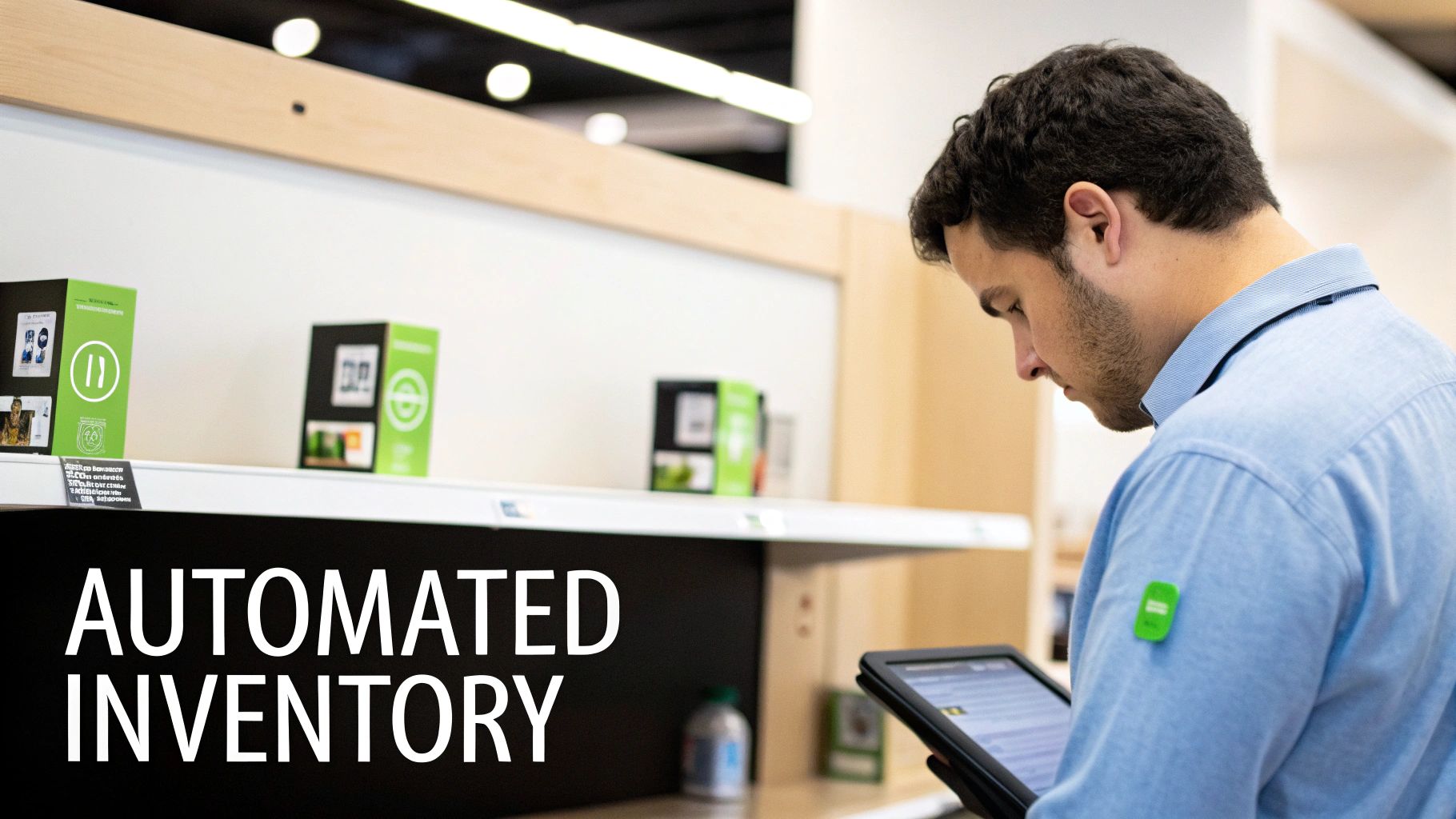
Manual inventory has always been slow and inaccurate. Staff spent hours scanning individual barcodes, yielding a flawed snapshot in time. IoT—specifically RAIN RFID (Radio Frequency Identification) tags—automates this process. Each product gets a tiny chip that can be read wirelessly, without the line-of-sight limits of a barcode. An employee can count thousands of items in minutes just by walking down an aisle, while fixed readers can provide a constant, real-time inventory count automatically.
The business outcomes are immediate:
- Drastically Reduced Labor Costs: The time employees spend on manual counts can be slashed by over 90%, freeing them up to help customers.
- Near-Perfect Inventory Accuracy: Accuracy leaps from an industry average of 65-75% to over 99%, eliminating costly overstocking and understocking.
- Reliable Omnichannel Fulfillment: Knowing exactly what’s in store allows for confident "buy online, pick up in-store" services without disappointing customers.
For a real-world look, consider Walmart. The retail giant requires many suppliers to use RFID tags. This provides incredible inventory visibility, ensuring top-selling products are always on the shelf and making their entire supply chain run smoother.
Smart Shelves and Shelf Analytics
An empty shelf is a lost sale. Smart shelves are the front-line defense against stockouts, using weight sensors or cameras to monitor inventory levels constantly. When an item runs low, the shelf instantly alerts a store associate's device with the exact product and location, enabling replenishment before a customer notices.
Beyond preventing stockouts, smart shelves provide a goldmine of data. They track which items are picked up and put back, spot misplaced products, and offer insights into how different layouts impact sales. This allows retailers to optimize merchandising based on hard data, not guesswork, to maximize sales per square foot.
Frictionless Checkout and In-Store Navigation
Checkout lines are a top complaint for shoppers. IoT is making this pain point disappear with "just walk out" technology, pioneered by Amazon. These systems use a mix of cameras, shelf sensors, and AI to track what a shopper selects. When finished, they simply leave, and their account is charged automatically.
A more accessible version is the smart shopping cart, which has built-in scanners that identify items as they're added. The cart maintains a running total, and the customer can pay on the cart's screen, skipping checkout lanes entirely.
Additionally, IoT beacons enhance the in-store journey. These small Bluetooth devices communicate with a shopper's smartphone app to provide a digital map, guiding them to an item or pushing a personalized offer when they stand in front of a product. This merges the convenience of online search with the tangible experience of a physical store.
IoT Retail Use Cases and Business Outcomes
To tie this together, here’s a direct line from technology to business benefit. Each IoT application solves a specific retail problem to produce a tangible outcome.
IoT Use CaseCore TechnologyPrimary Business OutcomeExample ScenarioAutomated InventoryRFID Tags, Handheld/Fixed Readers99%+ inventory accuracy, reduced labor costsA store associate scans an entire department in minutes, instantly identifying restock needs for online orders.Smart ShelvesWeight Sensors, Computer Vision CamerasEliminate stockouts, improve on-shelf availabilityA shelf of popular soda sends an alert to the stockroom when only three cases remain, preventing lost sales.Frictionless CheckoutComputer Vision, AI, Sensor FusionIncreased throughput, improved customer satisfactionA customer walks into a convenience store, grabs a drink and a snack, and leaves without ever waiting in line.Supply Chain TrackingGPS, Temperature/Humidity SensorsReal-time visibility, reduced spoilage & theftA shipment of fresh produce is tracked from farm to store, ensuring it remains at the optimal temperature throughout.Personalized MarketingBluetooth Beacons, Wi-FiIncreased basket size, enhanced engagementA shopper receives a 15% off coupon for a brand of coffee as they walk down the coffee aisle.
These are strategic tools that address the core challenges of modern retail, from operational efficiency to the customer experience itself.
Optimizing Your Supply Chain with IoT
A smart store is only as strong as the supply chain that stocks it. While much of the buzz around the internet of things in retail focuses on the in-store experience, its power extends deep into the logistics network. IoT injects a new level of intelligence into every link of the chain, from factory to shelf.
This is a fundamental shift from estimates and guesswork to hard, real-time data. It provides instant answers to crucial questions: Where is that shipment right now? Is this perishable item being kept at the right temperature? This visibility is key to slashing costs, cutting waste, and ensuring products are always available for your customers.
Real-Time Asset Tracking and Total Visibility
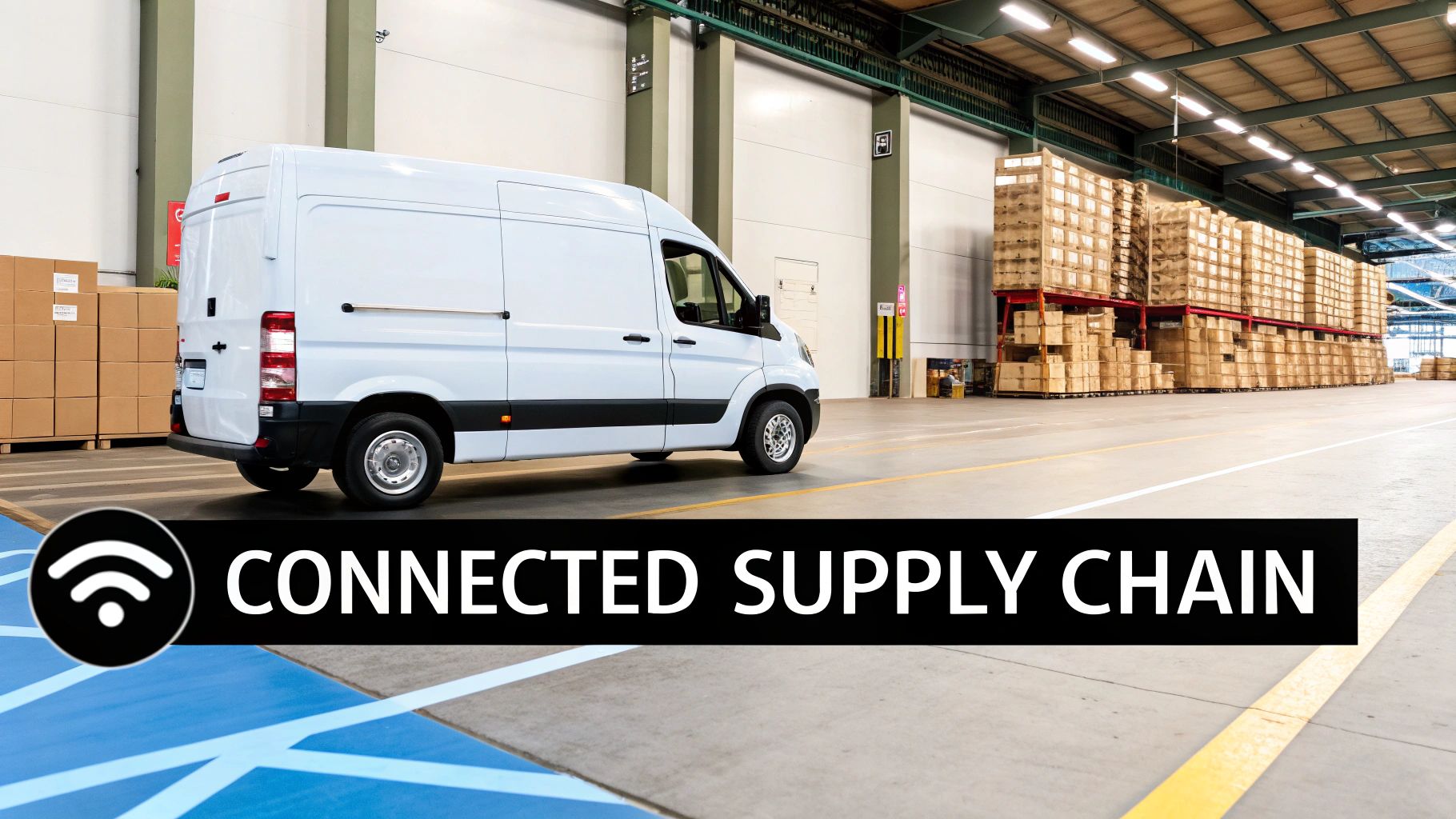
The most immediate win from an IoT-powered supply chain is total visibility. Attaching sensors to pallets, containers, or high-value products provides an unbroken digital trail from origin to destination, illuminating blind spots that once led to lost cargo, theft, and delays.
GPS provides location, and RFID offers identification. A GPS sensor on a delivery truck shows its precise location, while RFID tags on its cargo are scanned automatically as it passes through a warehouse gate. Together, they create a detailed record of every product’s journey. This is especially powerful for perishable goods; sensors can monitor a container's temperature throughout the entire trip, preventing spoilage and ensuring product safety. Managing this time-series data with Snowflake or similar platforms turns a constant stream of sensor readings into actionable alerts.
A connected supply chain changes how retailers manage risk. Instead of discovering a spoiled shipment after the fact, IoT provides the data to prevent these problems, saving millions in potential losses.
Predictive Maintenance for Fleets and Machinery
In logistics, downtime is the enemy. A broken-down truck or a failed warehouse conveyor can create a ripple effect of delays. IoT enables a smarter, proactive approach to maintenance. By placing sensors on vehicles and equipment, retailers can monitor vital signs like engine temperature and vibration patterns. This data is analyzed to spot anomalies that signal an impending failure.
This proactive approach delivers huge advantages:
- Reduced Downtime: Maintenance can be scheduled during off-hours before a catastrophic failure occurs, keeping critical assets running.
- Lower Repair Costs: Fixing a small issue before it becomes a major breakdown is always cheaper and faster.
- Improved Safety: Identifying potential equipment failures early helps prevent accidents in warehouses and on the road.
This ensures the core machinery of your supply chain operates reliably, resulting in a more resilient, cost-effective operation that consistently keeps stores stocked.
Understanding Your Retail IoT Architecture
Smart shelves, checkout-free stores, and real-time tracking are all powered by a well-designed technical backbone. Understanding how these pieces fit together is crucial. Think of it as a journey where data starts on the store floor and ends as a smart business decision, like an automatic restock order. This process turns raw information into profitable action.
Step 1: From the Edge to the Cloud
The first layer of any retail IoT setup is the edge, where the physical world meets the digital one. Edge devices are the eyes and ears of the operation, capturing millions of data points every second.
These devices include:
- Sensors: RFID readers logging inventory, weight sensors on smart shelves, and temperature monitors in delivery trucks.
- Cameras: Computer vision cameras power frictionless checkout, analyze shopper traffic, and check for empty shelves.
- Beacons: Small Bluetooth devices that enable in-store navigation and personalized offers on shoppers' smartphones.
Once a device captures data, a local gateway gathers it from nearby sensors and securely sends it to a central cloud platform. This first step is all about collecting the raw materials for business intelligence.
Step 2: Storing and Processing Raw Data
After data leaves the store, it lands in a centralized cloud environment. Here, the raw information is ingested, sorted, and stored for analysis, creating a massive, organized library of every event across your retail operation.
Modern data platforms like Snowflake are built to handle the high volume and velocity of IoT data. They continuously process information—temperature readings every minute, inventory scans every hour—and store it for easy analysis. This is the foundation everything else is built on.
The point isn't just to hoard data; it's to prepare it for action. By cleaning and structuring information as it arrives, the system ensures you get a fast, accurate answer when you ask a question like, "How many units of this shampoo sold in the last hour?"
Step 3: Turning Data into Actionable Intelligence
This final layer is where the real value is unlocked. Raw data is turned into insights that trigger smart decisions, often through analytics dashboards and Agentic AI systems.
Analytics dashboards provide managers with a clear, visual report on store performance. They can watch sales trends in real-time, check inventory levels, and track supply chain movements from one screen, allowing them to spot problems and opportunities instantly.
More advanced systems use Agentic AI to analyze data streams and make decisions autonomously. For example, an AI agent could monitor smart shelf data and automatically generate a purchase order when stock is low, without human intervention. This closes the loop, turning a simple piece of data into a direct action that drives value. As these systems grow, it's important to understand how simulation and IoT can help mitigate risk as systems grow and become more interconnected.
Your Roadmap for Implementing IoT in Retail
Rolling out the internet of things in retail is a strategic journey, not a simple tech purchase. A successful plan starts small, focuses on tangible results, and builds on a solid foundation for long-term success.
First, resist the urge to do everything at once. Instead of a massive overhaul, pick one high-impact problem. Are inaccurate inventory counts causing stockouts? Are long checkout lines driving customers away? Choose one pain point and launch a small pilot project to tackle it.
Think of this first project as your proof-of-concept. You could deploy RFID tags on a single product category or install smart shelves in one high-traffic aisle. The goal is to prove the technology's value in a controlled setting, measure its return on investment (ROI), and learn what works before considering a larger rollout.
Key Considerations for a Strong Foundation
Once your pilot proves its worth, it's time to scale. Moving from a test to a full implementation requires nailing a few fundamentals.
- Ensuring Robust Data Security: Every IoT device is a potential security risk. Your strategy must include end-to-end encryption, secure network protocols, and tight access controls from day one. This is non-negotiable for protecting your business and your customers' data.
- Planning for Future Scalability: The architecture for one store must work for hundreds. Choose platforms that offer scalable cloud infrastructure and flexible device management to ensure your system can grow with your business.
- Integrating with Existing Systems: New IoT solutions must communicate with your existing enterprise systems, like your Point of Sale (POS) and Enterprise Resource Planning (ERP) software. Proper integration provides a single, unified view of your entire operation.
The most successful IoT implementations are deeply integrated into the core business. When smart shelf data flows directly into your ERP to trigger an automatic purchase order, you're not just collecting data—you're automating value.
Charting Your Path Forward
A methodical, step-by-step approach minimizes risk and maximizes value. North America currently leads the IoT retail market, capturing over 35% of global revenue, largely due to early and strategic adoption of technologies like RFID. You can dive deeper into these key retail IoT industry trends and their drivers.
Ultimately, a successful journey into the internet of things in retail comes down to smart, incremental investments. Start with a clear problem, prove the solution's worth on a small scale, and build on a secure and scalable foundation. This deliberate path allows you to adapt and confidently expand your IoT capabilities, turning your stores into more efficient, responsive, and profitable environments.
Common Questions About IoT in Retail
When retailers explore an IoT strategy, a few key questions always arise regarding implementation, cost, and security. Getting clear answers is the first step toward building a smart, value-driven approach to the internet of things in retail.
What Is the Biggest Barrier to Adopting IoT in Retail
The biggest hurdle is typically the initial investment combined with the complexity of integrating new technology with legacy systems. Most retailers run on established POS and ERP platforms that weren't designed to communicate with a network of smart sensors.
The best way forward is to build a solid business case with a clear return on investment. Start with small, high-impact pilot projects. Pick a single, measurable problem—like chronic stockouts in your most profitable department—and solve it. This proves the technology's value, builds momentum, and keeps the initial risk low.
How Does IoT Improve the Customer Shopping Experience
IoT closes the gap between the convenience of online shopping and the real-world experience of being in a store. It works behind the scenes to make shopping more personal, convenient, and frictionless.
Here’s where shoppers feel the difference:
- Personalized Offers: Bluetooth beacons can send a shopper’s phone a relevant discount just as they walk down a specific aisle.
- Guaranteed Availability: Smart shelves ensure popular items are always in stock, eliminating the frustration of finding an empty shelf.
- Frictionless Checkout: Advanced systems using computer vision and sensors allow customers to walk out with their items, eliminating long checkout lines.
At its core, IoT removes the biggest friction points in the shopping journey. By automating tedious tasks and delivering personalized value, you create an experience that keeps customers coming back.
Is Customer Data Safe with In-Store IoT Devices
Security must be the foundation of any IoT project. A well-designed IoT system is incredibly secure, but this requires a cybersecurity-first mindset.
A reputable solution includes multiple layers of protection, such as end-to-end data encryption to make information unreadable as it travels from a sensor to the cloud. It also means using secure network protocols and strict access controls to lock down the system. Partnering with vendors who comply with data privacy laws like GDPR and CCPA is also crucial for handling customer information ethically and building trust.
Can Small Retailers Benefit from the Internet of Things
Absolutely. The idea that IoT is only for massive chains is a myth. The cost of sensors has plummeted, and scalable cloud platforms let you pay only for what you use, making the technology more accessible than ever.
A small retailer can get a huge return by targeting a specific pain point:
- A local boutique can use RFID tags to save dozens of hours on manual inventory counts.
- A neighborhood grocer can use temperature sensors in refrigerators to prevent thousands of dollars in food spoilage.
- A single apparel store can use smart tags to reduce theft and ensure every size is on the rack.
For small retailers, it's about practical applications that solve an immediate business problem. Start there, achieve a fast ROI, and build on that success as your business grows.


