Healthcare data analytics solutions transform raw information from EHRs, billing systems, and patient monitors into clear, actionable intelligence. Instead of letting data accumulate, these platforms reveal what it means for patient outcomes and operational efficiency. The result is measurable improvements in both the quality of care and financial health.
From Data Overload to Actionable Insight
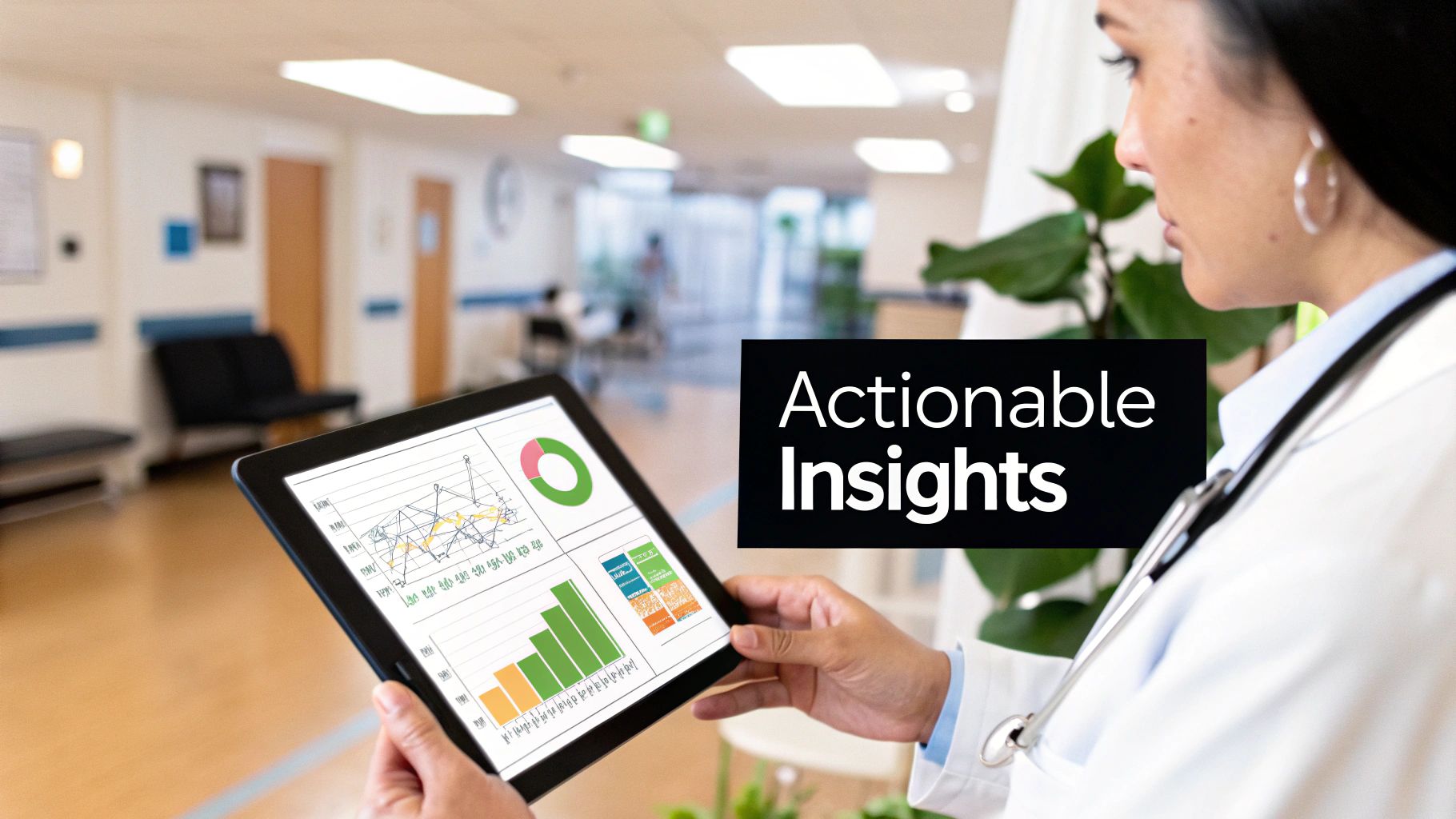
Most healthcare organizations are drowning in data from disconnected silos like Electronic Health Records (EHRs), patient wearables, and financial platforms. This fragmentation makes it nearly impossible to see the complete patient journey or spot operational bottlenecks.
This is where healthcare data analytics solutions deliver value. They act as a central hub, pulling in disparate data streams to create a single, unified view of performance. This empowers leaders to stop reacting to yesterday's problems and start proactively addressing future challenges.
Moving Beyond Simple Reporting
Traditional reports tell you what happened. A modern analytics platform tells you why it happened and what is likely to happen next. This shift from hindsight to foresight is a game-changer. It’s the difference between counting hospital readmissions and accurately predicting which patients are at high risk of returning before they even leave the hospital.
This capability is driving massive market growth. The global healthcare analytics market is projected to climb from USD 46.12 billion in 2025 to USD 177.18 billion by 2032, fueled by a strategic push to improve outcomes. You can explore the market trends and their implications for healthcare systems.
What Real Transformation Looks Like
Adopting a data analytics solution is about fundamentally changing how care is delivered. When implemented effectively, the outcomes are tangible and directly impact the front lines of care.
The goal is a data-driven culture where every decision—from treatment plans to staffing schedules—is backed by clear evidence, empowering teams to achieve better results.
This guide provides a clear roadmap, showing you how to:
- Predict Patient Risks: Identify patients susceptible to sepsis or heart failure, enabling proactive interventions that save lives.
- Streamline Hospital Operations: Optimize operating room schedules, reduce patient wait times, and manage supply chains to cut waste.
- Drive Measurable Improvements: Draw a direct line from your analytics investment to higher care quality and a stronger bottom line.
Driving Real-World Clinical and Operational Wins
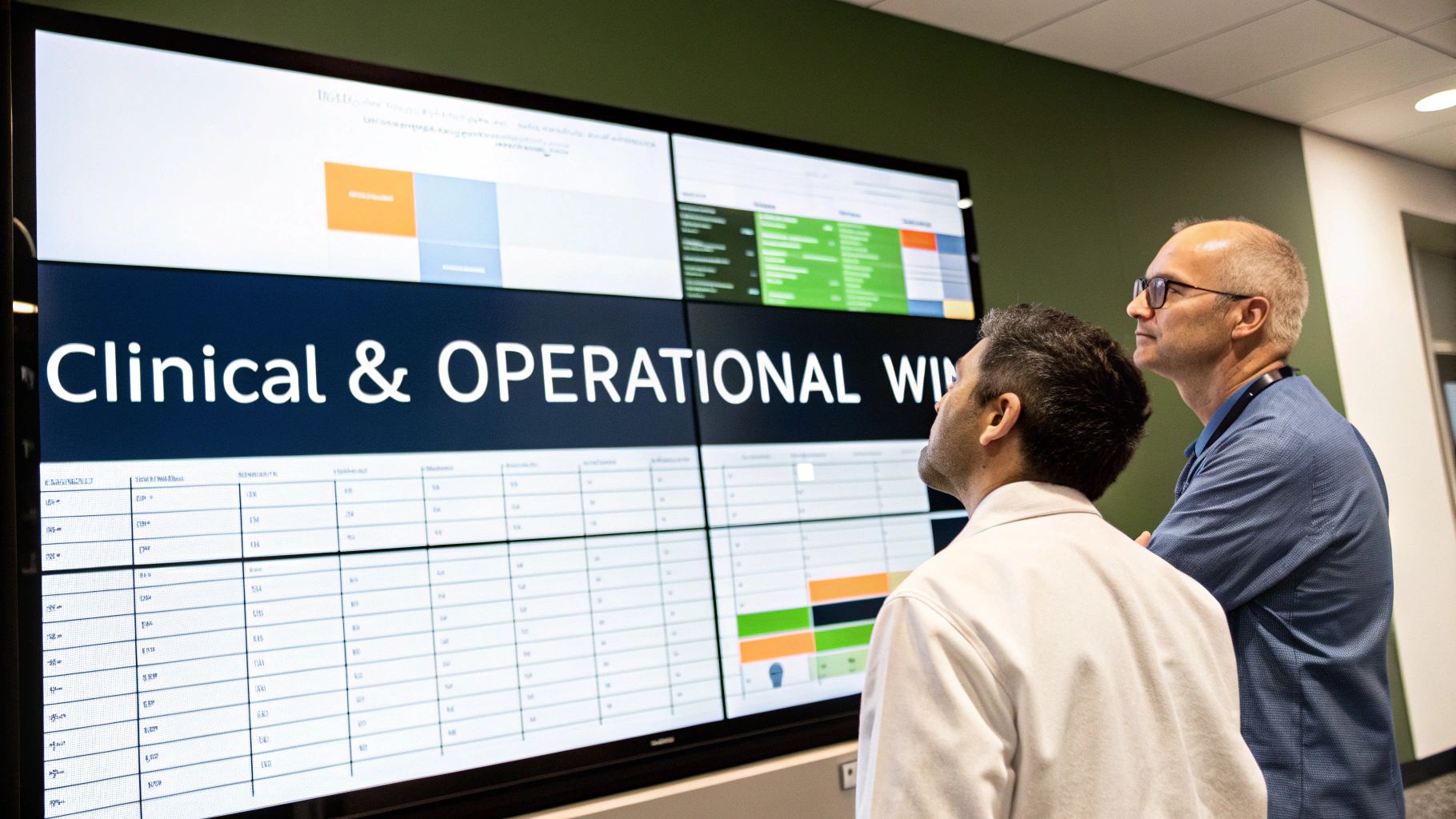
The true measure of a healthcare data analytics solution is its ability to deliver tangible results on the hospital floor. Effective analytics translates theory into practice, directly improving patient care and operational efficiency. It reveals hidden patterns in data, acting as a catalyst for change that saves lives, reduces waste, and builds more resilient health systems.
Better Outcomes Through Clinical Analytics
Predictive analytics shifts care from reactive to proactive. By analyzing patient histories, lab results, and real-time vitals, these systems flag high-risk individuals long before a crisis hits, giving care teams a crucial window to intervene.
Here are specific use cases and their outcomes:
- Early Sepsis Detection: Sepsis is a leading cause of hospital deaths, often due to delayed recognition. Predictive models that scan for subtle warning signs can trigger rapid response protocols, leading to a significant reduction in mortality rates.
- Personalized Treatment Pathways: By analyzing outcomes from similar patient populations, analytics helps clinicians select the most effective treatment protocol for an individual, boosting efficacy and minimizing side effects.
- Reduced Hospital Readmissions: A major health system successfully cut patient readmissions by 18% by deploying an AI model that identified at-risk individuals, allowing for targeted post-discharge follow-up care.
The demand for these capabilities is fueling market expansion. The big data analytics in healthcare market, valued at USD 56.47 billion in 2024, is projected to reach USD 327.57 billion by 2034, driven by the need to harness data for life-saving insights.
Smarter Operations And Resource Management
Beyond the bedside, analytics is crucial for optimizing hospital operations. Inefficiencies lead to higher costs, longer patient wait times, and care delays. Analytics provides the visibility needed to run a more effective and patient-centric organization.
Operational analytics isn't just about cost savings; it's about reallocating time, staff, and supplies to where they matter most: direct patient care.
By analyzing operational data, administrators can pinpoint bottlenecks and waste, enabling smarter decisions that improve performance across the entire organization.
The following table illustrates the concrete outcomes of both clinical and operational analytics.
Clinical vs Operational Analytics Use Cases and Outcomes
Use Case CategorySpecific ApplicationProblem SolvedMeasurable OutcomeClinical AnalyticsPredictive Sepsis AlertsDelayed detection of a life-threatening condition.30% reduction in sepsis-related mortality.Clinical AnalyticsPatient Readmission Risk ScoringHigh rates of costly and preventable patient readmissions.18% decrease in 30-day readmission rates.Operational AnalyticsOperating Room SchedulingUnderutilized ORs and surgical team downtime.15% increase in surgical case volume with the same resources.Operational AnalyticsSupply Chain ManagementStockouts of critical medical supplies and overstocking of others.20% reduction in supply chain waste and inventory costs.
These operational improvements are just as critical as clinical ones. For instance, optimizing OR schedules based on historical data can increase surgical throughput and reduce patient waitlists. Likewise, predictive supply chain models prevent stockouts of vital items, ensuring teams have what they need. Improving these workflows is a core part of digital transformation; you can learn more about our approach to test automation in healthcare to see how quality assurance underpins this process.
Ultimately, clinical and operational wins are interconnected. A well-run hospital is better equipped to deliver excellent care, creating a positive feedback loop that benefits patients and providers alike.
Building a Modern Healthcare Data Engine
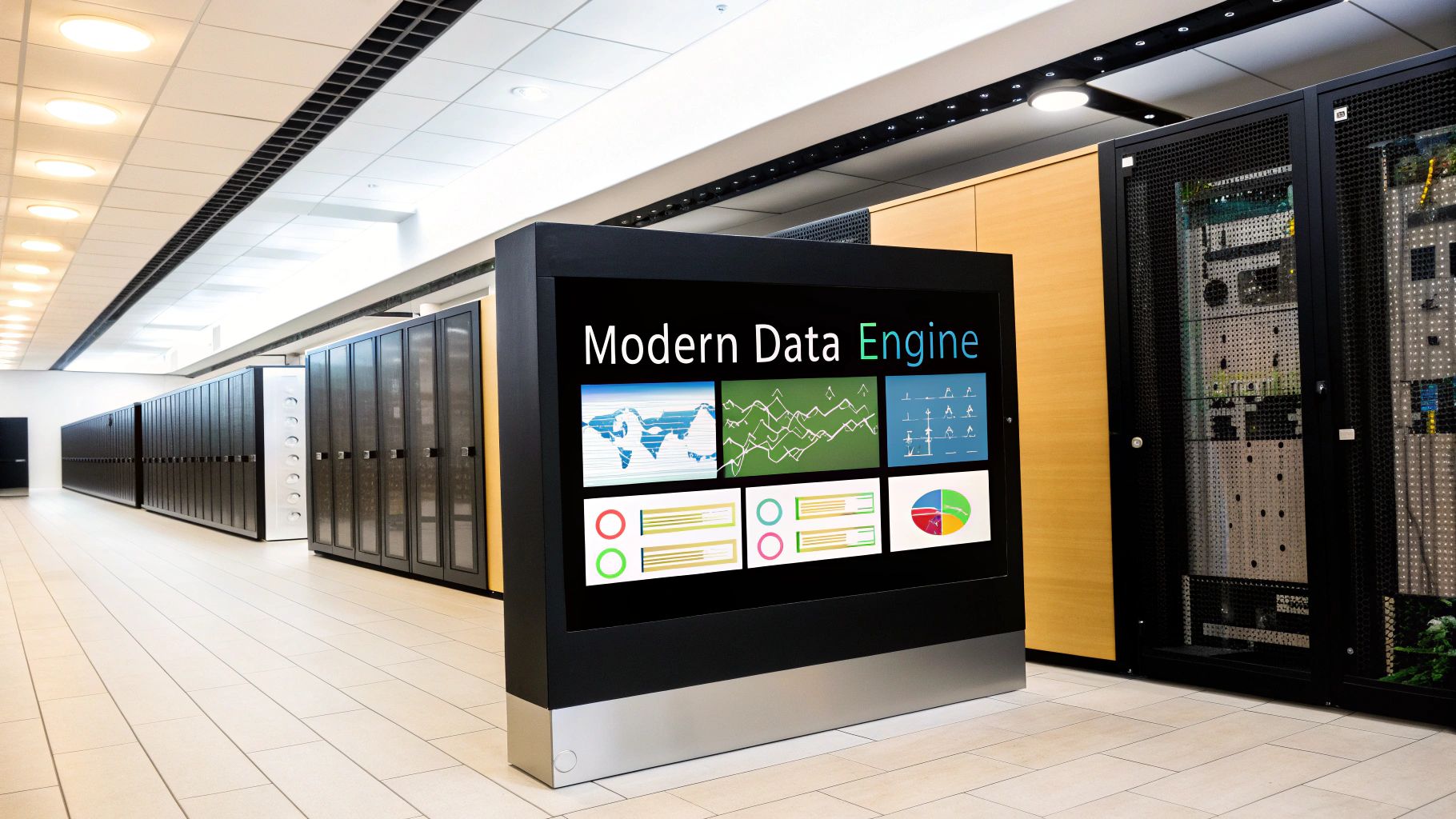
To achieve high-impact outcomes, healthcare data analytics solutions require a modern data platform. Outdated, rigid infrastructure cannot handle the speed, scale, and complexity of today's healthcare information. The foundation for turning data into meaningful action is a flexible, scalable, cloud-based architecture.
Traditional on-premise data warehouses were designed for simple reporting but struggle with diverse data types like real-time vitals or medical images. Modern cloud platforms, in contrast, are built to manage massive volumes of varied data without the high upfront cost of physical hardware. This architectural shift is essential for enabling advanced analytics.
The Core of a Modern Platform
A modern data platform is an ecosystem of integrated components designed to break down data silos. Its goal is to create a single source of truth that connects clinical, financial, and operational data, allowing organizations to see the full picture.
This architecture can handle everything from structured billing codes to unstructured physician’s notes and high-resolution imaging. By unifying this information, leaders can finally understand the connections between clinical activities and their financial impacts.
Moving to a modern data platform is a strategic decision to make data accessible, reliable, and ready for advanced analysis across the entire organization.
The benefits include faster query performance—providing answers in seconds, not hours—and the scalability to handle exploding data volumes. For organizations managing massive data streams, understanding how to manage time-series data with Snowflake provides a blueprint for building these high-performance systems.
Empowering Everyone with Agentic AI
A key innovation on modern data platforms is Agentic AI, which acts as an intelligent assistant, making sophisticated analysis accessible to non-technical users. It provides a conversational bridge to complex datasets.
Instead of writing code, a hospital administrator can ask in plain English, "Which departments had the longest average patient wait times last quarter?" The AI queries the platform, performs the analysis, and returns a clear, data-backed answer, often with visualizations.
This democratizes data insights, empowering frontline managers and clinical leaders to make informed decisions without waiting days for a report. It transforms analytics from a specialized back-office function into a daily operational tool, fostering a truly data-informed culture.
Mastering Data Governance and HIPAA Compliance
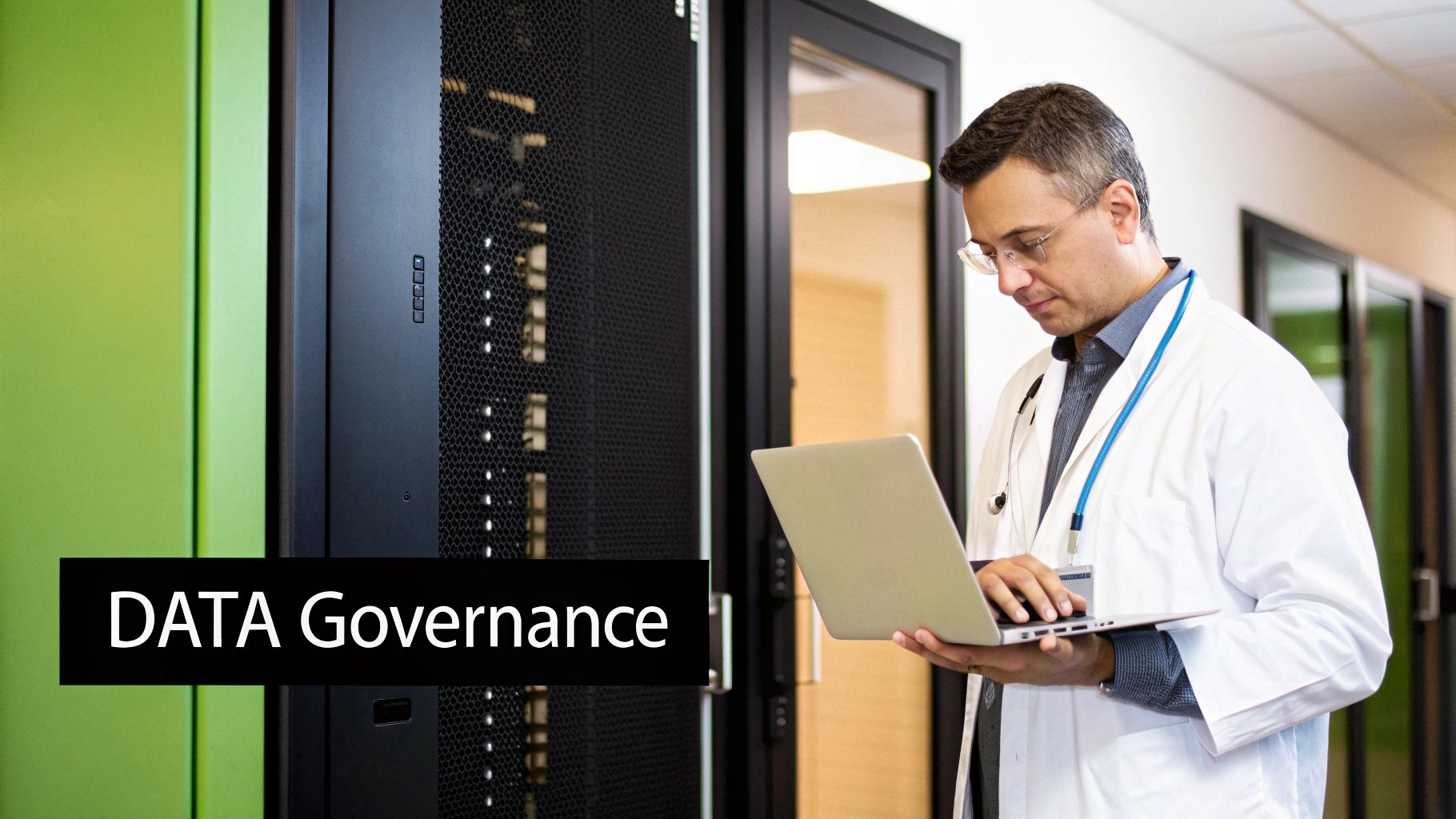
In healthcare, trust is non-negotiable. As healthcare data analytics solutions become more powerful, the responsibility to protect patient information multiplies. Strong security and compliance are essential for maintaining the confidence of patients, clinicians, and partners. This requires robust data governance—a complete rulebook that defines who can access what data, when, and why, ensuring every action is authorized and auditable.
This meticulous oversight is critical as the market grows. The healthcare big data analytics market, valued at USD 46.80 billion in 2024, is projected to reach USD 123.51 billion by 2033, driven by AI technologies that demand the strictest governance. You can explore the forces shaping this market expansion.
The Three Pillars of Data Governance
Effective data governance is built on three essential pillars. A weakness in any one of them can lead to flawed insights and serious compliance violations.
- Data Quality and Integrity: Insights are only as reliable as the underlying data. This pillar involves automated error-checking, regular data cleansing, and standardized data entry protocols to ensure accuracy.
- Access Control and Security: Not everyone needs access to all data. Role-based access controls (RBAC) enforce the principle of "least privilege," ensuring clinicians and staff only see the patient data necessary for their roles, minimizing breach risk.
- Auditing and Traceability: A clear, unchangeable audit trail is crucial. Detailed logs must record who accessed data, what they did, and when, providing essential information for security investigations and compliance verification.
Essential Safeguards for HIPAA Compliance
The Health Insurance Portability and Accountability Act (HIPAA) sets the standard for protecting patient health information (PHI). A modern analytics platform must have technical safeguards built into its core architecture.
True compliance is an active, ongoing process requiring a combination of technology, policy, and a vigilant culture to protect patient data at every turn.
Key technical measures for HIPAA compliance include:
- End-to-End Encryption: All PHI must be encrypted both "at rest" (in a database) and "in transit" (moving across a network), making it unreadable to unauthorized parties.
- Robust Data Anonymization: For population-level analysis, techniques like de-identification strip personal identifiers from data. This enables powerful research without compromising individual privacy.
- Secure Access Protocols: Enforcing strong passwords, requiring multi-factor authentication (MFA), and implementing automatic logoffs create critical layers of defense against unauthorized access.
By embedding these principles and safeguards into your healthcare data analytics solution, you build a trusted environment, giving you the confidence to unlock your data's full potential while ensuring patient information remains secure.
Your Roadmap to a Successful Analytics Program
Implementing a healthcare data analytics solution is a journey of manageable steps, not a single leap. A successful rollout connects technology to clear organizational goals to drive measurable change. This four-stage roadmap helps you avoid common pitfalls and achieve a data-informed culture more quickly.
Stage 1: Define Your Goals and Secure Buy-In
Before evaluating vendors, define what a "win" looks like. Are you trying to reduce patient readmissions, optimize OR schedules, or streamline your supply chain? Pinpoint a high-impact, measurable objective.
Next, get key stakeholders on board by framing the discussion around their goals. Explain how analytics will help clinical and administrative leaders hit their targets. This early alignment builds the momentum needed to drive the project forward.
Stage 2: Choose the Right Partner
With clear goals, you can find the right vendor. A great partner is more than a software provider; they are an experienced guide with deep healthcare expertise.
Focus your evaluation on these key areas:
- Scalability and Integration: Can the system grow with your data volumes and integrate cleanly with your existing EHR using standards like HL7 and FHIR?
- Healthcare Expertise: Does the vendor understand clinical workflows and the non-negotiable demands of HIPAA compliance?
- Support and Partnership: Do they offer robust training, implementation support, and a collaborative approach to problem-solving?
A great technology partner doesn't just sell you software; they invest in your success. They should feel like an extension of your team, committed to helping you achieve your clinical and operational objectives.
A structured evaluation process ensures you make an objective, informed decision.
Analytics Vendor Evaluation Checklist
This checklist provides a framework for evaluating potential healthcare data analytics vendors. Using a consistent set of criteria helps you make an objective, informed decision that aligns with your long-term strategic goals.
Evaluation CriteriaKey Questions to AskImportance (High/Medium/Low)Technical CapabilitiesDoes the platform support real-time data ingestion and processing? How easily does it integrate with our EHR (e.g., Epic, Cerner)?HighHealthcare ExpertiseCan they provide case studies specific to our challenges (e.g., ED throughput, readmission reduction)? Is their team staffed with clinical informaticists or healthcare veterans?HighData Governance & SecurityHow does the solution ensure HIPAA compliance? What are the protocols for data encryption, access control, and audit trails?HighUsability & AdoptionIs the interface intuitive for non-technical users like clinicians and department managers? What training and support resources are provided?MediumScalability & Total CostWhat is the pricing model (per user, per bed, etc.)? Are there hidden costs for data storage, integration, or support? Can the platform grow with us?MediumPartnership & SupportWhat does the implementation process look like? What is their average customer support response time? Can we speak with current clients?High
By systematically working through these questions, you can build a clear picture of which vendor is truly the best fit for a long-term partnership, not just a short-term purchase.
Stage 3: Start Smart with a Pilot Project
Avoid the "boil the ocean" approach. Instead, start with a focused pilot project that can deliver a quick, undeniable win. A great example is building a model to identify patients at high risk for sepsis—a clinically critical project with clear metrics that can demonstrate value quickly.
A successful pilot proves the value of analytics to the organization, making it easier to secure funding for future phases. It also serves as an invaluable training ground for your team.
Stage 4: Scale and Grow Methodically
Once your pilot delivers a clear victory, use what you learned to create a repeatable implementation playbook. Methodically expand the solution to other departments and use cases. This phased rollout builds momentum, allowing each department to adopt the new tools and act on the insights. By growing your analytics program one success story at a time, you build a lasting, data-driven culture that continuously improves patient outcomes and operational efficiency.
Answering Your Toughest Questions About Healthcare Analytics
Even with a clear roadmap, leaders often have practical questions before investing in healthcare data analytics solutions. Here are straightforward answers to the most common concerns.
What's the Real ROI on These Solutions?
Return on investment is measured in both financial savings and clinical improvements. Financially, ROI comes from reducing operational waste—optimizing staffing, cutting supply chain costs, and reducing claim denials. Clinically, better outcomes like lower readmission rates and fewer medical errors help avoid costly penalties and enhance your reputation. Most organizations that target high-impact use cases first see a positive ROI within 18 to 24 months.
A successful analytics program pays for itself by turning data into decisions that directly improve patient care and financial health. The key is to connect every analytics initiative to a clear, measurable business or clinical outcome.
How Do We Even Start with All Our Disconnected Systems?
This is the starting point for nearly every healthcare organization. The solution is to adopt a modern data integration strategy, typically on a cloud platform capable of pulling data from disparate sources like EHRs, billing systems, and labs.
Start small with a pilot project. Identify two or three critical data sources needed for a single, high-value use case. Modern data ingestion tools can create a centralized repository for that specific purpose, allowing you to prove value quickly. Once the pilot succeeds, you can expand by incorporating more data sources.
Aren't These Solutions Just for Huge Hospital Systems?
Not anymore. While large systems were early adopters, the rise of scalable, cloud-based Software-as-a-Service (SaaS) platforms has made advanced analytics accessible and affordable for organizations of all sizes. Smaller clinics and hospitals can now leverage powerful healthcare data analytics solutions without a massive upfront investment or a large in-house IT team.
Modern platforms enable smaller practices to:
- Analyze patient populations to identify and close care gaps.
- Optimize appointment scheduling to maximize provider time.
- Improve billing accuracy to maintain healthy cash flow.
The strategy is the same regardless of size: choose a solution that can grow with you and focus on solving your most pressing problems first.


