
A release is ready, but it sits in a queue. Developers wait for environment approval, operations reviews deployment risk, security requests another evidence pack, and the business watches a small change miss its commercial window. The organization has invested in cloud services, CI tooling, and automation, yet delivery still depends on handoffs and individual workarounds.
That's the point at which DevOps transformation needs a different question. Don't ask which tool to buy next. Ask which business outcome the change should improve, how you'll measure it, and what risk you're willing to accept while the organization learns.
Why DevOps Transformation Is an Outcome Game Now
DevOps becomes valuable when it makes software delivery faster without making production less reliable. A team that deploys frequently but creates incidents, emergency fixes, and customer disruption hasn't improved its operating model. It has moved effort from planned delivery into unplanned recovery.
The DORA program made this trade-off measurable through four core metrics: deployment frequency, lead time for changes, change failure rate, and mean time to restore service. In the 2017 State of DevOps report, high performers deployed on demand and multiple times per day, normalized to about 1,460 deployments per year, while low performers averaged 32 deployments per year. High performers also had change lead time of less than one hour, compared with one week to one month for low performers, a difference the report described as 440 times faster.

Speed needs a stability boundary
The same logic applies to an enterprise data platform. A Snowflake workload may support forecasting, fleet analytics, or operational dashboards. Faster changes can improve decisions, but a poorly tested schema migration can break downstream models, delay reporting, or compromise confidence in the data.
The current benchmark has also evolved. The 2024 framework describes elite performance as on-demand deployment, lead time under one day, change failure rate around 5 percent, and recovery from failed deployments in under one hour, while adding rework rate to capture unplanned deployments used to fix user-facing bugs. The 2024 DORA report summary shows why transformation leaders need both delivery and recovery measures, not a single productivity score.
Practical rule: Every transformation initiative should name the outcome, the DORA metric it should influence, and the guardrail that prevents faster delivery from becoming higher operational risk.
The roadmap is therefore simple in principle, though demanding in execution. Baseline the current value stream, choose one pilot with visible business value, remove its largest bottlenecks, and scale only the practices that produce repeatable outcomes. This approach also exposes the cost of getting the sequence wrong. The 2025 DevOps Migration Index found that 37% of organizations lost more than a quarter of their migration budgets to failed or abandoned initiatives, while 60% missed revenue opportunities because migrations delayed product releases and extended sales cycles.
Building Your Enterprise DevOps Transformation Roadmap
Start with the value stream, not the platform diagram. Pick a service or product that has a clear owner, meaningful release friction, and a business stakeholder who will review outcomes. A customer-facing API, a Snowflake ingestion pipeline, or a manufacturing analytics service can all work, provided the team can trace a change from commit to production use.
Baseline before changing the system
Record the four DORA metrics for the pilot using the definitions in the DORA metrics guide. Don't estimate from memory. Pull deployment events from the delivery system, commit and pull request timestamps from version control, incident data from the service desk, and rollback or hotfix events from release records.
Then map the waiting time. Look for manual environment creation, approval queues, flaky tests, unclear ownership, undocumented rollback steps, and data dependencies that sit outside the team's control. A metric tells you where performance is weak. A value-stream map helps you decide what to change.
Set decision gates
A practical roadmap has three gates:
- Baseline gate: The product owner, engineering lead, operations lead, and security representative agree on the current measurements and the problem statement.
- Pilot gate: The team has a small backlog of bottleneck fixes, an accountable service owner, and an agreed release and incident process.
- Scale gate: The pilot shows repeatable improvement without breaching reliability or security guardrails, and another team can adopt the pattern without direct intervention from the transformation team.
Use short planning horizons, but don't turn them into arbitrary promises. The 2024 DORA report, discussed in Google Cloud's announcement, notes that the metrics have been used since 2013 and are based on a decade of research into high-performing technology teams. That makes them useful for trend management, not as a reason to pressure teams into gaming releases.

Fund capability, not a tool catalog
Create a small reference path for source control, CI, artifact management, infrastructure as code, secrets, observability, and incident response. Standardize the controls that protect the enterprise, while allowing teams to choose implementation details where the risk is low.
Budget for migration analysis, refactoring, testing, data validation, and operational support. Tool licensing is only one part of the cost. If the pilot needs specialized platform or cloud expertise, organizations expanding their regional hiring can use a resource such as find LATAM DevOps talent to locate relevant engineering capability.
Assign one executive sponsor, one product owner, one technical owner, and one platform representative. Review the DORA trend and business outcome together. If the numbers don't move, stop adding tools and revisit the bottleneck.
Culture Change and Team Design That Actually Unblocks Flow
Tools don't remove ownership gaps. A pipeline can automate builds and deployments while developers still wait for an operations team to approve routine changes, security reviews every release as a special event, and no one owns the customer impact after deployment.
The operating model has to make the desired behavior normal. Developers need visibility into production health. Operations needs a voice in service design. Security needs controls that run in the same workflow as tests and release checks. Product leaders need to prioritize reliability work alongside features, rather than treating incidents as an operational issue detached from roadmap decisions.
Design around the flow of value
A stream-aligned team owns a product or service from planning through production feedback. A platform team provides reusable paths for deployment, observability, identity, and infrastructure. An enabling team helps product teams learn capabilities they don't yet have, then reduces its involvement as those capabilities become routine.
This model works only if platform engineering avoids becoming a new ticket queue. A platform team should publish paved paths with clear interfaces, documentation, service templates, and measurable adoption. Product teams should be able to use those paths without negotiating every deployment.
Shared ownership means the team that changes a service stays connected to the consequences of that change.
Make learning part of delivery
Blameless incident reviews should focus on system conditions, decision context, and corrective actions. They shouldn't become a ritual where the organization documents an incident and then returns to the same incentives. Assign owners to follow-up work, connect it to the product backlog, and review completion alongside feature work.
Use team rituals that reinforce flow:
- Planning: Include operations and security concerns before implementation begins.
- Reviews: Demonstrate operational behavior, not only functional behavior.
- Deployments: Make release events visible and reversible.
- Retrospectives: Examine waiting time, failure patterns, and unclear ownership.
- Leadership reviews: Discuss DORA trends, customer impact, and blocked work together.
Skill development also needs capacity. Pair engineers on infrastructure changes, let application teams contribute to platform improvements, and use the pilot as a teaching environment. A transformation that depends on a few specialists won't scale, even if the initial implementation looks polished.
Automating Delivery With CI/CD IaC and Snowflake Data Patterns
The technical system should make the safe path the easiest path. Start with version control, reproducible builds, automated tests, and deployable artifacts. Then connect infrastructure, application delivery, data changes, and production feedback into one traceable workflow.
Build a pipeline that proves readiness
A useful commit path includes formatting and lint checks, unit tests, dependency and image scanning, artifact creation, and metadata that identifies the source revision. Add integration tests where services interact, contract tests where APIs have independent owners, and end-to-end checks only for journeys that need them.
Trunk-based development reduces long-lived divergence, but it requires disciplined integration. Keep changes small, use feature flags for incomplete functionality, and make rollback or roll-forward a tested operation. Progressive delivery can expose a change gradually while monitoring error behavior, latency, and business signals.
A pipeline review should answer five questions:
- Artifact: Can you identify exactly what was built and from which revision?
- Environment: Are development, test, and production differences explicit?
- Data: Can schema and migration changes be tested without corrupting shared data?
- Release: Can the team stop or reverse a change without opening a manual escalation?
- Evidence: Can security and compliance teams retrieve the required history from the workflow?
Treat infrastructure as an application
Store Terraform, Pulumi, Kubernetes manifests, and cloud configuration in version control. Review plans before applying changes, separate reusable modules from environment-specific values, and detect drift rather than assuming the live environment matches the repository.
Standardize identity, network boundaries, secrets handling, logging, tagging, and policy enforcement. Let teams retain autonomy over service-level configuration where a shared standard doesn't reduce risk. The objective isn't uniformity for its own sake. It's predictable operations and a clear ownership boundary.
Connect application and data delivery
A Snowflake-centered platform often combines batch ingestion, streaming or event-driven workloads, time-series data, and analytics products. Treat each path as a deployable dependency with its own tests and operational signals.
For example, an IoT pipeline may validate event shape before loading data, apply controlled schema changes, test transformations against representative fixtures, and publish freshness and quality signals for downstream consumers. An analytics application can deploy code and data-model changes through coordinated release metadata, while access policies remain managed through reviewed infrastructure definitions.
Snowflake expertise is useful when the transformation spans application engineering, data architecture, and operational governance. Faberwork LLC is one option for organizations seeking a partner that works across Cloud Solutions, DevOps, and Snowflake-centered data solutions, including analytics, time-series, and IoT platforms. Teams evaluating that model can also review collaborating with Faberwork as a Snowflake partner.
Measuring Success With Observability SRE and DevSecOps Guardrails
A delivery pipeline tells you that a change was released. Observability tells you what happened afterward. Enterprise teams need both views because a green build doesn't prove that users can complete a transaction, data is fresh, or a dependent service is healthy.
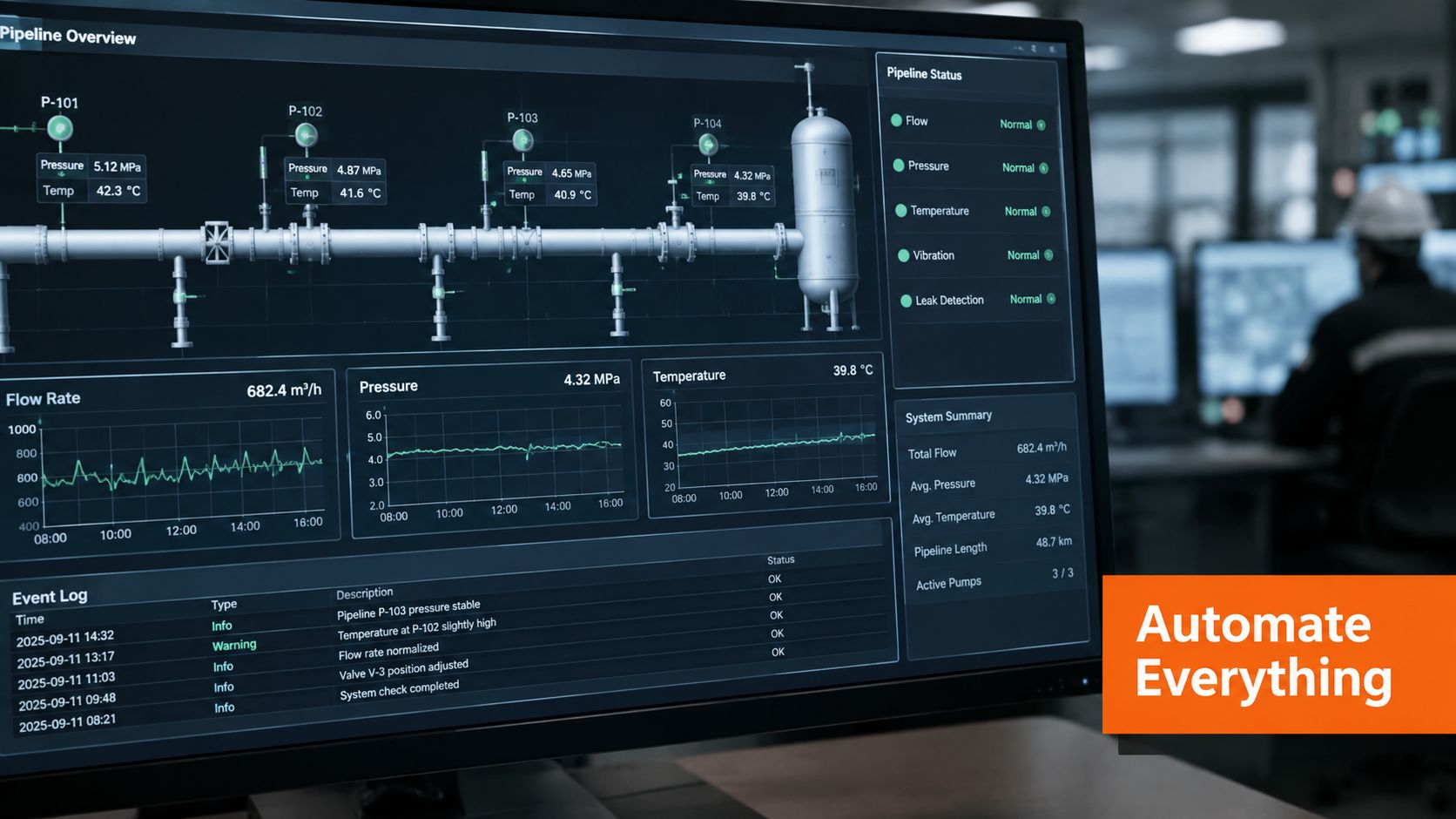
Instrument the service around user and business journeys. Capture metrics, structured logs, and traces with consistent ownership metadata. Link alerts to runbooks, dashboards, recent deployments, and the person or team responsible for response. For a Snowflake workload, include ingestion freshness, failed transformations, query behavior, warehouse usage, and downstream data-product impact.
Use DORA as a balanced scorecard
The four DORA metrics separate throughput from stability. Deployment frequency and lead time describe how quickly the team moves changes. Change failure rate and time to restore service show whether the team can operate those changes safely. The AWS explanation of change failure rate defines it as the percentage of deployments that cause a production failure requiring immediate remediation, such as a rollback or hotfix.
MetricElite targetEnterprise guardrailDeployment frequencyOn demand or multiple times per day, as described in the DORA performance bandsDon't reward frequency when change failure rate or user-facing incidents worsenLead time for changesUnder one hourReduce queue time and approval latency before demanding more outputChange failure rate0 to 15%Investigate rollback, hotfix, and remediation patterns rather than hiding failuresTime to restore serviceRapid restoration, with elite guidance focused on recovery in under one hourPrioritize detection, ownership, rollback quality, and learning
The table gives direction, not a universal quota. A team handling regulated financial workflows may choose a slower release path than an internal service, provided the decision is explicit and the service remains observable and recoverable.
Put SRE and security into the same loop
Define service-level objectives around availability, latency, freshness, or successful transactions. Use error budgets to decide when feature delivery should pause for reliability work. Incident response should include clear severity levels, an on-call owner, escalation paths, and a review process that turns recurring toil into engineering work.
DevSecOps guardrails belong earlier in the workflow. Scan dependencies and container images, enforce least-privilege access, keep secrets out of source control, and express policy as code where possible. Sign and verify release artifacts when the threat model requires it. Security should create evidence automatically, not depend on a manual audit scramble after delivery.
Review the dashboard weekly with engineering, product, operations, and security. The useful question isn't whether a team is “high performing.” It's whether delivery is becoming more predictable, failures are easier to recover from, and customers experience fewer surprises.
Avoiding Pitfalls and Scaling What Works
The most common failure is optimizing the visible part of delivery. Teams celebrate more deployments while ignoring failed changes, slow recovery, unstable tests, and operational fatigue. The LinearB DevOps benchmark library reports that elite teams deploy above 1.2 times per service and keep change failure rate under 1%, based on a dataset of more than 8.1 million pull requests across 4,800 teams in 42 countries. Those figures are useful as benchmark context, not as a reason to force every service into the same release pattern.
A second failure is treating migration as a technical relocation. The migration evidence cited earlier shows how budget loss and delayed revenue can follow abandoned or delayed initiatives. Put a value owner on modernization, define what will be retired, and measure business exposure during the transition.
Keep AI behind a healthy workflow
AI-assisted coding, testing, operations, and incident analysis can amplify an organization's existing behavior. DORA's 2025 research publications describe AI as an amplifier that strengthens both high-performing and struggling organizations. If ownership is unclear, tests are weak, and deployment controls are inconsistent, AI can increase the volume of changes without improving outcomes.
Use AI after the workflow has reliable interfaces, meaningful telemetry, review standards, and security controls. Let it suggest changes or summarize signals, but keep humans accountable for production decisions and policy exceptions.
Use a pilot that can survive scrutiny
A practical pilot includes:
- One value stream: A service or data product with a named business outcome.
- One accountable team: Product, engineering, operations, and security responsibilities are explicit.
- One baseline: DORA measurements plus service-level and data-quality signals.
- One bottleneck backlog: Work ordered by impact on flow, risk, and customer experience.
- One review rhythm: Weekly metric review and regular blameless learning.
- One scale decision: Expand only when another team can adopt the pattern with limited central support.
Technical debt deserves the same discipline. Teams can use managing technical debt in risk control to frame debt as an operational and business risk rather than an unbounded cleanup project. For continuity planning, infrastructure leaders may also find protect cloud infrastructure with Server Scheduler useful when assessing scheduled cloud resources and recovery responsibilities.
The transformation is working when teams can deliver, detect, recover, and learn without depending on heroics.
Start with one value stream this quarter. Baseline its DORA metrics, document the largest waiting points, and choose a pilot owner with authority to change the workflow. Then bring product, platform, security, and operations into the first review, and fund the smallest set of changes that can improve delivery while preserving stability.
Contact Faberwork to discuss an outcome-first DevOps transformation roadmap for your cloud, application, or Snowflake data platform. Bring one release path that feels slower or riskier than it should, and use that value stream to define the baseline, pilot, and measurable next step.


