
The dashboard refreshes on schedule. The model retrains overnight. Yet, during the board meeting, the finance leader asks why revenue differs from the number in the operating report, and nobody can explain which source, transformation, or business rule produced either figure. The technology team delivered pipelines, but the business still lacks confidence in its decisions.
That gap is where data engineering services earn their place. The deliverable isn't another workflow that technically completes. It's a reliable data product with clear ownership, observable quality, documented lineage, and freshness that matches the decision it supports. Buy engineering around those outcomes, and your data platform becomes useful infrastructure. Buy pipeline volume alone, and you'll create more assets for people to distrust.
Why Most Data Programs Ship Pipelines but Still Miss Decisions
A retailer can have application data landing in a warehouse, customer events streaming into a platform, and financial data transformed into polished tables. The executive dashboard may load without an error. Still, a missing late-arriving transaction, a changed product identifier, or an untracked definition of “active customer” can make the result unsuitable for a board decision.
The finance leader doesn't care that the orchestration job succeeded. They need to know whether the number is complete, current, reconciled, and tied to an accountable owner. That means the engineering service must expose freshness, accuracy, lineage, and incident status, not merely report a green pipeline badge.
A 2023 global survey of more than 450 data and analytics professionals found that 77% identified data-driven decision-making as the leading goal for their data programs, while only 46% rated trust in their data as high or very high (Precisely reports on data quality and trusted data). The strategic intent is clear. The operating model isn't keeping up.

The symptom pattern buyers should recognize
When pipelines run but decisions fail, the symptoms usually appear together:
- Conflicting metrics: Finance, sales, and operations use different definitions for the same measure.
- Unclear ownership: Nobody knows which team must fix a broken source or certify a critical dataset.
- Invisible degradation: Data becomes stale or incomplete without triggering an actionable alert.
- Untraceable outputs: Analysts can't move from a dashboard number back to its source and transformation logic.
- Operational hesitation: Leaders delay decisions because every important figure requires manual reconciliation.
Treating data as a product changes the question. Instead of asking whether the pipeline delivered a table, ask whether the table met its service-level objective and enabled a decision without emergency investigation. Teams scaling dashboards across clients can also use practical guidance on scaling dashboards across clients to keep metrics consistent as reporting expands.
Practical rule: A critical dataset isn't complete when it lands. It's complete when its users can trust what it means, where it came from, and whether it's fit for the decision at hand.
What Data Engineering Services Actually Cover
Think of an enterprise data platform as a utility. Pipes move the material, treatment removes harmful defects, meters reveal performance, and service operators respond when supply fails. Data engineering follows the same sequence, but the utility is information used by people, applications, analytics, and AI systems.
Start with movement and structure
Ingestion brings data from applications, APIs, files, event streams, sensors, and operational databases into controlled landing areas. The design choice depends on the decision. Batch ingestion can serve scheduled finance reporting, while streaming may be necessary for operational alerts or event-driven applications.
Transformation turns inconsistent source records into usable business entities and metrics. Engineers standardize formats, reconcile identifiers, join related data, apply business rules, and create analytical models. It is at this stage that technical logic becomes business meaning, so transformation code needs version control, tests, documentation, and review.
Storage and access determine who can use the data and how quickly. A Snowflake warehouse, a lake, operational database, or API may serve different consumers. The right architecture preserves raw evidence while exposing curated data products with predictable access patterns.
Add control before adding scale
Validation checks whether records meet expected schemas, ranges, relationships, and business rules. That control can't be limited to an initial ingestion test. Engineers need checks at landing boundaries, transformation stages, and delivery points, with alerts that identify the failing dataset and responsible owner.
A peer-reviewed analysis of 75 enterprise data-quality assessments found that, on average, 47% of recently created data records contained at least one critical error, while only 3% of assessed data-quality scores reached an acceptable threshold of at least 97% (peer-reviewed enterprise data-quality analysis). Centralizing flawed records doesn't make them trustworthy. It makes the errors easier to reuse.
Governance supplies definitions, access policies, retention rules, ownership, lineage, and auditability. Delivery then exposes certified datasets to dashboards, analysts, models, applications, and agents. Even the collection layer matters. Teams working with public or semi-structured sources should understand the practical considerations of using Python for data scraping, including repeatability, parsing controls, and responsible handling of source changes.
For a service partner, the scope should include architecture, implementation, testing, documentation, operational monitoring, and post-launch support. A useful starting point is Faberwork's services, where buyers can assess how data engineering fits alongside application, automation, and platform work.
The Five Capability Lanes Buyers Should Map
A vendor can describe the same engagement as “modernization,” “platform engineering,” or “analytics enablement.” Those labels aren't useful for procurement. Map the work across five capability lanes, then ask what evidence proves maturity in each lane.
Capability LaneKey Buyer QuestionMaturity SignalBusiness OutcomeIngestionCan the service capture every required source reliably?Recovery logic, schema-change handling, and source coverage are documentedComplete and timely informationTransformationAre business rules reproducible and reviewable?Versioned models, dependency graphs, and automated tests existConsistent metrics and lower reconciliation effortQuality and observabilityHow will we know data is wrong or late?Freshness, completeness, accuracy, and volume checks produce actionable alertsFaster incident detection and fewer bad decisionsGovernance and lineageCan users prove what a metric means and where it came from?Owners, definitions, policies, and end-to-end lineage are maintainedSafer access and stronger decision confidenceDelivery to analytics or AICan consumers use certified data without bespoke intervention?Curated products, semantic context, access controls, and evaluation data are availableFaster reporting, automation, and model adoption
Use evidence, not architecture diagrams
Ask the vendor to demonstrate a failed load, a schema change, and a late source record. A mature team should show how the platform detects the event, identifies affected products, routes the incident, preserves lineage, and confirms recovery. A slide showing tools isn't evidence.
The same test applies to AI. Request an example of how a generated answer identifies its source records, applies access policy, and handles missing or conflicting context. If the response focuses only on model connectivity, the service is probably solving integration rather than reliability.
Score the product after launch
Your evaluation should continue after implementation. Require a named owner for each critical data product, a documented freshness target, an accuracy and completeness policy, an incident route, and a review cadence. The winning provider isn't the one that promises the most pipelines. It's the one that can show how those pipelines become dependable products.
How Snowflake and Agentic AI Shape Delivery
Snowflake can provide a strong center for an enterprise data platform, but it doesn't remove engineering responsibility. Storage, compute separation, streams, tasks, Snowpark, access controls, and warehouse capabilities create platform primitives. Your team still has to define source contracts, transformation behavior, quality thresholds, semantic meaning, and operational accountability.

Build the stack in layers
Start with raw data and controlled ingestion. Use Snowflake storage and compute according to workload needs, then apply streams and tasks where change capture or scheduled orchestration fits the operating model. Use Snowpark when transformation or machine-learning logic benefits from processing close to governed data.
Then add observability around jobs and products. Track freshness, row counts, schema changes, quality dimensions, dependencies, and incidents. Only after those controls work should you expose curated context to an agent.
Atlan's 2025 research reported that 97% of organizations surveyed faced context gaps around definitions, quality, or trust that blocked AI from scaling, while only 39% cited security and access controls as the scaling blocker (Atlan's research on enterprise data and AI). Security still matters, but the bigger obstacle is often whether the agent can understand the data correctly.
LayerSnowflake HandlesEngineering Must AddStorage and computeManaged data storage, warehouses, and workload executionCost controls, workload design, and environment strategyIngestion and change handlingConnectors, tables, streams, and platform primitivesSource contracts, retries, reconciliation, and schema-change responseTransformationSQL execution and Snowpark processingBusiness rules, tests, versioning, and reproducibilityGovernanceAccess controls and platform security capabilitiesDefinitions, stewardship, ownership, policy interpretation, and lineage completenessAgentic AI accessData availability for retrieval and processingProvenance, retrieval freshness, evaluation sets, escalation, and action boundaries
Agentic AI needs more than a connection to a warehouse. It needs governed retrieval, current context, traceable evidence, and a defined response when records conflict. Teams planning production deployment should treat managing AI agents in production as an operating problem involving permissions, monitoring, evaluation, and human escalation.
For a Snowflake-centered program, collaborating with Faberwork as a Snowflake Partner can be evaluated alongside other implementation options. Compare providers on architecture decisions, quality controls, operating ownership, and measurable outcomes, not certification badges alone.
The Outcomes-First Operating Model
Buying more pipelines won't fix a trust problem. It may increase the number of datasets that require ownership, documentation, quality checks, and incident support. A CIO should fund data products with explicit service-level objectives, not an open-ended backlog of ingestion tickets.
For every critical product, define:
- Freshness: How current must the data be for the decision?
- Completeness: Which sources, entities, and periods must be present?
- Accuracy: Which validations and reconciliations determine fitness for use?
- Lineage: Can users trace every material metric to its origin and transformation?
- Incident response: Who receives the alert, who communicates impact, and who confirms recovery?
- Change control: How will schema and business-definition changes be reviewed?
The owner must be a person or accountable team, not a platform. Data stewards should maintain definitions and policy context, while engineers maintain pipeline behavior, tests, and recovery procedures. Business consumers must certify whether the product actually supports its intended decision.
Measure the service, not the activity
A provider that reports completed tickets, deployed jobs, or created tables can look productive while business trust declines. Track product-level measures instead:
- Decision-critical products meeting their freshness target
- Records rejected or quarantined by quality gates
- Incidents detected before business users report them
- Time from detection to owner acknowledgement
- Lineage coverage for executive and regulatory metrics
- Manual reconciliation effort for recurring reports
- AI responses supported by approved, current source context
More than 56% of respondents in dbt Labs' 2025 State of Analytics Engineering survey cited poor data quality as their top challenge, and 38% planned to increase investment in data quality or observability in the following 12 months (dbt Labs State of Analytics Engineering 2025). The buying implication is direct: quality and observability belong in the contract, roadmap, and operating review.
Board-level test: If a critical data product is technically available but wrong, who is accountable, how quickly will users know, and what evidence proves the correction worked?
Engagement Models and How to Choose
The engagement shape determines who carries delivery risk after the first release. Choose it based on the uncertainty of the work and the level of operational ownership you need, not on the provider's preferred sales motion.
Engagement ModelCost ProfileControl LevelAccountabilityBest FitFixed-scope implementationDefined project spend with change-control exposureHigh during design and deliveryStrong for agreed deliverables, limited after handoffA known platform migration, bounded data product, or specific Snowflake implementationManaged data operationsRecurring service cost tied to operational coverageShared control through runbooks and governanceProvider remains involved in monitoring, incidents, and improvementCritical products that need ongoing reliability and a team lacks round-the-clock operating capacityDedicated engineering teamOngoing capacity cost with broader backlog flexibilityHigh client direction and prioritizationShared, with the client retaining product ownershipComplex modernization where priorities will evolve and internal leadership can manage the team
Pick the model that matches the risk
Choose fixed scope when requirements are stable and the acceptance test can be written before work starts. Don't use it for an unclear platform rescue. You'll either receive a narrow implementation that misses operational needs or accumulate change requests that undermine the original economics.
Choose managed operations when a failure creates business disruption and your organization needs consistent monitoring, response, and maintenance. The contract must define product ownership, response expectations, escalation paths, and the boundary between source-system defects and pipeline defects.
Choose a dedicated team when you need architecture decisions and continuous delivery across several domains. This model offers flexibility, but it fails if nobody on the client side owns priorities, business definitions, and release decisions.
A hybrid can work when a fixed implementation establishes the foundation and managed operations take over certified products. Keep the handoff explicit. Require runbooks, lineage, test suites, ownership records, and incident history before declaring delivery complete.
What Reliable Data Engineering Looks Like in Practice
A smart-building analytics program shows why data engineering outcomes depend on more than dashboards. Utility feeds, building-management-system records, equipment telemetry, and diagnostic logic must converge into a dependable operating loop. The platform needs recurring ingestion, normalization, historical storage, anomaly detection, and alerts that facilities teams can act on.
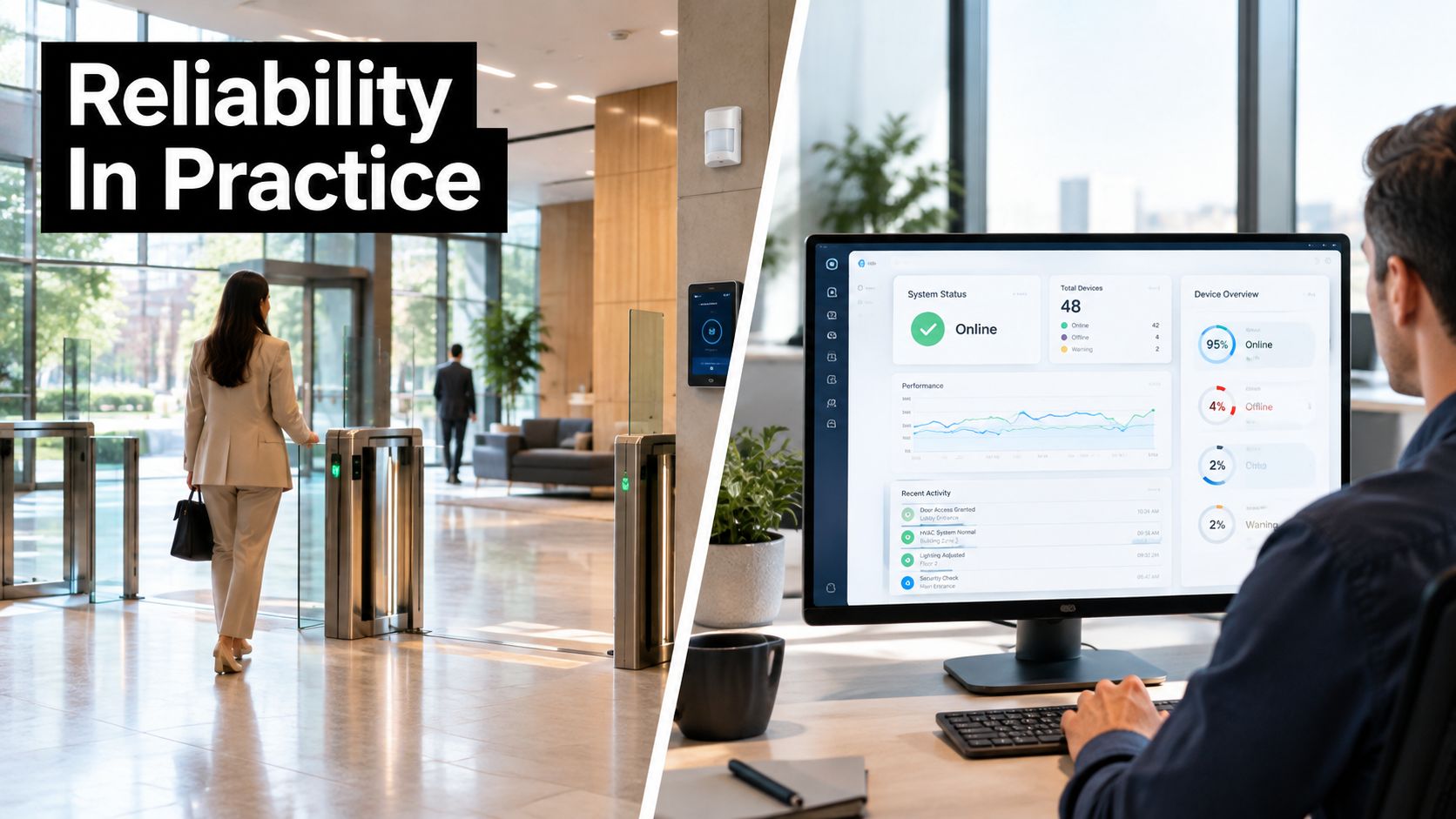
The U.S. Department of Energy Smart Energy Analytics Campaign analyzed data from 96 organizations, nearly 6,000 buildings, and 518 million square feet of floor area. After two years, buildings using energy information systems achieved median energy savings of 4%, while buildings using fault-detection-and-diagnostics software achieved median savings of 9%, equivalent to approximately $0.04 and $0.24 per square foot, respectively (Department of Energy campaign findings).
The important design choice isn't the dashboard. It's the connection between data quality and action. A stale telemetry feed can hide a fault, while a normalized history can show that a control problem is recurring across a portfolio. The business outcome comes from turning fragmented signals into maintenance priorities and measurable operating decisions.
An intelligent-automation program follows a different path but uses the same foundation. An enterprise may automate incident routing, compliance workflows, procurement approvals, or customer-service actions. The workflow must retrieve current records, apply policy, preserve an audit trail, and route exceptions to a human when context is incomplete.
IBM Institute for Business Value research based on 680 companies across 18 industries reported that highly automated organizations attributed a 10% increase in revenue, 28% IT cost reduction, 16% faster time to market, and 36% lower downtime costs from cybersecurity incidents to their digital-transformation efforts (IBM research on intelligent IT automation). These are attributed outcomes from the research, not automatic promises for every implementation.
For both patterns, measure the chain rather than the feature. Track source coverage, quality failures, freshness, alert response, time to action, exception rates, and financial or operational impact. Reliable data engineering earns funding when leaders can connect those measures to lower waste, faster decisions, fewer disruptions, or better service.
Your Four-Phase Delivery Roadmap and Buyer FAQ
Use four phases and give each one a hard exit criterion.
- Discover: Inventory sources, decisions, owners, definitions, risks, and current failure modes. Exit when critical data products and their accountable owners are documented.
- Design: Define architecture, contracts, quality gates, lineage, access policies, SLOs, and operating procedures. Exit when the target design has acceptance tests and a prioritized delivery sequence.
- Deliver: Build ingestion, transformations, validation, governance, and consumer access around one or more priority products. Exit when the product passes quality gates and its users can trace and use the output.
- Operate: Monitor performance, manage incidents, review changes, and improve coverage. Exit isn't a final milestone. It's the point where the service can demonstrate stable ownership and measurable product performance.
An IBM Institute for Business Value survey of more than 2,000 C-suite executives found that 92% expected to digitize organizational workflows and use AI-powered automation by 2026, while 82% agreed that generative-AI benefits were worth the potential risks (IBM research on AI and automation). The demand is strong, but the roadmap must connect automation to governed data and measurable outcomes.
Buyer FAQ
How can we prove an AI agent used the right policy?
Require source citations or provenance, policy-version tracking, retrieval freshness checks, access enforcement, evaluation datasets, and logs showing the context used for each material action. Define human escalation for ambiguous or conflicting records.
How should we set SLOs?
Start with the decision, not the tool. Define how current, complete, accurate, and traceable the data must be for that decision, then set targets that the owner and engineering team can monitor together.
Who owns a critical product after launch?
Name a business owner for meaning and fitness, a technical owner for pipeline operation, and an escalation path for source-system defects. Put those responsibilities in the operating agreement.
How should we phase Snowflake and AI investments?
Stabilize ingestion, quality, lineage, and access for priority products first. Add retrieval and agent actions only when the underlying context is current, governed, testable, and connected to a measurable workflow outcome.
Choose a data engineering services partner that will own reliability after deployment, not just produce pipeline code. Bring your priority data product, its current failure points, and the decision it must support to a steering committee. Then require a phased plan with named owners, quality gates, SLOs, incident procedures, and outcome measures before approving the next platform investment.


