
Your marketing team just sent a renewal offer, your service desk is trying to resolve an open complaint from the same customer, and your app is showing a third status altogether. Each system did its job. Together, they created confusion. That's the problem customer engagement solutions are built to solve, not by adding another channel, but by connecting the data, decisions and messages you already have. This guide focuses on outcomes, so every capability is tied to a use case, a metric or a failure you can avoid.
What Customer Engagement Solutions Include and Why They Matter
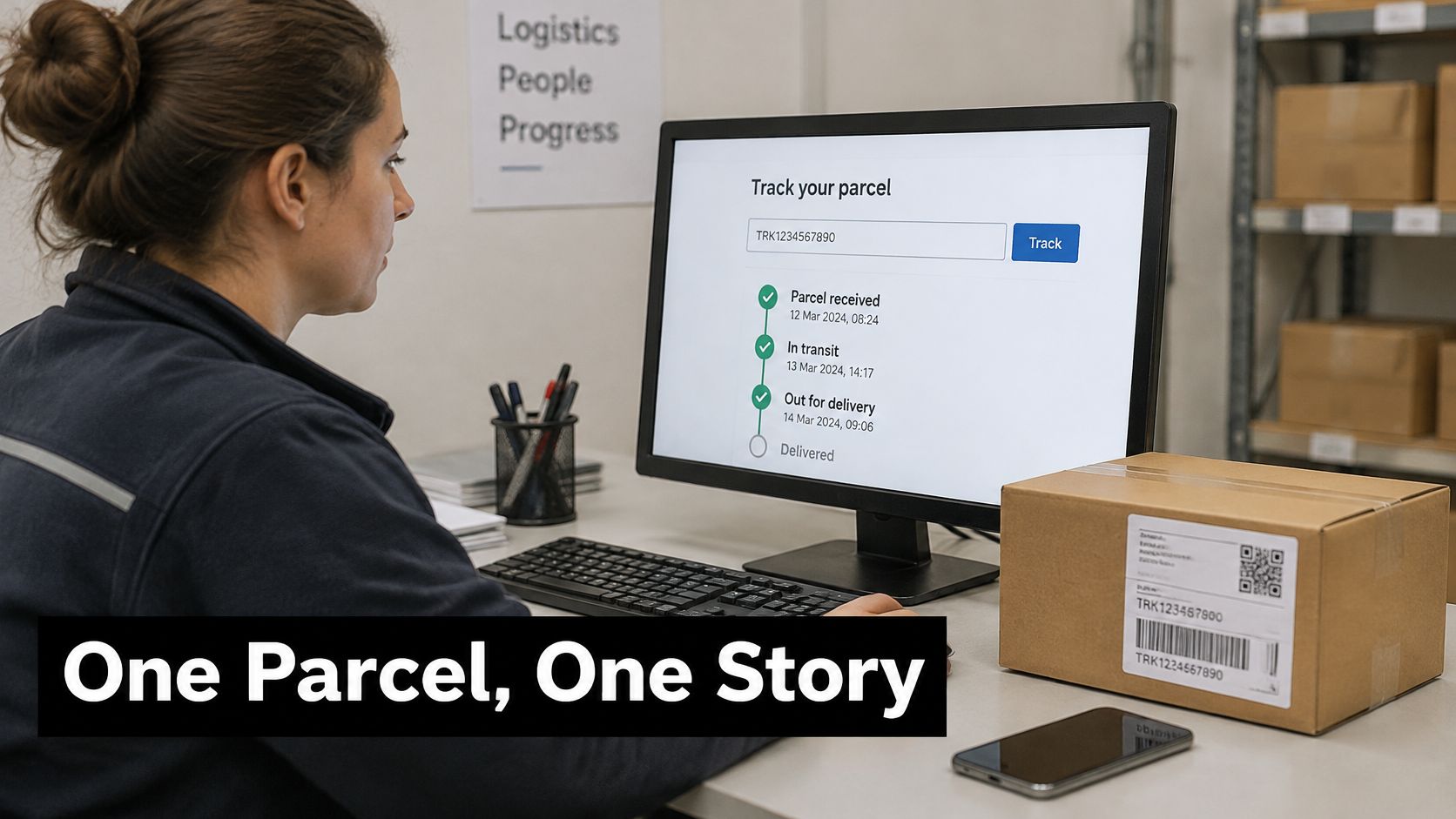
A logistics customer is waiting for a late parcel. She gets an email saying it's out for delivery, an SMS saying it's delayed by a day, and an app alert saying it's still at the depot. She calls support. The agent can see none of those messages, so he asks for the tracking number she already typed into chat. Nothing here is a staff failure. It's a systems failure, and it's exactly the kind of moment that loses customers.
Here's the plain definition. Customer engagement solutions are connected software that records what customers do and say, decides what to do next, and delivers the right message on the right channel at the right moment.
Think of a good hotel concierge. The concierge remembers you prefer a quiet room, checks your booking before you arrive, speaks your language and books the restaurant before you ask. The concierge isn't three separate people passing notes. It's one person holding one picture of you. Engagement software does the same work across apps, stores and service desks, at a scale no team can manage manually.
Why disconnected moments cost you
Customers don't separate your departments in their heads. They judge the whole brand on the last confusing interaction. In the PwC 2025 customer experience survey, 52% of U.S. consumers said they had stopped using or buying from a brand because of a bad product or service experience, in a survey of 5,511 consumers and 406 executives. A contradictory parcel update won't always cause churn on its own, but it teaches the customer that you don't know your own operation.
Practical rule: If two channels can tell the same customer two different things about the same event, you don't have an engagement problem. You have a data connection problem.
The six components below work as one loop. Data comes in, a profile is updated, a decision is made, a message goes out, and the response is measured. Remove any one part and the loop breaks in a predictable place.
Core components of a customer engagement solution
ComponentJobQuestion it answersWhat breaks without itCustomer data platform (CDP)Merges events and attributes into one profile per customerWho is this customer across every channel?Each team works from a different version of the customerCRMHolds accounts, contacts, cases, orders and service historyWhat has already happened with this account?Agents repeat questions and miss open issuesMessaging and orchestrationSequences email, SMS, push, chat and in-app messagesWhat should we say next, and where?Customers receive duplicate or conflicting messagesAnalyticsTracks journeys, experiments and outcome metricsDid the interaction change behavior?Teams report clicks but cannot prove revenue or retention impactPersonalization and AIScores the next-best action using context and consentWhat should this customer get right now?Offers feel generic or intrusiveReal-time data pipelinesMoves events from apps, devices and back-office systemsIs the data fresh enough to act on?Triggers fire hours late, after the moment has passed
Notice what the table is really showing. A CDP without orchestration knows the customer but can't act. Orchestration without a CDP acts quickly on the wrong person. Personalization without consent data creates the intrusive offer that makes people opt out.
That's also where conversation fits. Chat and messaging aren't just cheaper service channels, they're where buying decisions get resolved in real time. This guide to revenue-focused conversations for sales teams is a useful companion read if your team is connecting live conversation to pipeline, rather than treating chat as a support add-on.
No single component above is an engagement solution on its own. Vendors will sometimes sell one row of that table as if it were the whole system. The value comes from the links between the rows, and that's where your data platform and AI design decisions start to matter.
How Snowflake and Agentic AI Connect to the Stack
CMOs and CTOs often talk past each other here. Marketing wants speed. Technology wants control. A three-layer model gives both sides the same picture.
Snowflake is the governed data foundation. Profiles, transactions, consent flags and feature tables live there under one set of access rules. The engagement platform is the action layer. It sends the message, runs the journey and records the response. Agentic AI sits between them. It reads governed data, reasons about the customer's situation, and acts through approved tools such as checking an order, changing an appointment or opening a case.
Keep those jobs separate. When the action layer becomes a second data store, you get duplicate profiles. When an agent reads raw tables directly, you lose control over what it can see and do.
Four ways to connect the layers
Snowflake and agentic AI integration patterns
PatternHow data movesTypical latencyBest fitMain riskWarehouse-centered syncSnowflake holds master tables; reverse ETL pushes segments to engagement toolsEvery 15 minutes to dailyLifecycle email, renewal reminders, segment campaignsStale segments and duplicate profiles across toolsStreaming events into SnowflakeEvent streams land in raw tables through Snowpipe Streaming or a message broker; feature tables refresh continuouslySeconds to minutesBehavioral triggers and delivery-exception alertsFrequent small writes raise compute costSnowflake as decision layerGoverned feature tables supply scores; the platform requests them per interactionSub-second to a few secondsNext-best-action in web, app and contact centerDecisions made without a current consent checkAgentic AI on governed dataAgent calls approved tools that query certified views, then escalates when neededSeconds per turnOrder status, plan questions, appointment changesAgent acts on stale data or beyond its permissions
Latency isn't a technical vanity metric. It decides whether personalization arrives during the session or after the customer has left. In Twilio's 2025 customer engagement research, 88% of consumers are more likely to purchase when brands personalize interactions in real time, including 35% who are significantly more likely to buy. That doesn't mean every journey needs sub-second data. A renewal reminder can run on a daily sync. A delivery exception alert can't.
A large-scale Snowflake deployment shows what the foundation layer looks like in practice, and this EMS implementation using Snowflake is a concrete reference for teams assessing whether their warehouse can support high-volume, governed data flows.
Four design rules for agents
- Keep consent with the profile: Store consent flags in the same governed tables as the profile, so every decision checks permission at the same moment it checks eligibility.
- Query views, not tables: Let agents query certified views with row-level policies. Never give an agent raw table access.
- Confirm valuable writes: Require human confirmation for any write action above a value you set, such as a refund or contract change.
- Log every decision: Record what the agent decided and which data it used, so you can audit, retrain or roll back.
These rules also make the economics measurable. If you can't trace an agent's action to its inputs and outcome, you can't cost it, and this overview of measuring AI transformation ROI sets out why that traceability matters before you scale.
Say a telecom customer asks why her bill rose. The agent queries the certified plan and usage views, finds a roaming charge, and explains it in plain language. It offers a plan change only if her offer consent is on. When she disputes the charge, the agent stops, passes the full context to a human, and doesn't argue. That's the design working. Speed for the routine part, restraint for the sensitive part.
KPIs That Show Engagement Is Actually Working
Most engagement reporting fails for one simple reason. It counts activity, such as opens, clicks and messages sent, and calls that success. Activity tells you the system ran. It doesn't tell you whether the customer is better off or more likely to stay.
Measure in three layers instead. Operations covers speed and effort. Customer covers trust, satisfaction and opt-outs. Business covers conversion, retention and lifetime value. A journey only works when it improves at least one business metric without damaging a customer metric to get there.
Recommended engagement KPIs and review rhythm
MetricWhat it measuresGood directionReview frequencyFirst response timeDelay from request to first meaningful replyShorter, tracked by channelDailyFirst-contact resolutionShare of issues solved in one interactionHigher, split automated vs humanWeeklyTransfer precisionShare of AI handoffs that agents judge necessaryHigher; low means over-escalationWeekly sampleCustomer effortEase of getting the outcome, from a post-contact surveyLowerMonthlyAI correction rateShare of AI answers corrected by an agent or customerLower; check sampled transcriptsWeeklyOpt-out rate by journey stageCustomers who withdraw consent after an interactionStable or falling; a spike means pauseWeeklyIncremental conversionConversion lift against a holdout groupPositive and statistically clearPer experimentRetention at 90 daysShare of a cohort still active after 90 daysHigher than holdoutMonthlyCustomer lifetime valueNet margin earned from a customer over their active lifeRising by cohortQuarterlyCost-to-serveFully loaded cost per resolved contactLower without rising effortMonthly
Reading metrics together
Single metrics mislead. Read them in pairs that answer one business question. Take speed and buying behavior. In Qualtrics research involving more than 23,000 consumers and 3,072 employees, consumers were 2.6 times more likely to purchase more when contact-center wait times were satisfactory in 2025. So track first response time next to conversion in the same report. If responses get faster and conversion doesn't move, speed wasn't your bottleneck.
A falling cost-to-serve alongside rising customer effort isn't efficiency. You've moved the work onto the customer.
For definitions and calculation methods for the service metrics in this table, this reference on measuring CSAT, NPS, and FCR is worth keeping open while you build your dashboard.
Two habits that make the numbers trustworthy
Hold out 5 to 10 percent of eligible customers in every journey. That control group shows what would have happened without your intervention, which is the only honest way to claim incremental conversion. Without a holdout, you're crediting the campaign for customers who would have bought anyway.
For AI-assisted service, review a sample of 50 transcripts each week and score transfer precision and correction rate from them. Automated dashboards won't catch an agent that's technically accurate but tone-deaf, or one that resolves the ticket while frustrating the customer.
Finally, record every KPI for three months before your first campaign goes live. Lift is meaningless without a starting point, and reconstructing a baseline after launch is guesswork dressed up as analysis.
Vendor Selection Checklist for Engagement Platforms
Don't score vendors in a demo. A demo runs on the vendor's data, at the vendor's volume, along a path the vendor rehearsed. Score them in a pilot on your data instead.
Ask each shortlisted vendor to run a two-week sandbox on a sample of your Snowflake data. Measure event-to-action latency at your real volume. Then make one preference change for a test customer and time how long it takes to reach every channel. That single test exposes more than an afternoon of feature presentations.
Vendor selection checklist with red flags
CriterionWhat to verify in a pilotRed flagSnowflake integrationNative connector reads and writes governed tables without full nightly copiesVendor requires copying all raw data into its own storeReal-time ingestionMeasured event-to-action latency on your sample volumeLatency quoted only as a marketing figureConsent and preferencesOne change propagates to every channel within a set time, with an audit logPreferences stored separately per channelDecision transparencyEach action shows its inputs and the rule or model behind itScores that cannot be explained to a customer or auditorAgent guardrailsConfidence thresholds, handoff with full context, transcript reviewContainment rate is the only AI metric offeredChannel coverageLive connectors for the email, SMS, push, web, chat and contact-center channels you useRoadmap promises instead of live connectorsExperiment supportBuilt-in holdout groups and incremental-lift reportingOnly click and open reportsSecurity and residencyCurrent SOC 2 Type II or ISO 27001 report, with data residency stated by regionVendor cannot name its certifications or where data is storedTotal costThree-year cost modeled at your profile and message volumePricing that scales unpredictably with event volumeExit termsFull data export in open formats on requestExport limited or charged per table
Weighting the checklist by sector
Not every criterion matters equally everywhere. In regulated sectors such as healthcare and telecom, weight consent, audit and transparency first, because an unexplained decision is a compliance exposure, not just a poor experience. In logistics, weight latency and data sync first, because a delivery trigger that fires late has no value at all.
Close the evaluation with three contract points. Require a current SOC 2 Type II or ISO 27001 report, not a promise to obtain one. Get a three-year cost model built on your profile and message volumes, including growth. And contract for a full data export in open formats on request, so leaving the platform doesn't mean leaving your customer history behind.
Implementation Roadmap in Six Phases
The sequence below deliberately puts measurement before automation. Teams that reverse that order end up with a working system and no way to prove it works. Each phase has a duration and an exit criterion, so you know when you're actually ready to move on.

Phase 1 Baseline
Duration, 2 to 4 weeks. Record current KPIs for three candidate journeys, document every data source feeding them, and agree the holdout design with your finance and customer experience leads. Getting finance involved now prevents an argument later about whether the lift is real. Exit when the baseline dashboard is signed off by all three parties.
Phase 2 Data foundation
Duration, 6 to 10 weeks. Unify customer identities in Snowflake, build the feature tables for one pilot journey, and define the consent model that governs what each channel may send. Resist the urge to unify everything at once. One journey's worth of clean data beats a year spent on a perfect enterprise model. Exit when the identity match rate meets the threshold you agreed in phase 1.
Phase 3 Pilot one journey
Duration, 6 to 8 weeks. Launch a single journey with a 10 percent holdout and change nothing else while it runs. Mid-flight tweaks feel productive but destroy your ability to attribute the result. Exit when the lift is clear, or clearly absent. A clean negative result is valuable. It stops you scaling something that doesn't work.
The short walkthrough below shows how a phased rollout is typically sequenced and reviewed with stakeholders.
Phase 4 Add agent assistance
Duration, 4 to 6 weeks. Introduce AI assistance with human escalation inside the same pilot journey, not in a new one, so you can compare automated and human-assisted outcomes directly. Review 50 sampled transcripts each week with the agents who handle escalations. Exit when transfer precision and correction rate hit the targets you set.
Phase 5 Scale to the next journeys
Duration, one quarter. Extend to the next two journeys by reusing the decision layer you already built. Each new journey should need new feature tables and message templates, not a new decisioning system. If your team is rebuilding decision logic per journey, your architecture, not your timeline, is the problem.
Phase 6 Operate and protect
This phase doesn't end. Review KPIs monthly and set rollback triggers in advance, while everyone is calm. Two triggers cover most failures. Pause the journey if the opt-out rate doubles against baseline for two consecutive weeks. Pause it if customer satisfaction drops beyond the limit you agreed before launch.
Write the pause conditions before go-live, because after launch every stakeholder has a reason to wait one more week.
A rollback trigger isn't an admission of failure. It's the mechanism that lets you experiment at speed, because the cost of being wrong is a paused journey rather than a damaged customer base.
Where Engagement Solutions Pay Off by Industry
The same stack pays off differently depending on which moment matters most in your industry. Three cases show the pattern, each with the data it needs and the single metric that proves it.
Logistics and the two-hour warning
A fleet customer is planning warehouse labor around an afternoon delivery window. Two hours before that window is missed, she receives a predicted delay alert with a revised arrival time. She reschedules the dock crew instead of paying them to wait.
That alert needs GPS pings, warehouse events and carrier scans combined into one predicted arrival time, refreshed continuously. Batch data can't do this, because by the time a nightly file lands, the window has already been missed and the customer has already called you.
Speed of information is the whole value here. In a 2025 Verint survey, 56% of U.S. consumers said receiving information quickly was the most important aspect of good customer experience. The proving metric is where-is-my-order contacts per 100 shipments. If proactive alerts work, that number falls, because customers stop calling to ask a question you already answered.
Telecom and the moment of overage
A customer is approaching her data limit mid-cycle. At the moment she's about to incur an overage charge, she receives a plan-change offer sized to her actual usage, with the monthly difference stated plainly. She upgrades in the app and never sees a surprise bill.
This journey needs near-real-time usage data, the current plan and a consent check, because the offer only goes out if offer consent is on. Send it to a customer who opted out of marketing and you've converted a helpful moment into a complaint.
Measure it as upgrade conversion against the holdout and 90-day churn for the same cohort. Conversion alone can mislead you. An aggressive offer might convert well and still push price-sensitive customers to leave at renewal, which only the churn figure reveals.
Healthcare and the prepared patient
A patient receives an appointment reminder through his preferred channel, followed by pre-visit preparation instructions the day before. He arrives on time, having fasted as required, so the appointment doesn't need to be rescheduled.
The data need here is scheduling and channel preference, with consent records checked first and clinical details kept out of SMS entirely. For U.S. patients, apply HIPAA rules to what may appear in each channel, and design message templates with compliance before anyone writes copy.
Track the no-show rate alongside opt-out rate by message type. Reminders usually earn strong tolerance. Preparation messages sent too often don't. Splitting opt-outs by message type tells you which one is wearing out its welcome.
These three cases differ in data, timing and regulation, but they share one structure. Each identifies a moment where being late or wrong costs the customer something real, then proves value with one operational metric. For a broader view of how these patterns vary across sectors, see the overview of industries and their data priorities.
Pitfalls to Avoid and How to Fix Each One
Most engagement failures aren't technology failures. They're sequencing and measurement failures that a working platform then executes at scale. Each pitfall below names the fix in one line.
- Automating before a baseline exists: Lift becomes impossible to prove. Fix it by completing the baseline phase before any journey launches.
- Measuring containment instead of resolution: You reward AI that traps customers in a loop. Fix it by tracking first-contact resolution and transfer precision instead.
- Over-personalizing with unexpected data: Customers feel watched rather than helped, and trust erodes. Fix it with a visible preference centre and a plain reason shown for each offer.
- Assuming customers feel as well served as you believe: In Twilio's 2024 engagement research, 84% of businesses said they provided good or excellent customer engagement, compared with 54% of consumers who agreed. Fix it by surveying customers each quarter and comparing the result with your internal scores.
- Building a second copy of customer data outside Snowflake: Consent records split across two stores and drift apart. Fix it by making the warehouse the single source every tool reads from.
- Ignoring the agents who inherit escalations: They receive harder cases with no training and no override path. Fix it with a monthly review of escalated cases, run with the agents themselves.
- Launching without rollback triggers: A problem runs for weeks while teams debate whether it's real. Fix it by writing the triggers before go-live.
Read that list as a pattern. In nearly every case, the fix is cheap early and expensive late. A preference centre designed before launch is a feature. The same preference centre built after an opt-out spike is a rescue project, and the customers who left don't come back to see it.
The over-personalization point deserves emphasis because it's the pitfall teams are least likely to spot in their own dashboards. Conversion can rise while trust falls, since the customers who disengage without complaint don't appear in your campaign report. That's why consent and opt-out metrics belong on the same dashboard as revenue, reviewed by the same people, in the same meeting.
Confirm Your First Use Case Before You Buy
Start narrower than feels comfortable. Choose one journey where a missed or late moment costs the most, whether that's a delayed delivery, a data overage or a missed appointment. That journey becomes your test case for every vendor claim and every architecture decision.
Set one primary KPI and one guardrail KPI before anyone sees a demo. Incremental conversion as the primary, opt-out rate as the guardrail, is a sound pairing for most commercial journeys. Then agree the holdout size before any vendor is shown your data, so the measurement design isn't gradually reshaped around what a platform happens to report well.
Run the vendor pilot on that journey alone. Use a clear go or no-go rule. Proceed only if latency, consent propagation and the lift target are all met within the 90-day window. If any one of the three fails, narrow the scope or stop. Signing anyway and hoping the gaps close during implementation is how enterprises end up with shelfware.
Faberwork LLC (faberwork.com) is one option for teams whose data already runs on Snowflake and who need a partner for the decision layer and agent guardrails. As a Snowflake Partner Network member with SnowPro Certified engineers, it can scope the first journey against the checklist above before any platform contract is signed.
Before the pilot starts, write down the three answers it must produce. The lift. The opt-out change. The cost per resolved contact. If a pilot can't produce those three numbers, it isn't a pilot. It's a demonstration.
Bring your three candidate journeys, your current Snowflake schema and your consent model to a scoping session, and leave with one pilot journey, a holdout design and a written go or no-go rule for the 90-day test. Start there, prove the lift on one journey, and let the numbers decide how fast you scale.


