Off-the-shelf software promises a quick fix, but often delivers a long-term headache. Built for the "average" user, these one-size-fits-all solutions rarely support the unique workflows that define your business. Instead of providing a competitive edge, they create operational bottlenecks that stifle growth and force your team into inefficient workarounds.
The Hidden Costs of Generic Software
Many companies choose off-the-shelf products to save on initial costs, only to pay a much higher price in lost productivity and missed opportunities. The problem is simple: your business is unique, but your software isn't. This mismatch forces your teams into manual workarounds, creating data silos where critical information becomes inaccessible. When your CRM can't sync with your inventory system, you lose a unified view of your business, crippling strategic decision-making.
Use Case: When Pre-Packaged Solutions Fail
The limits of generic software become clear in practice. Imagine a logistics company using a standard tracking app to manage a complex fleet. The software lacks custom geofencing, real-time route optimization, or predictive maintenance alerts. The outcome? Higher fuel costs, delayed deliveries, and dissatisfied customers.
Similarly, a financial firm using a generic CRM struggles with compliance and personalization. The platform wasn't built for the industry's specific data security protocols or complex client journeys, preventing them from offering the high-value services clients expect.
These examples highlight a fundamental truth:
Off-the-shelf software forces you to adapt your business to its limitations. In contrast, custom software development solutions are engineered to amplify your unique operational strengths and deliver measurable outcomes.
Here’s a concise breakdown of how the two approaches differ in the results they produce.
Off-the-Shelf vs. Custom Software: A Comparison of Outcomes
AttributeOff-the-Shelf SoftwareCustom Software SolutionsFunctionalityStandard, generic features for a broad audience.Built to solve your specific business challenges.ScalabilityLimited; may hinder growth as your business expands.Designed to scale seamlessly with your operational needs.IntegrationOften difficult, resulting in fragmented data and insights.Seamless integration for a single, unified view of your business.ROILow upfront cost, but high long-term costs from inefficiency.Higher initial investment with a greater long-term ROI.Competitive EdgeNone; you use the same tools as your competitors.Creates a distinct advantage by optimizing unique processes.
The choice is whether you want a tool that dictates how you work or one that accelerates your success.
The Growing Demand for Tailored Solutions
The market confirms this shift away from generic tools. The global demand for custom software is accelerating as businesses recognize its strategic value in achieving specific outcomes.
In 2024, the market was valued at USD 43.16 billion and is projected to hit USD 146.18 billion by 2030, growing at a remarkable CAGR of 22.6%. This rapid expansion shows that industry leaders are investing in purpose-built technology to drive growth. You can explore more about this market acceleration to see how businesses are leveraging custom solutions.
Ultimately, choosing custom software is an investment in tools that function exactly how your business functions, delivering superior efficiency, innovation, and sustainable growth.
Understanding Modern Software Architectures
The power of custom software lies not just in its features, but in its architectural foundation. Modern architectures are the blueprint for your software's future growth, intelligence, and efficiency. Think of it like building a new corporate headquarters: you wouldn't erect a skyscraper on a foundation meant for a two-story office. Two concepts are central to building systems that deliver powerful business outcomes today: Agentic AI and unified data platforms.
Agentic AI: Your Autonomous Digital Workforce
Move beyond traditional automation, which merely follows a rigid script. Agentic AI introduces a team of autonomous digital "agents" that can reason, plan, and execute complex, multi-step tasks to achieve a specific goal. It's the difference between a simple calculator and a senior analyst who can build a complete financial forecast. These agents collaborate to create a self-managing system that optimizes operations without constant human intervention.
Use Case: An Intelligent Supply Chain
Imagine a large retail enterprise deploying an Agentic AI system to perfect its supply chain.
- The Goal: Maintain optimal stock levels across hundreds of stores, slashing carrying costs without ever running out of popular items.
- The Outcome:
- A Monitoring Agent watches real-time sales data from every point-of-sale system.
- A Forecasting Agent analyzes that data with seasonal trends and marketing campaigns to predict future demand.
- An Optimization Agent calculates the most efficient reordering schedule and automatically generates purchase orders.
- A Logistics Agent coordinates with suppliers to ensure on-time delivery.
The result is a supply chain that responds instantly to market shifts, dramatically cuts waste, and ensures the right products are always on the shelf. This level of hyper-automation is only possible with a custom architecture.
Snowflake: The Single Source of Truth
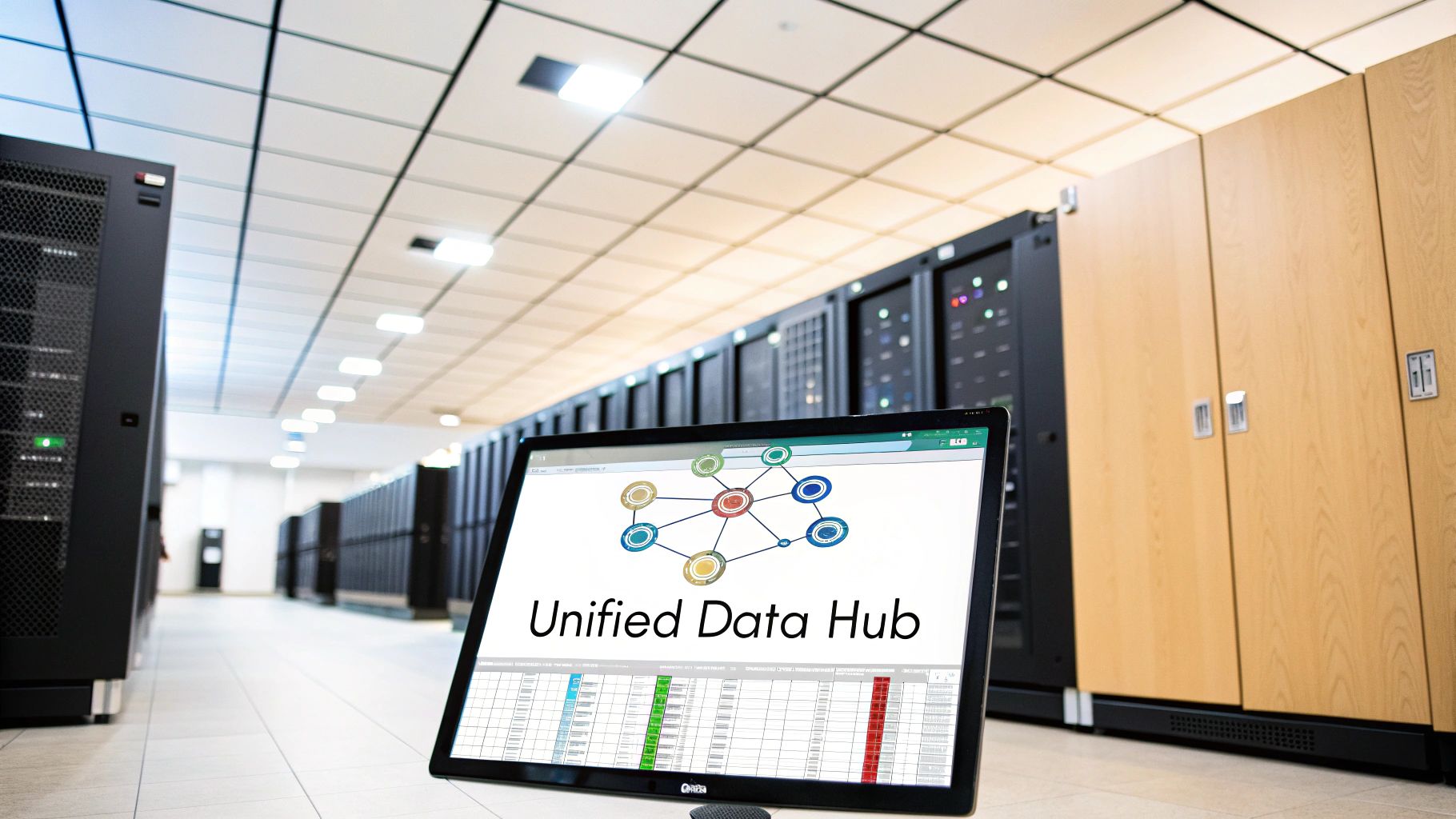
Data is a business's most valuable asset, but it's often trapped in disconnected silos. Marketing has its data, sales has theirs, and operations has another version, making it nearly impossible to get a straight answer. Modern data platforms like Snowflake solve this by creating a single, intelligently organized repository for all company information.
By unifying data, platforms like Snowflake create a single source of truth. This ensures that when leaders make decisions, everyone is working from the same complete, accurate playbook, leading to better strategy and aligned execution.
This unified view is critical. When sales and support teams see the same complete customer history, they can deliver a seamless, high-touch experience that builds lasting loyalty.
Architectures That Deliver Business Outcomes
Choosing a modern architecture is a strategic decision that directly impacts the bottom line. The purpose of custom software development solutions is to build systems that produce tangible, measurable results.
- Agentic AI Delivers Hyper-Automation: It automates entire complex workflows, freeing up your key talent for high-value, strategic work.
- Snowflake Delivers Smarter Decision-Making: By eliminating data silos, it gives leaders a complete, real-time picture of the business for more accurate forecasts and confident strategies.
- Combined, They Deliver Scalable Performance: These architectures are engineered to handle massive data volumes, ensuring your software grows with your business instead of hitting a performance wall.
The right architecture ensures your custom software is not just a tool for today, but a scalable platform for tomorrow's innovation.
Choosing Your Development Engagement Model
Selecting the right partnership model is as crucial as the technology itself. Your choice will shape the project's budget, flexibility, and overall success. It's the operational blueprint for your project, so getting it right is key to seeing your vision delivered smoothly. Think of it like deciding how to build a house: do you need a fixed-price contract for a defined blueprint, or a flexible setup to adapt as you go?
The Fixed Price Model: Predictability and Clarity
The Fixed Price model involves agreeing on a specific scope of work for a set price and deadline. This approach is ideal for smaller projects with crystal-clear, well-documented requirements that are not expected to change, such as a Minimum Viable Product (MVP).
- Use Case: A company needing a simple, standalone mobile app for a marketing campaign with defined features and a firm deadline would benefit from a Fixed Price engagement, ensuring the budget is locked from day one.
Outcome Focus: This model delivers cost certainty and minimizes financial risk upfront, but at the trade-off of rigidity. Any scope change requires renegotiation, which can impact timelines.
The Time and Materials Model: Flexibility for Evolving Projects
The Time and Materials (T&M) model offers maximum flexibility by billing for the actual time and resources used. It's the go-to model for complex, long-term projects with evolving requirements. It allows you to react to market feedback and pivot without being constrained by an initial scope.
- Use Case: When building a new enterprise platform from the ground up, a T&M model allows you to start with core features and add advanced functionality based on early user testing, ensuring the final product meets market needs.
This model is a cornerstone of modern custom software development solutions because it embraces the iterative reality of building truly innovative tools.
The Dedicated Team Model: An Extension of Your Own Team
The Dedicated Team model is the most integrated approach, where you hire a full-time, remote team that works exclusively on your projects. This model blends the flexibility of T&M with the deep institutional knowledge of an in-house team, making it ideal for enterprises that need continuous development and support for mission-critical systems.
Aligning Your Model with Agile Methodologies
Regardless of the model, an Agile framework like Scrum is essential for keeping projects on track while allowing for adaptation. Scrum breaks large projects into small, manageable cycles called "sprints," delivering working software in short, regular intervals.
- Product Backlog: A prioritized list of all desired features.
- Sprint Planning: The team commits to building a small batch of high-priority items in a 2-4 week sprint.
- Daily Stand-ups: A brief daily sync to clear roadblocks and maintain alignment.
- Sprint Review: The team demonstrates the working software to stakeholders to gather feedback.
- Retrospective: The team reflects on the process to identify improvements for the next sprint.
This structure de-risks projects by allowing for early problem detection and continuous feedback, ensuring the final software is precisely what your business needs to succeed.
Custom Software Solutions in Action
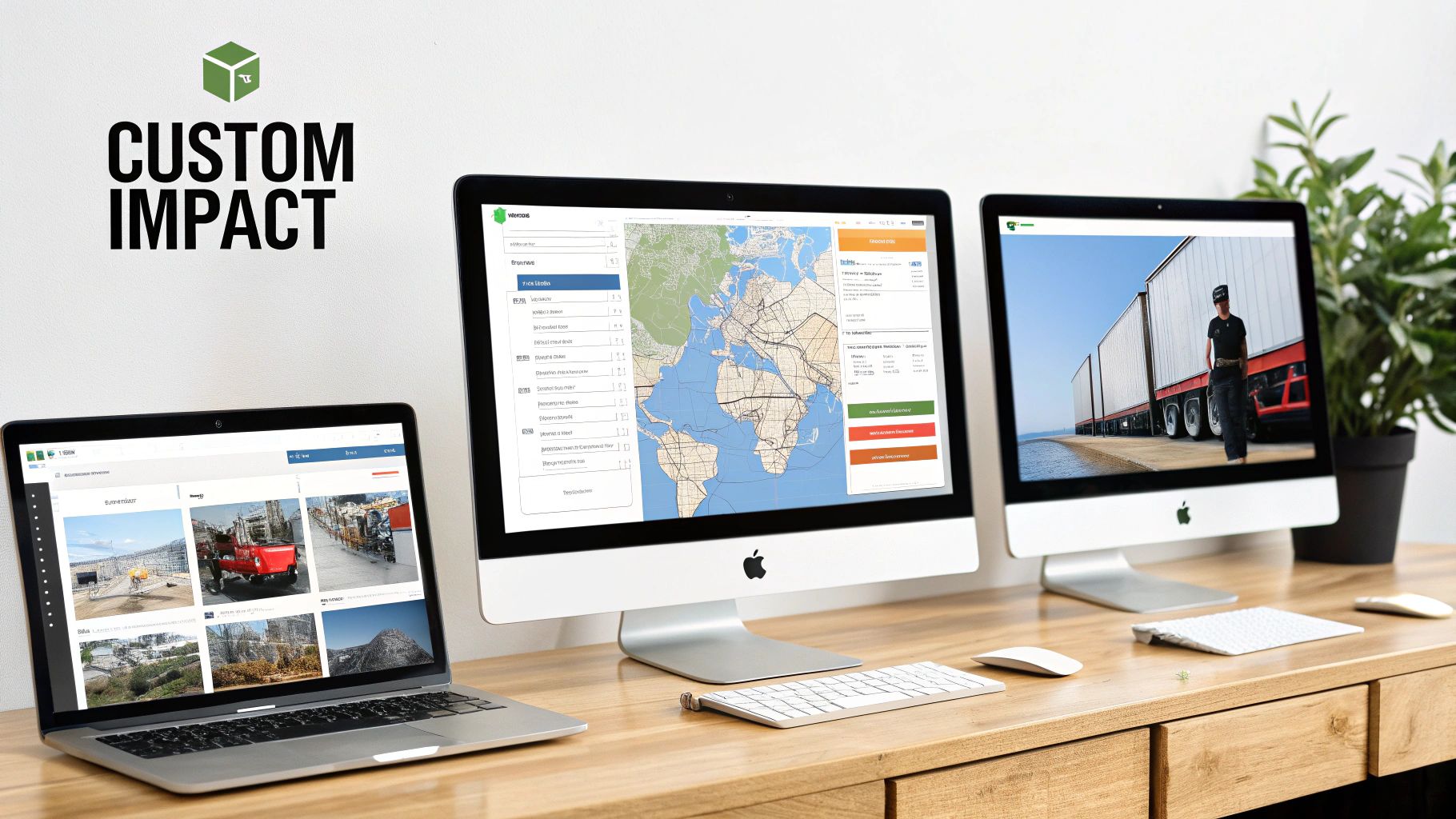
The true value of custom software is demonstrated by the real-world problems it solves. By moving past generic tools, companies can address high-stakes challenges and unlock significant gains in efficiency, customer satisfaction, and profitability. These are not minor tweaks; they are strategic assets built to create a tangible competitive advantage.
Use Case: Boosting Retail Sales with AI-Driven Personalization
An e-commerce retailer struggled with a generic recommendation engine that suggested irrelevant products, leading to low conversion rates and high cart abandonment.
- The Problem: The platform treated all customers the same, ignoring individual browsing habits and purchase history.
- The Custom Solution: A bespoke e-commerce platform with an integrated AI recommendation engine was built to analyze user data in real-time and provide hyper-personalized product suggestions.
- The Outcome: The company achieved a 25% increase in average order value and a 15% lift in overall sales within six months as customer engagement soared.
Use Case: Streamlining Healthcare for Better Patient Outcomes
A large healthcare provider was burdened by disconnected systems, forcing staff into manual data entry and increasing the risk of errors. This inefficiency drove up costs and compromised patient care.
A custom patient management system was created to centralize all data, from appointment scheduling to billing. Designed for HIPAA compliance, the platform automated administrative tasks and provided doctors with a complete patient history at their fingertips.
The outcome was a 30% reduction in administrative overhead and a 20% decrease in patient wait times, leading to higher satisfaction scores and improved care.
Use Case: Gaining an Edge in Logistics with Real-Time Tracking
A national logistics firm's outdated software provided only sporadic updates, making proactive fleet management impossible. Unexpected delays and inefficient routes were eroding their profit margins.
- The Custom Solution: A mobile and web application was built for real-time fleet tracking. The solution used geofencing for automated alerts and a smart algorithm to optimize routes based on live traffic data.
- The Outcome: Dispatchers could now anticipate delays and reroute drivers on the fly. This led to a 12% reduction in fuel costs and a significant increase in their on-time delivery rate, solidifying their market position. Discover more about how we implement powerful mobile apps in the logistics sector to drive similar results.
These examples show that successful businesses build solutions, not just buy software. This trend is also accelerating in the public sector, with government agencies adopting custom systems to modernize operations. The government segment is projected to grow at a CAGR of 25.9% as it replaces legacy systems to better serve citizens.
How to Select the Right Development Partner

Choosing a development partner is one of the most critical decisions you'll make. The right team acts as a strategic asset, while the wrong one can lead to missed deadlines, spiraling costs, and a product that fails to deliver. Your evaluation must go beyond price to assess technical depth, industry experience, and cultural fit. A strong partnership is built on transparency and a shared commitment to achieving your business goals.
Evaluating Technical Expertise and Industry Acumen
First, confirm the partner has hands-on experience with your technology stack and industry. A team that has already built custom software development solutions for other logistics companies understands the nuances of fleet management. Their past work is the best predictor of your future success.
Request detailed case studies and client references. Ask their clients about the partner's problem-solving skills and proactivity.
Key questions to ask:
- Can you show us projects similar to ours in complexity and industry?
- How do you stay current with the latest technologies and security standards?
- What is your approach to quality assurance and testing?
Assessing Project Management and Communication Styles
Technical skill is only half the equation; project management and communication are just as vital. You need a transparent, agile process with regular check-ins to keep the project aligned with your evolving business needs.
The best partners act as an extension of your team. They prioritize clear communication and provide direct access to the developers and project managers, ensuring there are no layers of misinterpretation.
Look for a team that uses collaborative tools and maintains a cadence of scheduled touchpoints, like daily stand-ups and weekly sprint reviews. This structure ensures you always know your project's status. To see how we structure our partnerships, learn more about our full range of development services and collaborative approach.
Planning for Long-Term Support and Scalability
Think beyond the launch. Your software will require ongoing maintenance, security updates, and new features as your business grows. A reliable partner will offer robust support plans and have a clear process for future development. Discuss their support level agreements (SLAs) and how they design for scalability. A partner with foresight will build an architecture that handles future growth from day one, ensuring your investment continues to deliver long-term value.
Measuring the ROI of Your Software Investment
How do you prove an investment in custom software was worth it? Unlike off-the-shelf products, a custom build requires a solid business case demonstrating a clear return on investment (ROI). The key is to focus on measurable outcomes, separating tangible returns that impact the balance sheet from intangible ones that build long-term strategic value.
Tangible Returns You Can Measure
Tangible ROI is about hard numbers—the direct financial gains you can attribute to the software. These are the metrics that matter most in the boardroom.
Key tangible outcomes include:
- Direct Cost Savings: Automating manual work slashes labor costs and eliminates expensive human errors.
- Increased Revenue: A custom solution can unlock new revenue streams or optimize existing ones. An AI-powered recommendation engine that increases average order value is a direct revenue gain.
- Productivity Gains: Streamlined workflows allow your team to accomplish more without increasing headcount, boosting overall output.
Intangible Returns That Create Value
While harder to quantify, intangible benefits often deliver the most significant competitive advantage. This is about strengthening your business from the inside out.
Think of intangible ROI as building a stronger foundation for future growth. It makes your business more resilient, adaptable, and customer-focused.
Key intangible outcomes include:
- Improved Customer Loyalty: A seamless user experience and personalized service create happy customers who stay longer, increasing their lifetime value.
- Greater Business Agility: Custom solutions are built to evolve, allowing you to pivot quickly in response to market shifts.
- Enhanced Decision-Making: With a single source of truth, your leadership team can stop guessing and make faster, more confident strategic moves.
How Cloud and AI Accelerate Your ROI
Modern development practices deliver these returns faster than ever. Cloud-based deployment is now the standard, with over 57% of organizations choosing cloud platforms in 2024 for their scalability and efficiency.
Simultaneously, AI-powered coding platforms have been shown to reduce development task times by up to 88%, radically accelerating release cycles. You can learn more about these software development market findings to see how they are reshaping project timelines. By shipping value faster, this modern approach ensures your investment starts generating a return much sooner, maximizing your overall ROI.
Frequently Asked Questions
When exploring custom software, many questions arise. It's a significant decision. Here are answers to common questions from leaders considering a move beyond off-the-shelf tools.
How Long Does Custom Software Development Take?
The timeline for building custom software development solutions depends on the project's scope. A focused Minimum Viable Product (MVP) can often be delivered in 3-6 months. In contrast, a complex, enterprise-wide platform could take a year or more. The number of features, integration complexity, and security requirements are the primary drivers. An agile approach is best, as it allows us to deliver functional software in short cycles, providing value to your business much faster.
Is Custom Software More Expensive Than Off-the-Shelf Options?
The initial investment for a custom build is typically higher than a pre-packaged license. However, focusing only on the upfront cost is shortsighted. You must consider the total cost of ownership.
Off-the-shelf software comes with hidden costs: recurring license fees, paying for features you never use, and productivity lost to inefficient workflows. A custom solution is a one-time capital investment designed to optimize your specific operations, delivering a far stronger ROI over time.
How Do I Know If My Business Needs a Custom Solution?
The need for a custom solution often appears as persistent operational pain points.
See if any of these sound familiar:
- Operational Bottlenecks: Your teams rely on spreadsheets and manual workarounds because your current software can't keep up.
- Data Silos: Critical information is trapped in systems that don't communicate, preventing you from getting a clear view of your business.
- Scalability Issues: Your current tool struggles to handle growing user and data volumes—a problem that will only get worse.
- Lack of Competitive Edge: You use the same generic tools as your competitors, making it impossible to innovate or create a unique advantage.
If you recognize these challenges in your organization, a purpose-built solution is likely a strategic necessity, not just a "nice to have."


