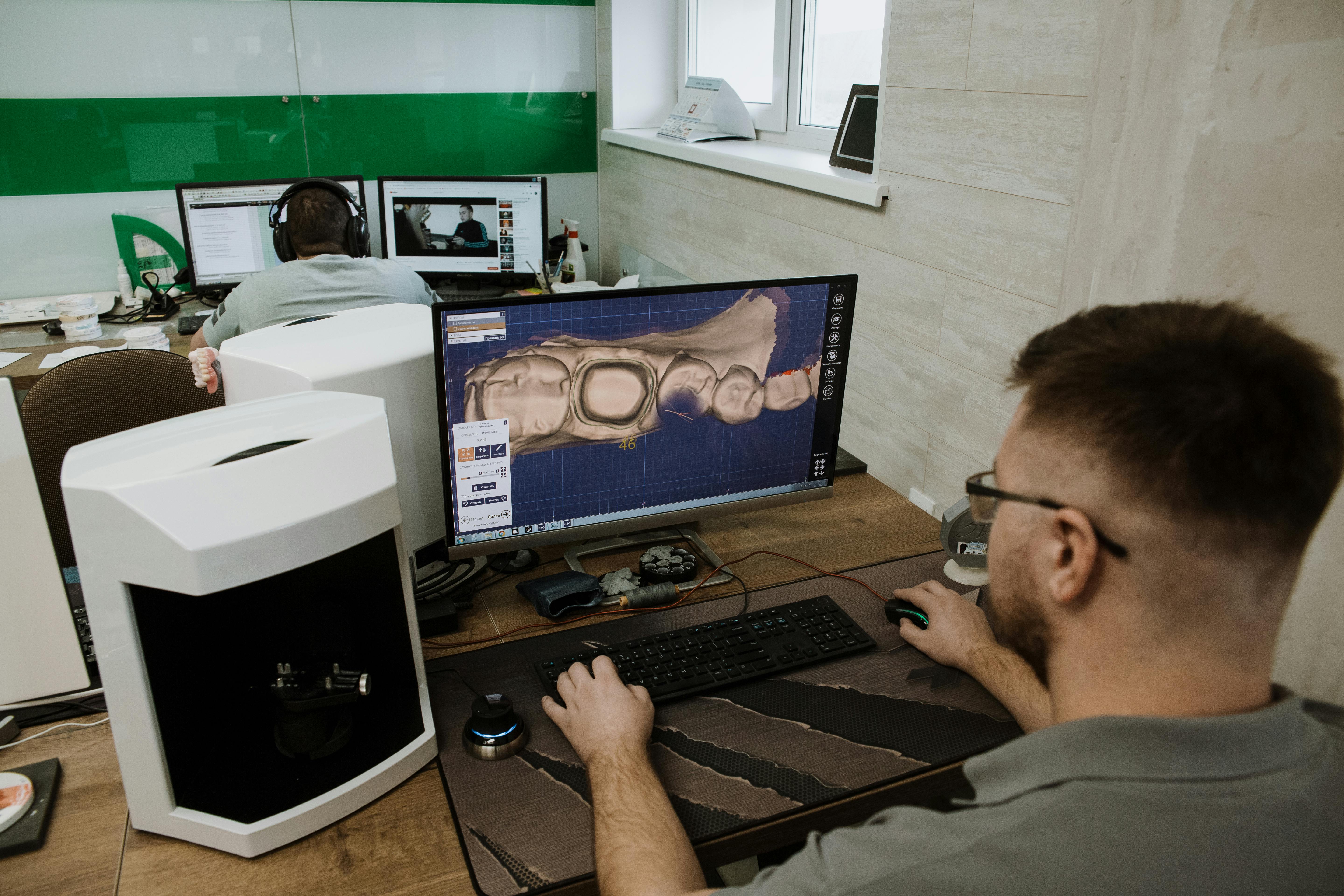
Custom healthcare software development services are not just about building apps; they're about engineering digital tools to fit a healthcare organization’s specific workflows and compliance needs. It's the difference between a one-size-fits-all product and a precision instrument designed to achieve specific outcomes.
Why Generic Software No Longer Works for Healthcare

The modern healthcare ecosystem is too complex for a generic approach. Using off-the-shelf software in a hospital is like prescribing the same painkiller for every patient—it might help a few but ignores the root problem for most. Custom software, however, is like a treatment plan developed from a patient's unique DNA; it's built to match your organization’s exact needs and deliver better results.
The Failure of Off-the-Shelf Systems
Ready-made systems force clinicians and administrators to change proven workflows to fit rigid software, leading to friction, risky workarounds, and compromised patient safety. One of their biggest failures is the inability to share data seamlessly across systems. This is the core challenge of understanding interoperability in healthcare, where custom platforms excel by creating a single, coherent view of the patient.
Custom solutions are a strategic necessity for organizations aiming to improve patient outcomes, streamline clinical tasks, and safeguard sensitive data.
The market has taken notice. The demand for customized healthcare solutions is set to grow at a 10.8% CAGR between 2026 and 2035, driven by the shift to personalized medicine. As patient needs become more complex, hospitals and clinics are leading the charge.
Custom Healthcare Software and Their Strategic Outcomes
This table summarizes how custom software applications connect directly to measurable improvements in care and efficiency.
Software TypePrimary OutcomeKey Use CaseEHR/EMR SystemsImproved Clinical EfficiencyAutomating charting to reduce physician burnout and save hours per week.Patient PortalsIncreased Patient EngagementGiving patients online access to schedule appointments and view lab results, improving adherence.Telehealth PlatformsExpanded Access to CareProviding virtual consultations for remote patients, creating new revenue streams.Data & AnalyticsData-Driven Decision-MakingIdentifying at-risk patient populations to enable proactive intervention.mHealth AppsBetter Chronic Disease ManagementHelping diabetic patients track blood sugar, leading to fewer complications.
Ultimately, by investing in custom healthcare software development services, your organization isn't just buying a product. You're building a foundation for future growth, innovation, and a higher standard of care.
Key Types of Custom Healthcare Software That Drive Results

The first step is realizing one-size-fits-all solutions don’t work. The next is to pinpoint where custom healthcare software development services can deliver tangible results. This isn’t about chasing trends; it’s about building specific tools for specific jobs that strengthen the entire organization.
Custom EHR and EMR Systems
Standard EHRs are notorious for clunky interfaces that cause physician burnout. A custom-built EHR reverses this by conforming to your clinical processes.
Use Case: An emergency department uses a custom EHR that automatically flags critical alerts from incoming patient data, presenting a single, consolidated view. This eliminates the need for physicians to hunt through multiple screens for vital information.
Key Outcomes:
- Reduced Physician Burnout: Automating documentation and slashing clicks saves clinicians hours each week.
- Improved Clinical Decisions: Surfacing relevant patient history and guidelines at the point of care leads to faster, more accurate diagnoses.
- Enhanced Data Accuracy: Workflows built for your needs reduce data entry errors, creating cleaner, more trustworthy records.
Secure Patient Portals and Engagement Platforms
Most generic patient portals offer little more than basic information. A custom portal becomes a true command center for a patient’s healthcare journey.
A well-designed patient portal actively involves patients in their own care, which has been shown to improve treatment adherence and lead to better health outcomes.
Use Case: A cardiology clinic’s custom portal connects to a patient’s wearable device. If a synced blood pressure reading crosses a pre-set threshold, the system instantly alerts the care team, allowing for proactive intervention before a serious event occurs.
Key Outcomes:
- Reduced Administrative Overhead: Automating tasks like scheduling and bill pay frees up staff for higher-value work.
- Increased Patient Satisfaction: An intuitive portal that simplifies communication and provides easy access to health information improves the patient experience.
- Better Health Outcomes: Features like medication reminders and secure provider messaging empower patients to manage their health effectively.
Telehealth and Remote Monitoring Solutions
Many organizations are stuck with standalone video tools that create data silos. Custom telehealth platforms integrate seamlessly with in-person care.
Use Case: A rural health clinic deploys a custom telehealth app for secure consultations, capturing vitals from IoMT devices, and automatically filing claims coded for virtual visits.
Key Outcomes:
- Expanded Access to Care: Break down geographic barriers to serve remote patients and offer convenient follow-ups.
- New Revenue Streams: Monetize specialized virtual consultations and remote patient monitoring programs.
- Improved Chronic Disease Management: Continuous remote monitoring allows clinicians to adjust treatment plans in real-time to prevent complications. The global healthcare telemetry market is projected to hit $400 billion by 2026, confirming the massive demand.
Building the Business Case for Custom Software Investment
Any discussion about custom software lands on one question: how do we justify the investment? The conversation must focus on the return. Custom software is a strategic asset that generates measurable value by automating workflows and freeing skilled staff to focus on patient care.
From Cost Center to Revenue Generator
The strongest argument for building custom software is its ability to find new revenue and plug existing leaks. Off-the-shelf billing systems often can't keep up with new reimbursement rules, leading to denied claims and lost revenue.
Use Case: A custom billing system automatically checks insurance eligibility, suggests accurate medical codes, and provides a real-time view of every claim. This outcome doesn't just speed up the revenue cycle; it cuts errors and dramatically improves collection rates.
Custom platforms also open new lines of business:
- Telehealth Services: Monetize a purpose-built platform by offering specialized consultations or subscription-based care models.
- Data Analytics: Provide anonymized, aggregated population health data to research institutions, creating a new revenue channel.
The decision to build custom software is an investment in long-term strategic advantage. It future-proofs your technology against evolving regulations, creating a sustainable competitive edge.
The healthcare SaaS market, a huge part of custom development, is expected to jump from $33.21 billion in 2026 to $71.33 billion by 2030. This growth is driven by the outcomes custom solutions deliver, a trend documented in analyses of the rapid adoption of cloud and hybrid models in healthcare IT.
A Mini Case Study in Measurable Growth
A regional hospital network struggled with scattered patient data and a bottlenecked scheduling system. They invested in custom healthcare software development services to build a unified platform integrating their EHRs and a central patient portal.
The results were immediate and measurable:
- 25% Reduction in Patient No-Shows: Automated reminders cut the no-show rate within six months.
- 30% Increase in Administrative Capacity: Automating scheduling freed up front-desk staff to handle more complex patient issues.
- 15% Drop in Medication Errors: A single, complete patient record allowed clinicians to see a full medical history instantly, improving safety.
This illustrates how a smart investment in custom software drives quantifiable improvements in patient safety, operational efficiency, and the bottom line.
For any technology leader, picking the right technical foundation is like a surgeon choosing the right tool. The architecture you choose dictates your system's resilience and adaptability. Modern software has moved past monolithic designs to flexible, data-centric tech stacks.
The Power of Microservices and Cloud-Native Design
Imagine a traditional application as a single, massive building where renovating one department disrupts others. A microservices architecture is like a medical campus with separate, specialized buildings. Each service, like patient scheduling or EMR access, runs independently.
Use Case: A health system needs to update its patient scheduling module. With microservices, developers can overhaul the "scheduling" service without affecting the EMR or billing systems at all. This allows for faster, safer updates.
This gives you two major wins:
- Increased Resilience: If one service fails, it doesn't crash the entire system.
- Faster Innovation: Teams can work on different services simultaneously, pushing out new features much faster.
This approach pairs perfectly with a cloud-native design, which ensures your application can scale on demand. It's like a hospital that can instantly add wings during a crisis, preventing system meltdowns and saving costs during quiet times.
Unlocking Insights with Modern Data Platforms
Healthcare organizations sit on mountains of data trapped in silos. Modern data platforms tear these down. For anyone building tech in Europe, understanding EU Data Sovereignty is critical, as it impacts how you handle sensitive data.
A powerful data platform like Snowflake acts as a central nervous system for your healthcare data, pulling information from EHRs, IoT devices, and billing systems into one reliable source of truth.
Use Case: A hospital uses a modern data platform to analyze patient flow in real-time. By identifying bottlenecks, they rearrange staffing and workflows, resulting in a 20% reduction in ER wait times and improved patient satisfaction.
This unified data fuels critical work like population health management and clinical research. See how one organization transformed its operations by utilizing Snowflake for their emergency medical services.
The Rise of Agentic AI in Healthcare
Agentic AI is a genuine leap forward. Instead of just analyzing data, these AI agents can take action and automate complex, multi-step workflows. The healthcare IT market, including these services, is expected to swell to $2,864.39 billion by 2033, driven by AI and IoT, as covered in reports on the impact of AI and cloud services on healthcare technology.
Use Case: Agentic AI for Scheduling
- The Problem: A patient needs a complex series of appointments. Today, a human coordinator spends hours on the phone juggling calendars.
- The Outcome: An AI agent receives the request and handles everything. It checks schedules, finds times that work for the patient, books all appointments, and sends confirmations. This frees up staff, cuts administrative errors, and delivers a far better patient experience.
This is the tangible, practical power of building with a modern tech stack.
A Practical Guide to the Development Process

Turning an idea into a compliant, user-friendly application requires a structured approach. Expert custom healthcare software development services provide a clear roadmap that reduces risk and builds momentum, starting with a deep understanding of your specific challenges.
Phase 1: The Discovery and Strategy Workshop
Before writing any code, we hold an intensive workshop with your stakeholders and clinicians to pinpoint the core problem. We map out current workflows to find points of friction. The outcome is a solid project scope, success metrics, and a shared vision.
Phase 2: UX and UI Design for Clinicians
In healthcare, a confusing interface can lead to clinical errors. Our design phase is obsessed with how clinicians actually do their jobs. We build prototypes and wireframes based on detailed user personas and their workflows.
The Outcome: We design interfaces that reduce clicks and cognitive strain, turn complex data into easy-to-read dashboards, and bake in accessibility from day one. This user-centric focus ensures the final product feels natural and helpful, driving rapid adoption.
Phase 3: Agile Development and Continuous Feedback
We use an agile development methodology, breaking projects into small, two-to-four-week cycles called "sprints." Each sprint delivers a working piece of the software.
This approach produces key outcomes:
- Continuous Feedback: Your team sees a functional part of the app after every sprint, allowing for quick course corrections.
- Adaptability: The model makes it easy to adjust plans as priorities shift without derailing the project.
- Faster Time-to-Value: You start seeing results quickly and can deploy a Minimum Viable Product (MVP) much sooner.
Agile development is about building the right product, not just building the product right. It fosters a collaborative partnership focused on continuous improvement.
Phase 4: Integrating Security and Compliance by Design
Security and compliance can't be an afterthought. We integrate HIPAA rules and FHIR standards from the beginning. Every feature is built with data protection as a core requirement. We implement strict access controls, end-to-end encryption, and detailed audit logs. Rigorous test automation in healthcare validates both function and security. The outcome is a powerful, user-friendly application that is secure, compliant, and ready for real-world clinical demands.
How to Choose the Right Development Partner

The success of your software boils down to picking the right partner. A good partner does more than write code; they become a strategic guide who understands healthtech. Proven healthcare experience is non-negotiable.
Evaluating Expertise and Strategic Fit
A partner’s portfolio is your first stop. Look for case studies with tangible results: Did their software cut administrative costs, improve patient engagement, or streamline clinical workflows?
A true partner will also act as a consultant, challenging assumptions and suggesting better solutions. If a vendor just agrees with everything you say, it's a red flag—they may lack the insight to build an effective tool.
The goal is to find a team that provides solutions, not just lines of code. You want a consultative partner invested in your long-term success.
A Deloitte survey found 76% of companies now outsource specialized projects to access global talent. In healthcare, tapping into expert custom healthcare software development services is a major strategic win.
An Actionable Checklist for Vetting Partners
Use this checklist to cut through the sales pitch and reveal a company’s true methodology and commitment.
- Industry and Compliance Knowledge: Can you show us examples of HIPAA-compliant applications you've built? How do you stay current with changing healthcare regulations?
- Development and QA Process: What is your approach to quality assurance and security testing for healthcare data?
- Communication and Collaboration: How will we communicate during the project? What project management tools and update cadences do you use?
- Long-Term Support and Scalability: What do your support plans look like after launch? How do you build software that can scale for our future needs?
Asking these questions helps you gauge a partner’s technical skill and reliability. The right partner will welcome detailed inquiry with clear, transparent answers.
Frequently Asked Questions
Considering custom healthcare software brings up questions about budget, timelines, and regulations. Here’s a clear picture of what to expect.
How Much Do Custom Healthcare Software Services Cost?
There's no single price tag. The final cost reflects the project's size, complexity, and the problems it solves.
Key variables shaping the budget include:
- Project Complexity: A simple departmental tool costs less than an enterprise-wide platform.
- Feature Set: Sophisticated features like real-time analytics or AI-powered aids add development effort.
- Third-Party Integrations: Connecting to existing EHRs, lab systems, or billing platforms adds complexity.
- Compliance and Security: Building to HIPAA standards requires specialized expertise and intensive testing, which is factored into the budget.
While the initial outlay is higher than off-the-shelf software, the investment pays for itself by eliminating recurring fees and creating long-term value.
How Long Does It Take to Build a Custom Healthcare App?
Timelines are tied to scope. A Minimum Viable Product (MVP) can often be deployed in as little as 3-6 months.
The MVP approach delivers value quickly and allows you to gather user feedback, de-risking future development.
A large-scale system, like a new EHR, can take 12-24 months or more. Our agile process ensures that even on longer projects, we deliver functional software in iterative sprints, so you see continuous progress.
How Do You Ensure the Software Is HIPAA Compliant?
HIPAA compliance is woven into every stage of development. Protecting patient health information (PHI) is paramount.
Our comprehensive approach includes:
- Technical Safeguards: We implement end-to-end encryption for all data, enforce strict role-based access controls, and build detailed audit logs to track every interaction with PHI.
- Administrative Safeguards: We conduct regular risk assessments, establish clear security policies, and ensure every team member is thoroughly trained on HIPAA requirements.
- Continuous Validation: We run rigorous quality assurance and security tests throughout development to identify and fix potential vulnerabilities long before the software goes live.
This "compliance-by-design" philosophy produces a final product that isn't just functional but fundamentally secure and trustworthy.


