
Imagine a hospital where every decision—from staffing a ward to tailoring a patient's treatment plan—is guided by real-time data, not just intuition. This is the reality of business intelligence for healthcare, a shift from reactive problem-solving to proactive, data-informed care. It's about turning raw healthcare data into actionable insights that improve patient outcomes and streamline operations.
From Intuition to Insight: The Role of BI in Modern Healthcare
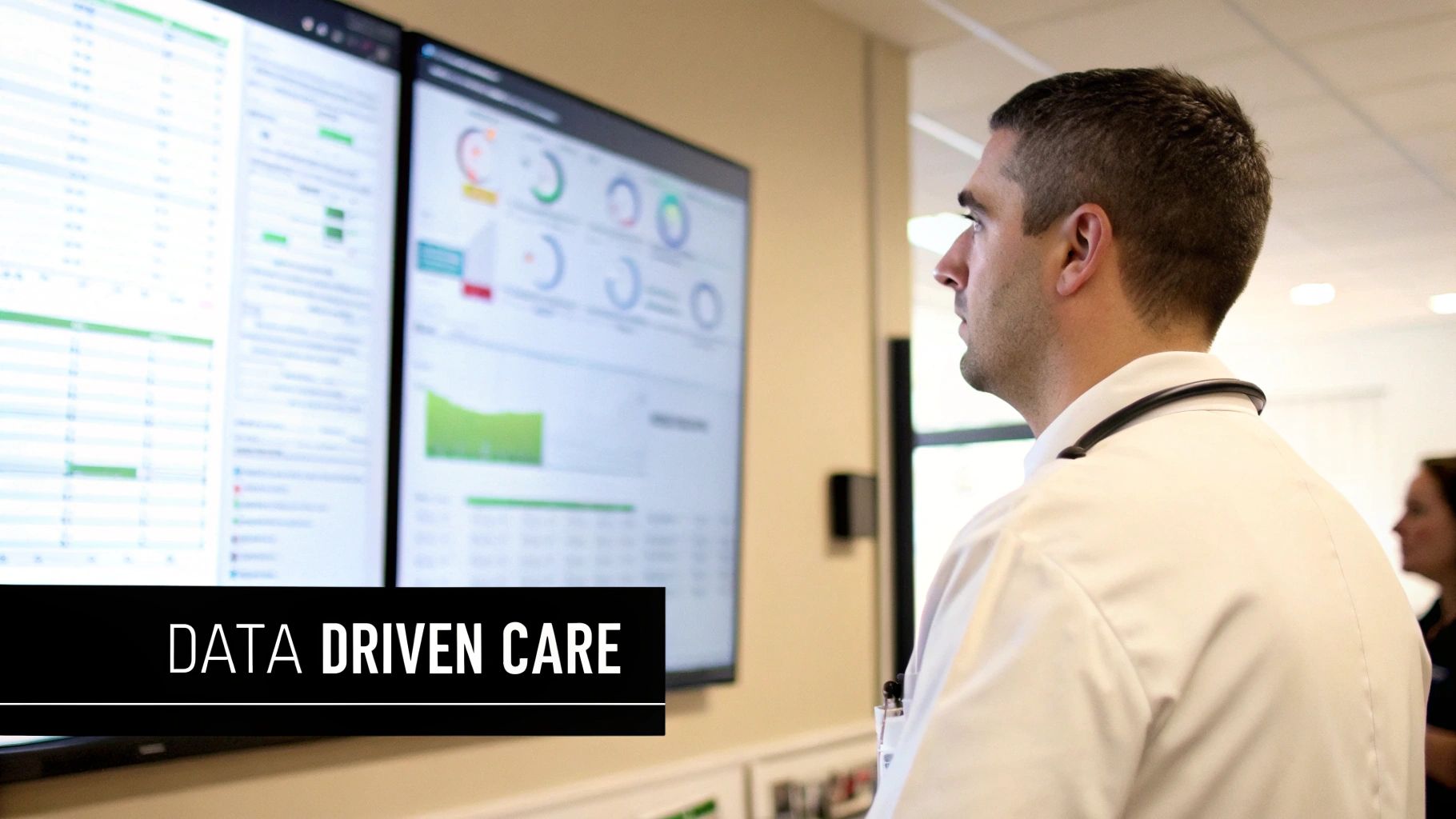
For decades, healthcare decisions have relied on clinical experience. While invaluable, expertise alone can miss broader trends, operational bottlenecks, or financial leaks. Today, with rising costs and patient demands, intuition isn't enough. Business intelligence (BI) bridges this gap by transforming massive datasets into clear, actionable insights.
Making Data-Driven Decisions a Reality
Healthcare BI isn't just about reports; it’s about creating a culture where data informs every move. It unifies information from across an organization—clinical, financial, operational—to create a complete picture. This allows leaders to move from asking "what happened?" to answering "what will happen next?" and "what is the best action to take?"
The market reflects this need. The global healthcare BI market is projected to grow from USD 10.2 billion in 2024 to USD 29.7 billion by 2033, driven by the demand for data-backed decisions. You can explore market trends and their drivers in the full research.
Business intelligence acts as a translator. It converts the complex language of data into simple, visual stories that clinicians and administrators can use to make faster, smarter decisions for patient care.
Core Components of Healthcare Business Intelligence
A successful healthcare BI strategy is built on four key components that work together to turn raw data into a catalyst for improvement.
The table below breaks down these essential pillars and their function in a healthcare setting.
ComponentDescriptionExample in HealthcareData SourcesRaw information from diverse systems.Electronic Health Records (EHRs), billing systems, patient surveys, pharmacy data, and lab results.Data IntegrationCombining fragmented data into a single, unified view.Merging clinical EHR data with financial data to analyze the true cost of care for a specific procedure.Data AnalysisUsing tools to find patterns and predict trends.Identifying patient groups at high risk for hospital readmission or forecasting patient no-show rates.Reporting & VisualizationPresenting findings in easy-to-digest formats like dashboards.A dashboard showing real-time emergency department wait times, allowing staff to reallocate resources instantly.
By integrating these elements, BI gives healthcare organizations the foresight needed to enhance patient care, control costs, and improve operational efficiency.
Seeing BI in Action: Real-World Healthcare Use Cases

The true power of healthcare BI is evident when it solves tangible problems that impact patient lives and financial stability. The following examples illustrate how BI turns common healthcare challenges into measurable improvements.
Use Case 1: Reducing Patient Readmissions
Outcome: A hospital system reduced 30-day readmissions by 15%, improving patient outcomes and saving significant costs.
- Problem: High readmission rates for patients with chronic conditions like congestive heart failure and COPD, indicating gaps in care coordination.
- BI Solution: A BI platform integrated data from multiple sources:
- Electronic Health Records (EHRs) for clinical history.
- Socio-demographic Data to identify non-clinical risks (e.g., lack of transportation).
- Post-Discharge Notes to monitor care plan adherence.
- Action: The system identified high-risk patients, enabling care coordinators to provide proactive, personalized follow-up, such as home health visits and medication management support.
Use Case 2: Optimizing Clinic Patient Flow
Outcome: An outpatient clinic cut average patient wait times by 25%, boosting patient satisfaction and staff morale.
- Problem: Excessive wait times (over an hour) were causing patient complaints and staff burnout.
- BI Solution: A real-time BI dashboard visualized key operational metrics:
- Patient check-in and check-out times.
- Exam room occupancy and turnover rates.
- Staff availability and appointment no-show patterns.
- Action: The dashboard revealed a bottleneck at the lab sample collection station. The clinic reallocated a staff member to assist during peak hours, immediately easing the congestion and improving patient throughput. This success reflects trends seen in other data-driven projects, like those in test automation in healthcare.
Use Case 3: Enhancing Financial Health
Outcome: A healthcare network lowered its first-pass claim denial rate by 40%, accelerating its revenue cycle and improving cash flow.
- Problem: Nearly 10% of insurance claims were being denied on the first submission, often due to simple administrative errors.
- BI Solution: A BI tool analyzed historical claims data, identifying the root causes of denials by payer, procedure code, and error type.
By transforming raw claims data into a clear, visual story, business intelligence empowers finance teams to move from reactive appeals to proactive denial prevention.
- Action: The analysis revealed that a few common errors were responsible for over 60% of denials. The billing department used this insight to provide targeted staff training and set up automated flags to catch high-risk claims before submission.
Measuring What Matters Most: Key Healthcare KPIs
A BI platform is only as good as the metrics it tracks. Key Performance Indicators (KPIs) are the vital signs of a healthcare organization, telling a clear story about patient care, operational efficiency, and financial stability. Tracking the right KPIs turns data into a strategic asset.
Without them, even the most advanced business intelligence for healthcare system generates noise. By focusing on specific, measurable outcomes, leaders can see where they are succeeding and where change is needed. These metrics typically fall into three categories: clinical, operational, and financial.
Clinical KPIs: Gauging Quality of Care
Clinical KPIs measure the effectiveness of patient care and help shift from reactive to proactive treatment.
- Patient Readmission Rates: Tracks the percentage of patients readmitted within 30 days. A high rate signals problems with post-discharge care.
- Average Length of Stay (ALOS): Monitors how long patients stay for specific conditions, helping to identify and resolve care bottlenecks.
- Hospital-Acquired Infection (HAI) Rates: A critical patient safety metric that helps pinpoint infection sources for targeted prevention.
Operational KPIs: Revealing System Efficiency
Operational KPIs focus on the efficiency of the healthcare system itself, uncovering bottlenecks and resource gaps.
Think of operational KPIs as the health metrics for the hospital's processes. Just as vital signs indicate a patient's health, these numbers reveal the pulse of the organization, showing whether it's running smoothly or struggling under strain.
- Bed Occupancy Rate: Helps balance patient demand with resources. BI tools can forecast trends to improve staff scheduling and planning.
- Emergency Room (ER) Wait Times: A key factor in patient satisfaction. Real-time tracking allows managers to resolve logjams as they happen.
- Staff-to-Patient Ratio: Ensures adequate staffing for patient safety and helps prevent burnout.
Financial KPIs: Highlighting Financial Health
Financial KPIs provide a transparent view of the revenue cycle and overall fiscal health, ensuring long-term sustainability.
- Cost Per Patient: Breaks down treatment costs to identify savings opportunities without compromising care quality.
- Claim Denial Rate: Reveals administrative issues in the billing process. BI tools analyze denial reasons to fix root causes and improve cash flow.
- Revenue Per Bed: Measures the effective use of physical assets, informing strategic decisions about service line investments.
Essential Healthcare KPIs Tracked with BI
This table summarizes critical KPIs monitored with business intelligence tools, highlighting what to track and why it matters.
CategoryKPI ExampleWhy It MattersClinical30-Day Readmission RateIndicates gaps in post-discharge care, directly impacting patient outcomes and CMS reimbursements.ClinicalHospital-Acquired InfectionsA direct measure of patient safety. High rates can lead to poor outcomes and financial penalties.ClinicalMedication Error RateCritical for patient safety. BI identifies patterns in errors to drive process improvements.OperationalER Wait TimeA major driver of patient satisfaction and a key indicator of emergency department efficiency.OperationalBed Occupancy RateHelps with capacity planning and resource allocation to avoid overcrowding or underutilization.OperationalStaff-to-Patient RatioCrucial for ensuring patient safety, quality of care, and preventing staff burnout.FinancialClaim Denial RateReveals revenue cycle issues. Reducing this rate directly improves cash flow.FinancialAverage Cost Per PatientProvides insight into cost-effectiveness, helping identify savings opportunities.FinancialDays in Accounts ReceivableMeasures payment collection speed. A lower number indicates a more efficient revenue cycle.
Focusing on a balanced set of KPIs provides a 360-degree view, enabling leaders to ask better questions and drive continuous improvement.
Building Your Healthcare Data Foundation

Insightful dashboards and predictive analytics are built on a powerful technical backbone. This data foundation transforms a flood of information into a single, reliable source of truth. Without this structure, even the best business intelligence for healthcare tools will fail.
Unifying Disparate Data Sources
A typical healthcare system has many disconnected technologies. The first step is to integrate data from these disparate sources to create a complete picture.
Common sources include:
- Electronic Health Records (EHRs): Core clinical data, from patient histories to lab results.
- Billing and Claims Systems: Financial data on revenue cycles and operational costs.
- Patient Feedback Surveys: Qualitative data for measuring patient satisfaction.
- Pharmacy Management Systems: Information on medication dispensing and inventory.
A modern data foundation acts as the central nervous system for a healthcare organization. It collects signals from every department, processes them, and sends clear, actionable insights back to the teams on the ground.
This unified approach ensures everyone—from clinicians to administrators—is working from the same data, enabling collaborative decision-making.
The Power of a Cloud-Based Data Platform
Traditional on-premise data storage cannot handle the volume and velocity of modern healthcare data. A cloud-based data warehouse like Snowflake offers a scalable, secure, and flexible alternative.
Cloud platforms provide key advantages:
- Scalability: Effortlessly expand to handle fluctuating data loads.
- Security: Offer robust, HIPAA-compliant security controls, including end-to-end encryption.
- Collaboration: Make data a central, shared asset accessible to authorized users anywhere.
This architecture is a strategic advantage. Our experience in building a large-scale EMS data solution highlights the reliability and speed of cloud platforms in high-stakes environments.
From Raw Data to Actionable Insight
Once data flows into a central warehouse, it is cleaned, organized, and prepared for analysis using an ELT (Extract, Load, Transform) process. Raw data is loaded first, then transformed, offering greater speed and flexibility. During this stage, data is standardized and enriched.
With a clean dataset ready, BI tools like Tableau or Power BI connect to it. These platforms provide the user-friendly interface that turns complex data into the interactive dashboards that clinicians and administrators use for daily decision-making.
Protecting Patient Data with Secure BI Practices

In business intelligence for healthcare, protecting patient data is a non-negotiable responsibility. Adherence to the Health Insurance Portability and Accountability Act (HIPAA) is a legal and ethical mandate. A security breach erodes patient trust and can lead to severe financial penalties.
Security must be integrated into your data architecture from day one. This requires a multi-layered approach that combines technology, strict processes, and a security-conscious culture to protect patient data at every stage.
Core Pillars of a Secure BI Framework
A HIPAA-compliant BI system relies on several essential safeguards working in concert.
- End-to-End Encryption: Data must be encrypted both at rest (in the data warehouse) and in transit (moving between systems). This renders information unreadable to unauthorized parties.
- Strict Access Controls: Role-Based Access Control (RBAC) is crucial for limiting data visibility to the minimum required for an individual's job, following the "principle of least privilege."
- Comprehensive Audit Trails: A clear record of who accessed what data, when, and what they did is essential for accountability and allows for rapid investigation of suspicious activity.
Security in healthcare BI is really about creating a "need-to-know" environment. A surgeon analyzing surgical outcomes shouldn't have access to billing information, and a financial analyst doesn't need to see detailed clinical notes. Granular controls make this separation possible.
Making Security Actionable with Role-Based Access
Here is how RBAC works in a hospital. On a single BI dashboard tracking cardiac procedure outcomes, different users would see views tailored to their roles:
- The Cardiac Surgeon: Sees aggregated, de-identified outcome data for their cases (e.g., recovery times, complication rates). They cannot see patient names or data from other departments.
- The Hospital Administrator: Views high-level operational metrics (e.g., total procedures, average cost, bed occupancy). They have no access to individual patient records.
- The Billing Specialist: Accesses only financial data, like claim statuses and reimbursement rates. All clinical details are masked.
This granular control ensures analytics reach the right people without compromising patient privacy, building a BI system that is both insightful and trustworthy.
Your Roadmap to BI Implementation Success
Successful BI implementation requires a solid plan that balances people, process, and technology. It’s not just about installing new software; it's about shifting how your organization uses and values data. This roadmap breaks the journey into three core pillars to build a program that delivers tangible results and scales for lasting change.
Cultivating the People Pillar
The most advanced dashboard is useless if no one uses or trusts it. Building a data-literate culture is the most critical factor for long-term success. This starts with leadership buy-in and requires champions at every level.
The first step is to assemble a cross-functional team including:
- Clinical Staff: Nurses and doctors who understand workflows and can identify where BI can have the greatest impact.
- IT and Data Analysts: The technical experts who will build the data infrastructure and dashboards.
- Administrative Leaders: Decision-makers who ensure the BI strategy aligns with organizational goals.
This team ensures the solution solves real-world problems and gains the necessary buy-in to succeed.
Defining the Process Pillar
With the right team in place, map out a realistic process. Many BI projects fail by trying to do too much too soon. The key is to start small, prove value quickly, and build on that success.
Begin by defining specific, achievable goals. Instead of "improve patient care," aim for something like, "reduce ER wait times by 15% in six months." This clarity focuses the team and makes success easy to measure.
The single best way to prove the concept and build momentum is to launch a pilot project. Pick one high-visibility problem—like tracking bed occupancy rates—and build a focused solution. A successful pilot becomes your best internal marketing tool, winning over skeptics and unlocking resources for the next phase.
This approach minimizes initial risk and cost while building an evidence-based case for a larger rollout of your business intelligence for healthcare strategy.
Selecting the Technology Pillar
Finally, choose the right tools. Your technology should support your people and processes, not dictate them. The tech stack must be scalable, secure, and user-friendly for non-technical staff.
Consider the entire data journey:
- Data Integration: How will you extract data from systems like EHR and billing platforms?
- Data Storage: A cloud data warehouse is the modern standard for scalability and security.
- Data Visualization: Which BI platform, like Tableau or Power BI, best fits your team's skills and makes insights easy to understand?
The industry is rapidly adopting advanced analytics. In 2024, North America dominated the healthcare BI market, and the U.S. market alone reached USD 4.23 billion. You can find more details on these healthcare BI market trends in the full report. Selecting technology aligned with market trends ensures you build a lasting solution.
Frequently Asked Questions About Healthcare BI
Shifting to a data-driven approach raises practical questions. Understanding the specifics of implementation, cost, and real-world impact is the first step toward a successful business intelligence for healthcare initiative.
How Long Does a BI Implementation Take?
A full, enterprise-wide implementation can take six months to over a year, but a phased approach is better.
Start with a focused pilot project targeting a specific problem, like reducing ER wait times. A successful pilot can deliver a working dashboard and measurable results in just three to four months. This provides a quick win, proves the value of BI, and builds momentum for a broader rollout.
What Is the Biggest Challenge to Adoption?
The biggest challenge isn't technology—it's culture.
Shifting from intuition-based decisions to data-driven ones is a significant change. It requires strong leadership, clear communication, and effective training to overcome resistance. The key is to demonstrate how BI tools make jobs easier and lead to better patient outcomes, rather than just adding another complex system to learn.
The real measure of success for any healthcare BI initiative isn't how fancy the dashboards look. It's about how many daily decisions are genuinely being informed by data. You're aiming for a fundamental shift in mindset, not just a technology upgrade.
Can BI Tools Work With Our Old Systems?
Yes. Modern BI platforms are designed to integrate with a wide variety of systems, including older legacy platforms like established EHRs or billing systems.
Data connectors and a modern data warehouse act as a bridge, pulling information from these older sources and combining it with data from newer tools. This creates a single, unified view of all your information, ready for analysis.


