In modern development cycles, manual testing creates unsustainable bottlenecks. Strategic automation is essential to accelerate release times and eliminate critical defects. However, navigating the crowded marketplace to find the right solution is a challenge. This guide cuts through the marketing noise to provide a clear, actionable comparison of the best software testing automation tools available today.
This resource focuses on tangible business outcomes. For each of the 12 tools, you'll find an analysis of its strengths, weaknesses, and ideal use cases, from web and mobile to API and performance testing. We examine critical factors like scalability, CI/CD integration, and AI-assisted capabilities to help you select a solution that aligns directly with your organization's goals.
This curated list helps you select a solution that aligns directly with your organization's goals, whether you're a telecom firm modernizing OSS/EMS, a logistics company enhancing mobile apps with geofencing, or an enterprise optimizing Snowflake data platforms. While our focus is on functional and end-to-end automation, it's important to remember that specialized testing domains often require dedicated solutions. For instance, maintaining UI consistency is a distinct discipline; exploring the 12 Best Visual Regression Testing Tools can provide targeted tools for ensuring visual integrity across releases. This article will equip you with the insights needed to build a resilient, efficient, and outcome-driven testing pipeline.
1. Our Services — Test Automation
Faberwork’s Test Automation is an engineering-led service that designs, builds, and integrates scalable test automation frameworks directly into an organization's delivery pipeline. Instead of a single software product, this fully managed service is ideal for businesses needing to solve complex quality challenges in regulated industries like finance, healthcare, and telecom.
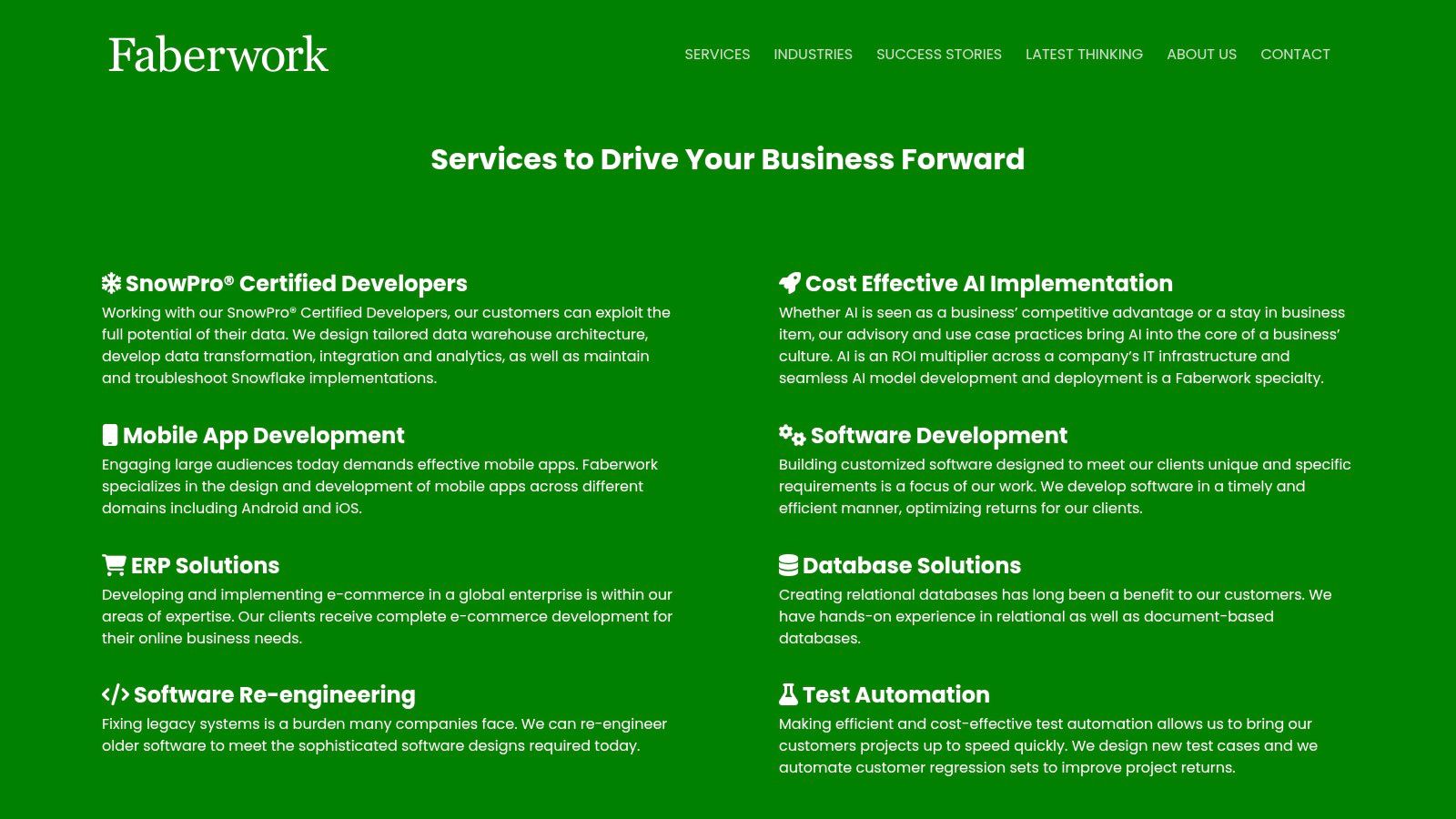
The service provides end-to-end scope, from creating new test cases and automating regression suites to full CI/CD integration. A key outcome is its expertise in leveraging Snowflake-centered data platforms for sophisticated test data management, ensuring tests run against realistic, high-quality data sets.
Key Outcomes and Use Cases
Faberwork delivers where off-the-shelf tools fall short, solving industry-specific problems for mission-critical systems.
- Use Case: Accelerating Financial Compliance. A financial services firm needed to accelerate its release cycle for a core banking platform. Faberwork designed an automated regression suite integrated into their Jenkins pipeline. The outcome was a reduction in the regression testing window from five days to just four hours, eliminating release-day defects.
- Use Case: On-Demand Test Data for Retail. For a large retailer, Faberwork built a test data generation system using Snowflake. This allowed the QA team to create sanitized, production-like data on-demand, enabling realistic performance and load testing.
Practical Considerations
The service is delivered through a project-based model with customized pricing and timelines. This requires more upfront engagement than a SaaS subscription but ensures the final solution is precisely tailored to the client’s technology stack and business objectives. The 24/7 support model is particularly valuable for global teams.
Website: https://www.faberwork.com/services
2. Selenium
Selenium is the foundational open-source framework for web browser automation. As a W3C standard, Selenium WebDriver ensures consistent, vendor-neutral browser interactions, making it one of the best software testing automation tools for achieving comprehensive cross-browser validation. The website, selenium.dev, is the central hub for documentation and community access.
Core Features and Outcomes
Selenium's strength is its modularity and flexibility, enabling teams to build custom solutions. Key components include:
- WebDriver: Provides the core API for direct browser control.
- Grid: Enables parallel test execution across multiple machines. The key outcome is a significant reduction in test run times for large-scale enterprise applications.
- IDE: A record-and-playback tool for creating initial test scripts, ideal for teams new to automation.
Because Selenium is a free framework, organizations must manage their own infrastructure or integrate with cloud grid providers. This model offers ultimate flexibility at the cost of engineering overhead. For a deeper dive into practical application, explore how to leverage Selenium for complex test automation in specialized sectors.
FeatureAssessmentIdeal Use CaseCustom web UI automation for enterprise-level, cross-browser testing.StrengthsVendor-neutral, massive community support, integrates with everything.LimitationsSteep learning curve; requires self-managed infrastructure.CI/CD IntegrationNative integration with Jenkins, Azure DevOps, CircleCI, and others.Licensing ModelCompletely Free (Apache 2.0 License).
Website: https://www.selenium.dev
3. Playwright
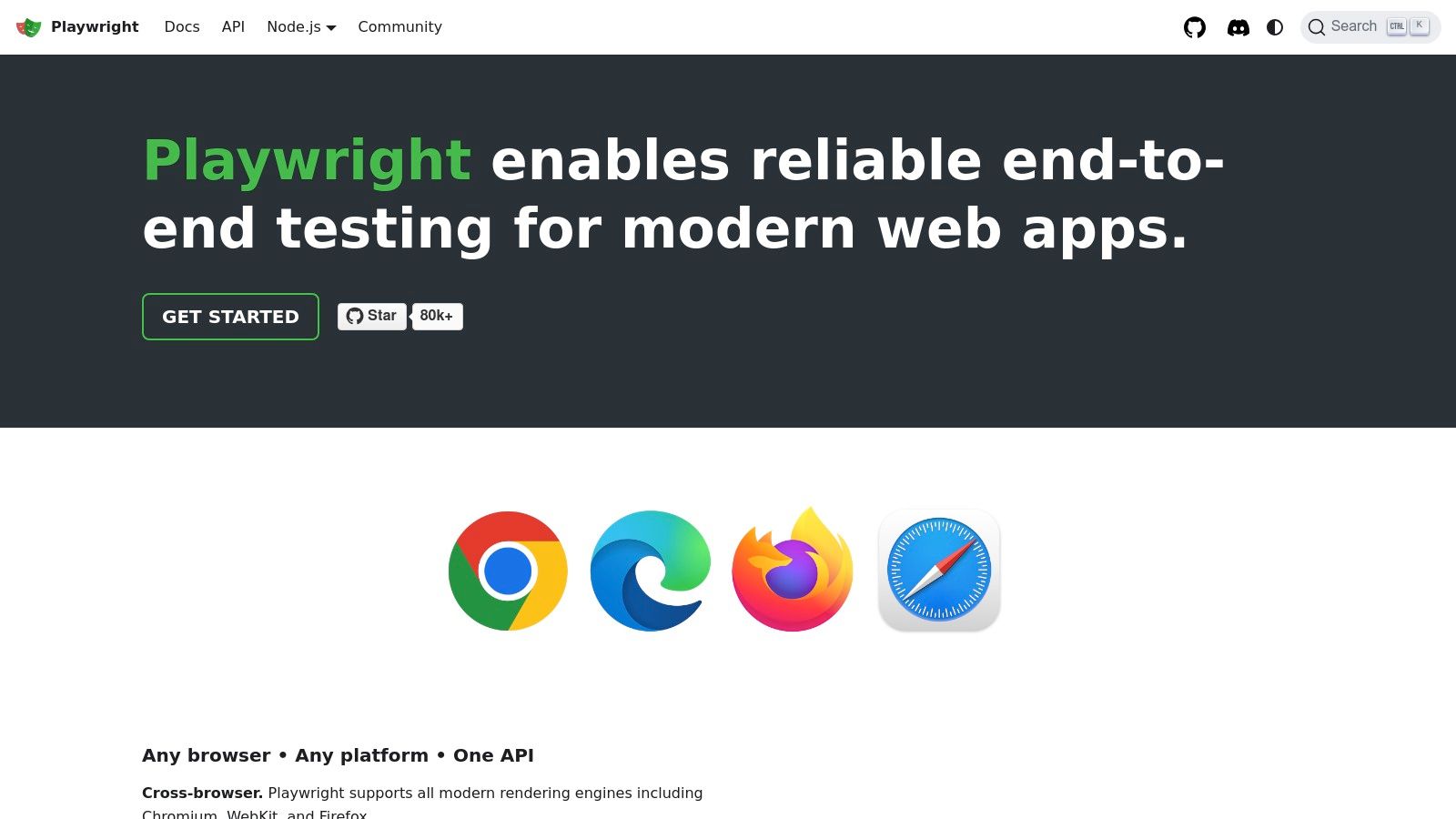
Playwright is a modern, open-source framework from Microsoft designed for reliable end-to-end web testing. Its key outcome is speed and an improved developer experience, offering a single API to automate across Chromium, Firefox, and WebKit. The playwright.dev website is the official resource for its comprehensive documentation. Its architecture includes built-in auto-waits, which eliminate flaky tests caused by timing issues—a common pain point in older frameworks.
Core Features and Outcomes
Playwright’s "batteries-included" approach delivers a complete testing solution out of the box. Key components include:
- Unified API: A single command set simplifies cross-browser script creation.
- Test Runner: Includes built-in parallelization and rich assertion libraries, reducing the need for third-party tools.
- Trace Viewer: A powerful debugging tool that provides a complete, step-by-step trace of test execution, including network logs and DOM snapshots, leading to faster issue resolution.
As a free tool, Playwright requires no licensing fees. However, like Selenium, enterprise teams must manage their own infrastructure or integrate with cloud testing platforms to achieve large-scale, cross-device execution. This model provides flexibility but requires additional configuration.
FeatureAssessmentIdeal Use CaseFast, reliable end-to-end testing for modern web applications (React, Vue).StrengthsExcellent developer experience, auto-waits, built-in tracing, fast execution.LimitationsRequires self-managed grid; smaller community and plugin ecosystem than Selenium.CI/CD IntegrationFirst-class support for GitHub Actions, integrates easily with all major CI tools.Licensing ModelCompletely Free (Apache 2.0 License).
Website: https://playwright.dev
4. Cypress
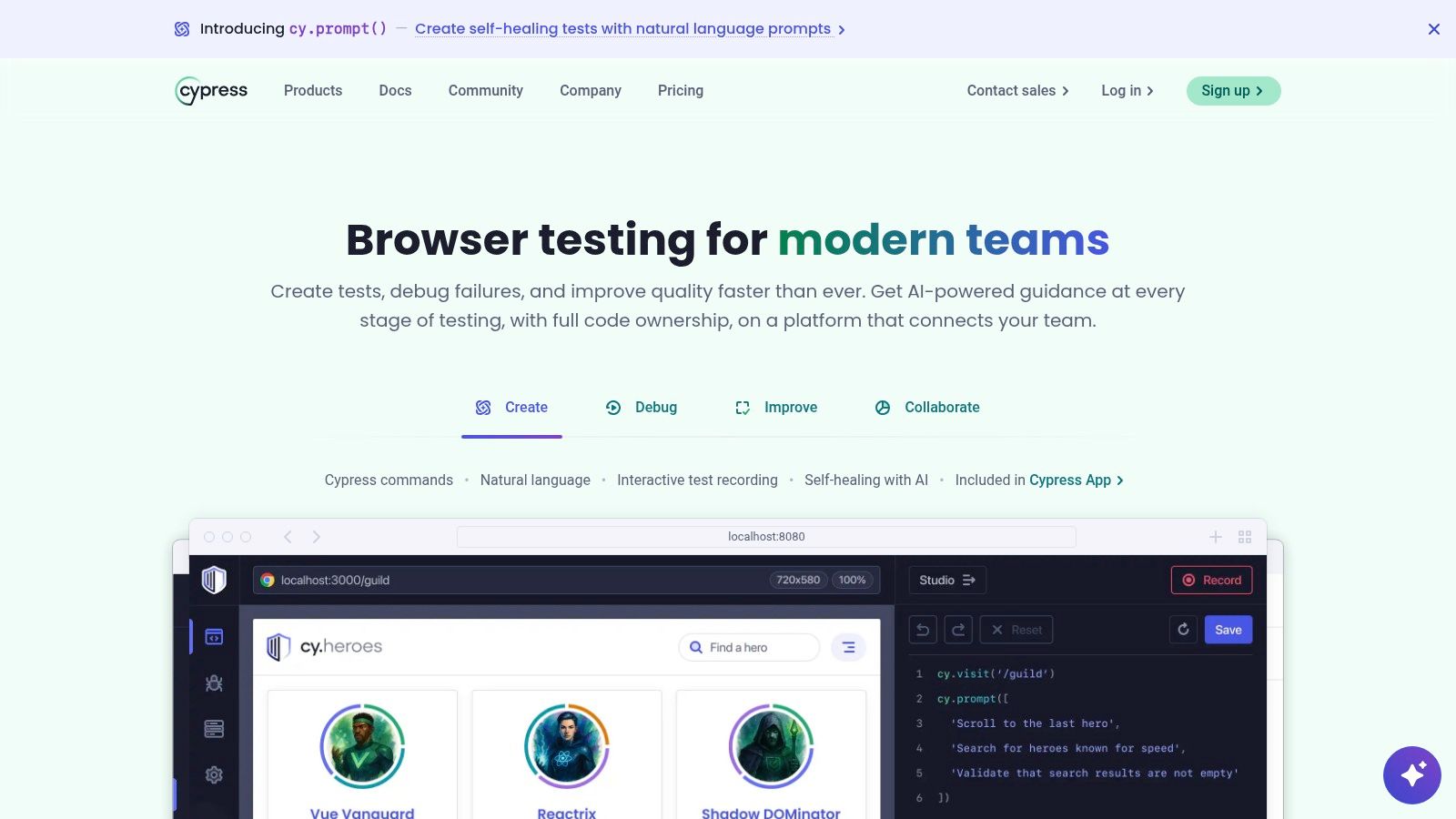
Cypress is an open-source automation framework designed for modern web applications. Its architecture runs directly in the browser alongside the application, providing native access to the DOM and network traffic. The primary outcome is a superior debugging experience and rapid feedback loops, which is crucial for development teams practicing Agile and DevOps. cypress.io is the gateway to its test runner and the companion Cypress Cloud service for orchestration and analytics.
Core Features and Outcomes
Cypress combines an open-source runner with a commercial cloud platform for enterprise-grade testing.
- Use Case: Improving Developer Productivity. A frontend team uses the free Cypress runner for local development. Its time-traveling debug features allow them to step through test execution, instantly identifying the cause of failures without leaving their IDE. This shortens the debug cycle from hours to minutes.
- Use Case: Scaling QA with Cypress Cloud. An enterprise team uses the paid Cypress Cloud service to run its test suite in parallel across their CI/CD pipeline. The platform's flaky test detection and AI-assisted summaries help them pinpoint and fix unstable tests, improving release confidence.
While the local runner is free, scaling test execution requires a Cypress Cloud subscription. This model is ideal for teams that value developer experience and integrated debugging. For insights into its practical application, see how organizations are accelerating browser testing with solutions like Cypress.
FeatureAssessmentIdeal Use CaseDeveloper-led end-to-end and component testing for modern JavaScript frameworks.StrengthsExceptional developer experience, rapid setup, and powerful debugging tools.LimitationsLimited to single-browser control per test; paid cloud service needed for scale.CI/CD IntegrationFirst-class integrations with GitHub, GitLab, Jenkins, CircleCI, and others.Licensing ModelFree (MIT License for runner) with Paid plans for Cypress Cloud.
Website: https://www.cypress.io
5. Katalon
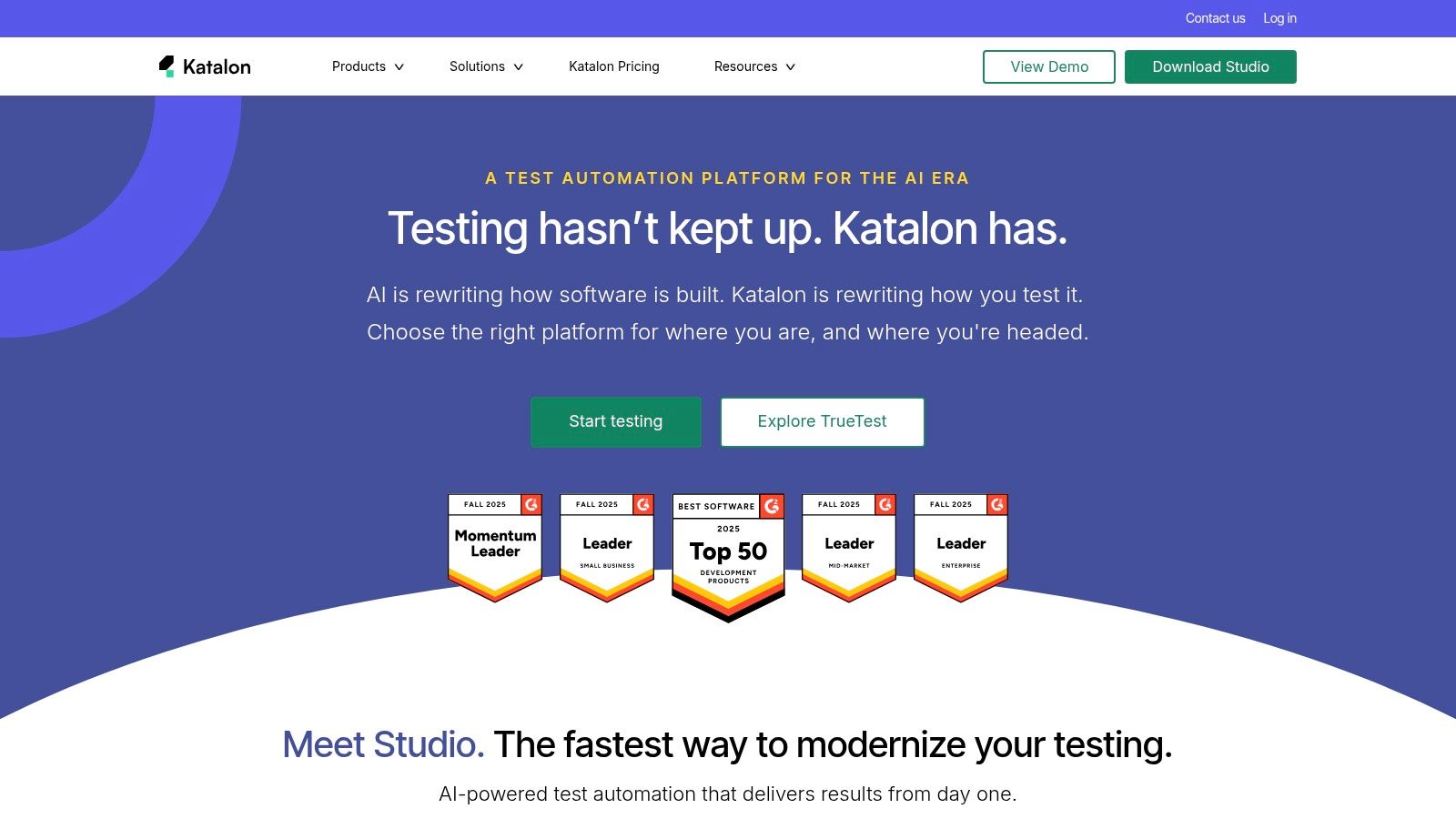
Katalon is a comprehensive testing platform that unifies web, mobile, desktop, and API automation. Its key outcome is reduced toolchain complexity, allowing organizations to standardize quality engineering practices. katalon.com is the portal for its integrated suite, which includes Studio for test creation, TestCloud for execution, and TestOps for analytics. This all-in-one approach positions it as one of the best software testing automation tools for teams with varied skill sets.
Core Features and Outcomes
Katalon’s platform is built to accommodate both new and experienced automation engineers.
- Use Case: Democratizing Test Automation. A QA team with mixed coding skills uses Katalon Studio. Manual testers use the record-and-playback and keyword-driven modes to create automated tests quickly, while experienced engineers use the full scripting environment for complex scenarios. This approach increases automation coverage without requiring everyone to be a developer.
- Use Case: Reducing Test Maintenance. Katalon's self-healing locators automatically adapt to minor UI changes. This feature reduces the time spent fixing broken tests, allowing the team to focus on creating new test cases for upcoming features.
The platform offers a tiered licensing model, starting with a free version. Paid tiers unlock advanced features like parallel execution. Procurement is flexible, with options for direct purchase or through the AWS Marketplace.
FeatureAssessmentIdeal Use CaseTeams needing a unified platform for web, mobile, and API test automation.StrengthsAll-in-one solution reduces tool sprawl; accessible low-code and full-code options.LimitationsKey enterprise features like parallel execution are gated behind higher tiers.CI/CD IntegrationPre-built integrations for Jenkins, Azure DevOps, CircleCI, GitLab, and more.Licensing ModelFreemium with paid tiers for advanced features and enterprise scale.
Website: https://katalon.com
6. SmartBear TestComplete
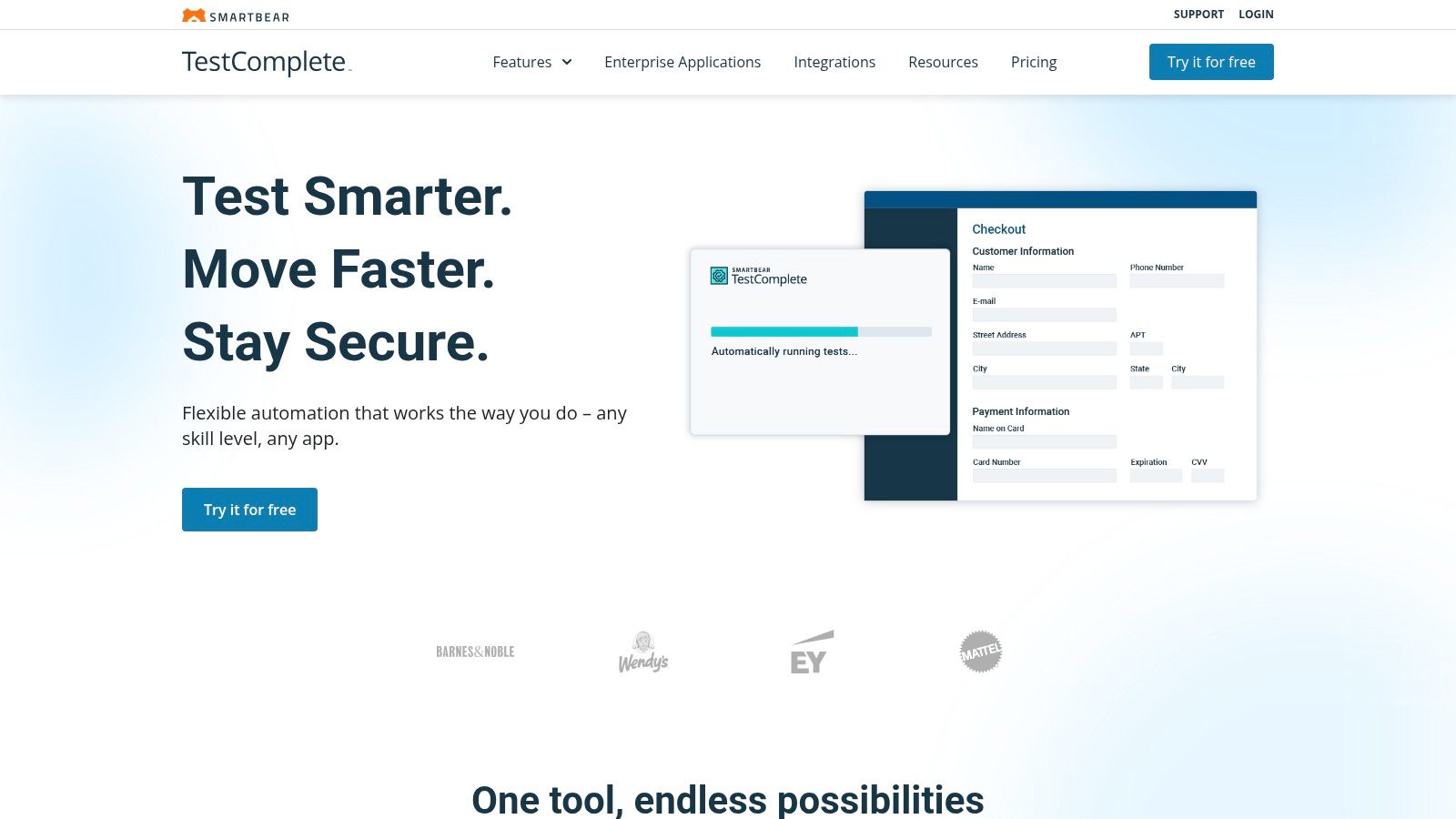
SmartBear TestComplete is a commercial UI test automation platform for desktop, web, and mobile applications. It offers both scripted and keyword-driven testing, making it accessible to diverse teams. A key outcome is robust testing with dedicated vendor support, making it ideal for organizations in regulated industries like finance or healthcare, where accountability is critical. The website is smartbear.com/product/testcomplete.
Core Features and Outcomes
TestComplete’s value is its broad technology coverage combined with enterprise-focused features.
- Use Case: Automating Legacy Desktop Applications. A large insurance company needs to automate regression testing for a critical Windows-based claims processing application. TestComplete’s robust desktop support and object recognition engine allow them to build stable tests for the legacy system, reducing manual testing effort by 80%.
- Hybrid Test Creation: Supports VBScript, Python, and other languages alongside a codeless record-and-playback editor.
- AI-Powered Object Recognition: Utilizes AI to improve test stability by reliably identifying dynamic UI elements, reducing maintenance.
Licensing is managed through a node-locked or floating license model, providing flexibility for different team sizes. While pricing is quote-based, this model ensures enterprises receive a package tailored to their specific needs, including dedicated support and transparent product roadmaps.
FeatureAssessmentIdeal Use CaseEnterprise-level UI testing for desktop, web, and mobile, especially in regulated environments.StrengthsBroad technology coverage, enterprise support, and both scripted/codeless options.LimitationsPricing requires a direct quote; authoring environment can be Windows-centric.CI/CD IntegrationIntegrates with Jenkins, Azure DevOps, Jira, and other CI/CD pipeline tools.Licensing ModelCommercial (Node-Locked or Floating Licenses).
Website: https://smartbear.com/product/testcomplete
7. Tricentis Tosca
Tricentis Tosca is an enterprise-grade, model-based test automation platform for complex, end-to-end business processes. Its codeless approach covers UI, API, and data layers. The key outcome is reduced test maintenance. By creating a model of the application, Tosca allows teams to update test cases through a visual interface, which is highly effective for packaged software like SAP and Salesforce. The website is tricentis.com.
Core Features and Outcomes
Tosca’s strength is its unified, model-based engine that abstracts test logic from the underlying technology.
- Use Case: End-to-End SAP Testing. A manufacturing company uses Tosca to automate its entire order-to-cash process, which spans across SAP, a custom web portal, and a Salesforce CRM. Tosca’s model-based approach allows them to create a single, resilient test that validates the entire workflow, catching integration defects before they reach production.
- Risk-Based Testing: Integrates test case design to help teams prioritize tests based on business risk. This ensures that the most critical application functions are tested first, optimizing test cycles.
As a commercial enterprise tool, pricing requires direct sales engagement. It offers flexible deployment options, including on-premises and cloud. While codeless, mastering the model-based methodology requires dedicated training.
FeatureAssessmentIdeal Use CaseEnd-to-end testing of complex enterprise systems (e.g., SAP, Oracle).StrengthsCodeless, reduces test maintenance, strong governance and reporting.LimitationsHigh total cost of ownership; ramp-up time for model-based approach.CI/CD IntegrationIntegrates with Jenkins, Azure DevOps, Bamboo, and other major tools.Licensing ModelCommercial (Quote-based).
Website: https://www.tricentis.com/products/tricentis-tosca
8. OpenText UFT One
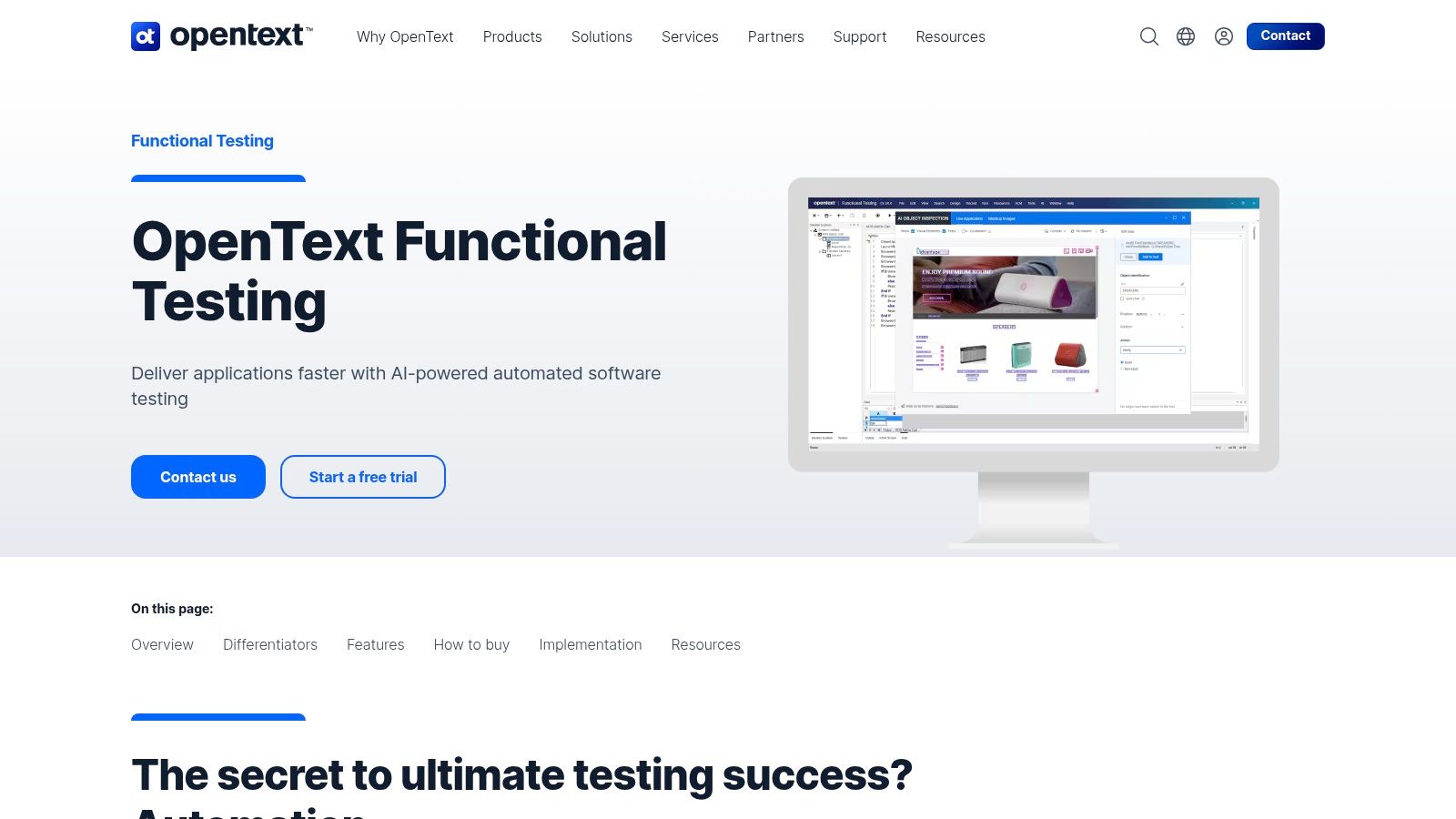
OpenText UFT One is an enterprise functional testing platform designed for complex, omnichannel application landscapes. Its primary outcome is creating resilient tests that don't break with minor UI changes, thanks to its AI-powered object recognition. This makes it ideal for enterprise environments where application stability across legacy systems, packaged apps, and modern web frontends is critical. opentext.com/products/uft-one is the main product resource.
Core Features and Outcomes
UFT One combines a broad technology stack with modern AI capabilities to streamline testing.
- Use Case: Validating an Omnichannel Banking Experience. A bank needs to test a new loan application process that starts on a mobile app, continues on a web portal, and is finalized in a mainframe-based backend system. UFT One's cross-technology support allows a single script to validate the entire workflow, ensuring a seamless customer experience.
- AI-Based Object Recognition: Identifies on-screen objects visually, reducing reliance on brittle locators. The outcome is more stable automation scripts that require less maintenance.
UFT One is a fully supported commercial product with enterprise pricing. Licensing requires direct engagement with OpenText sales. Its Windows and VBScript heritage may require specific skill sets, though it has expanded to support more modern approaches.
FeatureAssessmentIdeal Use CaseEnd-to-end testing for enterprises with a mix of modern, legacy, and packaged applications.StrengthsBroad technology coverage, powerful AI object recognition, dedicated vendor support.LimitationsGated enterprise pricing; historical reliance on VBScript can be a barrier.CI/CD IntegrationStrong integration with Jenkins, Azure DevOps, ALM Octane, and other CI tools.Licensing ModelCommercial (Pricing available upon request).
Website: https://www.opentext.com/products/uft-one
9. BrowserStack
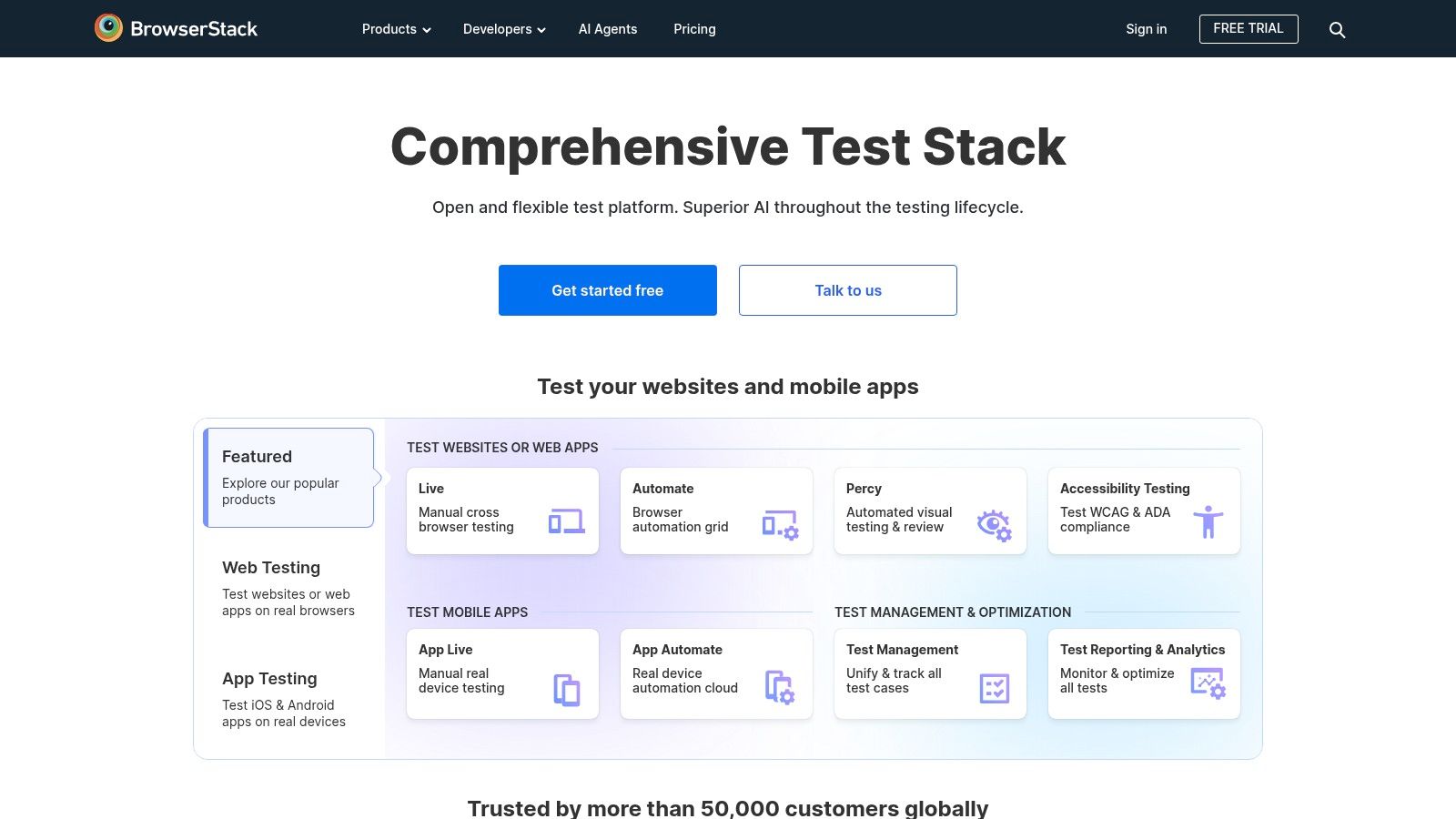
BrowserStack is a leading cloud testing platform that provides instant access to a massive grid of real mobile devices and browsers. The primary outcome is achieving comprehensive test coverage across a fragmented digital landscape without building and maintaining costly internal device labs. Its website, browserstack.com, offers a unified solution for running Selenium, Cypress, Playwright, and Appium tests at scale.
Core Features and Outcomes
BrowserStack is designed for seamless integration and scalability.
- Use Case: Ensuring Cross-Browser Compatibility. An e-commerce company wants to ensure its new checkout page works flawlessly on all major browsers and devices before launch. They use BrowserStack Automate to run their existing Selenium suite across hundreds of browser/OS combinations in parallel. The entire suite completes in 15 minutes, giving them immediate confidence to release.
- Debugging Artifacts: Immediately diagnose failures with access to video recordings, console logs, and network logs. This leads to faster root cause analysis.
- Secure Tunneling: The Local Testing feature creates a secure connection to test applications hosted on internal, pre-production environments.
The platform operates on a subscription model, with pricing determined by the number of parallel test executions required. This structure allows teams to start small and scale their testing capacity as needed.
FeatureAssessmentIdeal Use CaseCross-browser and real device testing for web/mobile apps without managing infra.StrengthsExtensive device/browser coverage, enterprise-grade security, and robust debugging tools.LimitationsPer-parallel pricing model can become expensive; advanced features are often add-ons.CI/CD IntegrationNative plugins for Jenkins, Azure DevOps, GitHub Actions, and more.Licensing ModelSubscription-based (Priced per parallel test).
Website: https://www.browserstack.com
10. Sauce Labs
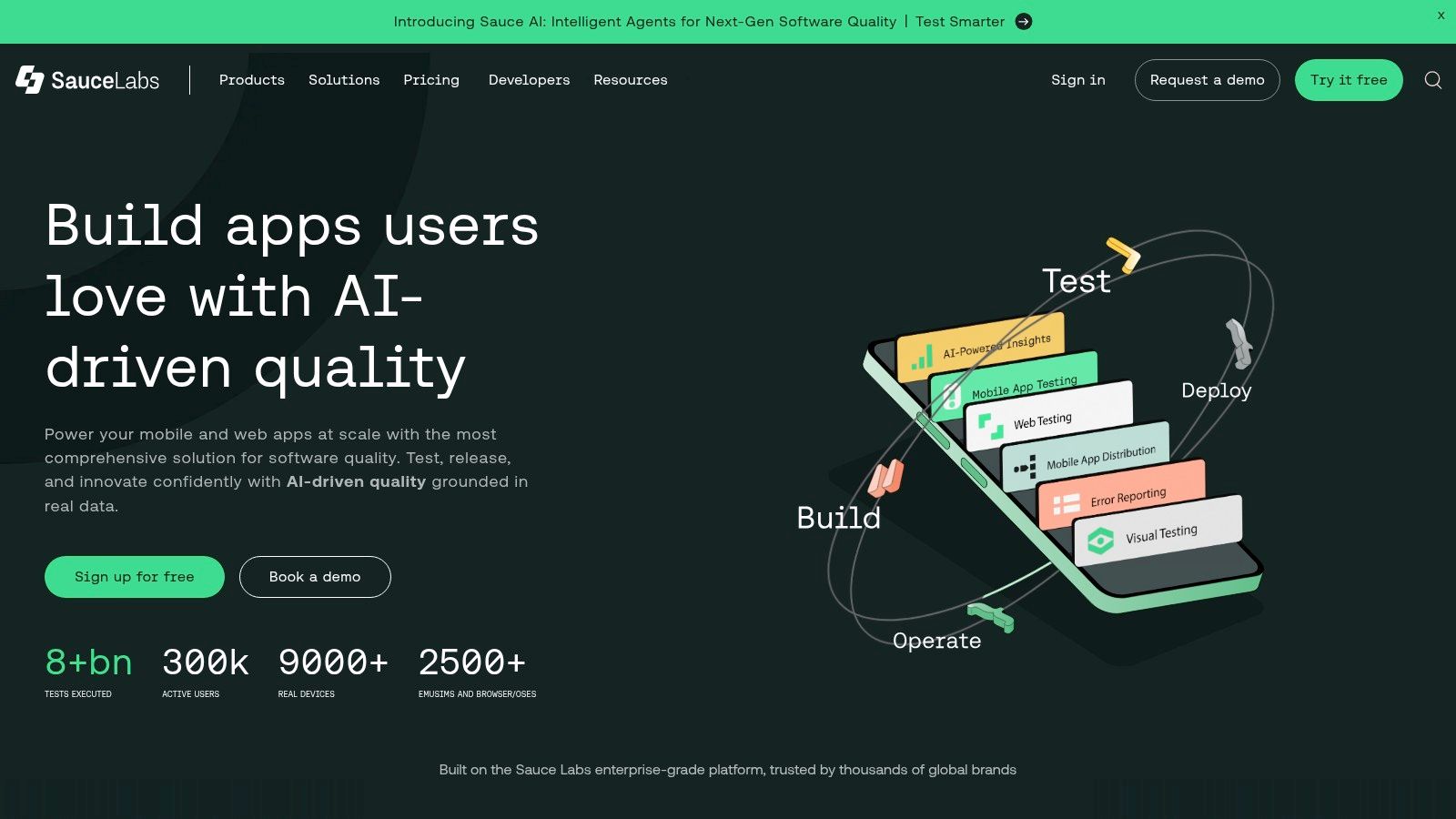
Sauce Labs is a comprehensive, cloud-based testing platform that provides automated testing across a massive grid of browsers, operating systems, and real devices. Its key outcome is bridging the gap between open-source flexibility and enterprise-grade reliability, security, and scale. It acts as a ready-made test grid for popular frameworks, accelerating CI/CD pipelines. The website is saucelabs.com.
Core Features and Outcomes
Sauce Labs offers a unified platform for diverse testing needs, supporting web and mobile validation.
- Use Case: Enterprise-Scale Mobile Testing. A media company needs to test its streaming app on a wide range of real iOS and Android devices. Using Sauce Labs' Real Device Cloud, they run their Appium test suite across hundreds of device models in parallel. This allows them to identify device-specific bugs and performance issues before releasing to the app stores.
- Framework Agnostic: Seamless integration with Selenium, Playwright, Cypress, Appium, and others allows teams to use their preferred tools.
- Debugging and Analytics: Provides detailed error reporting, video recordings, and screenshots to help engineers quickly identify and resolve failures.
The platform operates on a subscription model based on the number of parallel tests required. While entry-level plans offer a cost-effective start, scaling concurrency often requires higher-tier enterprise plans.
FeatureAssessmentIdeal Use CaseEnterprise-level parallel testing for web and mobile apps on a secure cloud.StrengthsMature platform, broad framework support, strong security and compliance.LimitationsEntry plans are limited in concurrency; advanced features are premium.CI/CD IntegrationExtensive plugins for Jenkins, Azure DevOps, GitLab, GitHub Actions, etc.Licensing ModelSubscription-based (tiered by concurrency and feature set).
Website: https://saucelabs.com
11. LambdaTest
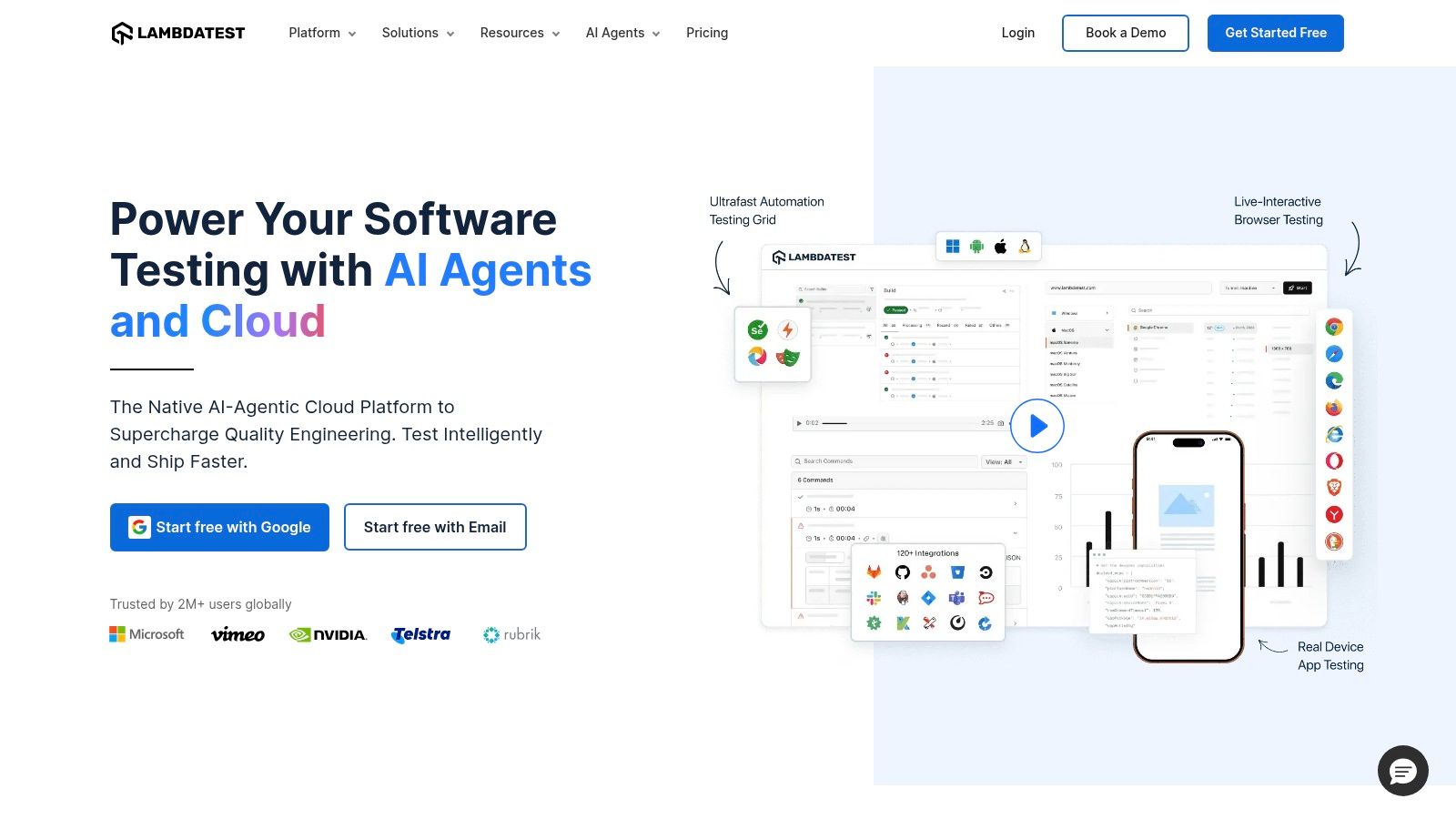
LambdaTest provides a unified, cloud-based testing platform to run web and mobile automation scripts at scale. The primary outcome is providing immediate access to a massive and flexible test execution environment for over 3,000 real browser, device, and OS combinations. This makes it an essential tool for teams looking to centralize their cross-browser testing without managing physical infrastructure. lambdatest.com is the gateway to its testing cloud.
Core Features and Outcomes
LambdaTest simplifies the execution of existing test suites on a secure, scalable cloud grid.
- Use Case: Optimizing CI/CD Pipeline Speed. A fast-growing startup integrates LambdaTest with its CircleCI pipeline. Using the HyperExecute feature, they intelligently orchestrate their Cypress test suite, reducing their end-to-end test execution time from 45 minutes to under 10. This provides developers with faster feedback and accelerates the deployment frequency.
- Broad Framework Support: Natively supports all major automation frameworks, allowing teams to plug in their existing scripts with minimal configuration changes.
- Parallel Execution: The platform is built for speed, enabling massive parallelization to dramatically reduce test cycle times.
As a commercial platform, it offers a freemium model with a generous free-forever tier, making it accessible for individuals and small teams. Paid plans are designed to scale with organizational needs.
FeatureAssessmentIdeal Use CaseCloud-based execution for web and mobile test automation at any scale.StrengthsWide framework coverage, competitive pricing, and a robust free-forever tier.LimitationsUI and plan options can be dense; private cloud requires enterprise engagement.CI/CD IntegrationExtensive plugins for Jenkins, CircleCI, GitLab, Azure DevOps, and more.Licensing ModelFreemium with tiered subscription plans based on concurrency.
Website: https://www.lambdatest.com
12. AWS Marketplace (Test Automation category)
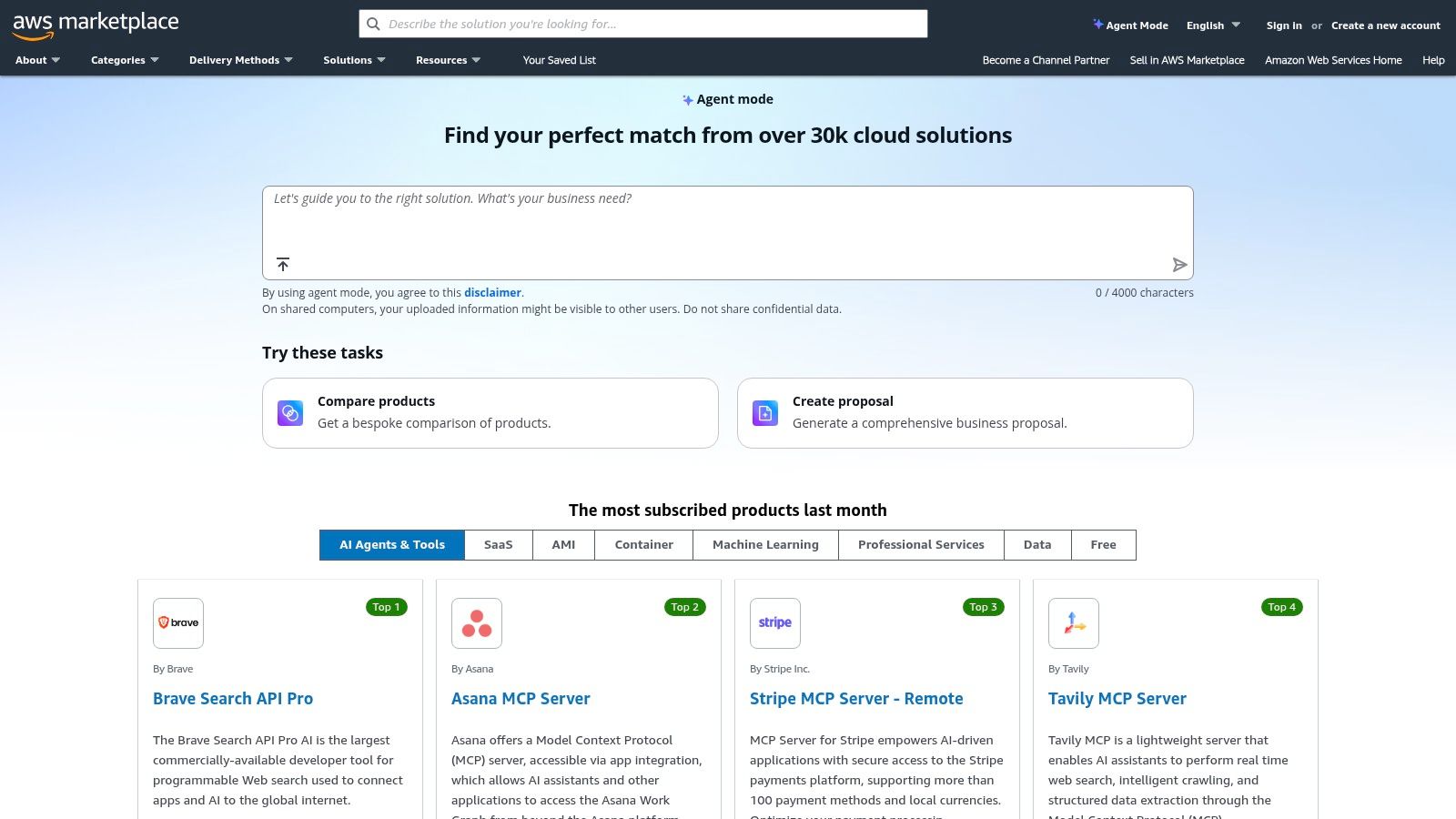
AWS Marketplace is a centralized procurement channel where enterprises discover, purchase, and deploy third-party software, including a wide array of test automation solutions. The key outcome is simplified financial governance and accelerated deployment. By offering pre-configured solutions on aws.amazon.com/marketplace, it allows organizations to launch testing tools directly within their existing cloud infrastructure, consolidating costs into a single AWS bill.
Core Features and Outcomes
The marketplace simplifies how teams access and manage automation tools.
- Use Case: Streamlining Vendor Procurement. A large enterprise needs a new test automation platform but wants to avoid a lengthy procurement process with a new vendor. They find a suitable SaaS tool on AWS Marketplace and subscribe directly. The entire process takes one day instead of months, and the costs are automatically added to their existing AWS bill.
- Consolidated Billing: All software purchases are added to your monthly AWS bill, simplifying cost tracking.
- Private Offers: Enterprises can negotiate custom pricing and terms directly with vendors through the marketplace.
While the marketplace offers significant procurement advantages, the selection can favor vendors with a strong AWS alignment. Pricing is also variable, often metered by usage, which requires careful cost management.
FeatureAssessmentIdeal Use CaseEnterprises within the AWS ecosystem seeking streamlined procurement of automation tools.StrengthsUnified billing, simplified vendor management, and accelerated tool deployment.LimitationsLimited vendor selection; pricing can be complex and varies by region and usage.CI/CD IntegrationSeamless integration with AWS CodePipeline, CodeBuild, and other AWS developer tools.Licensing ModelVaries by vendor (SaaS Subscriptions, Pay-As-You-Go, BYOL).
Website: https://aws.amazon.com/marketplace
Top 12 Test Automation Tools Comparison
OfferingCore features ✨Quality & reliability ★🏆Pricing/value 💰Target audience 👥Our Services — Test AutomationEnd-to-end test automation, CI/CD integration, Snowflake test-data & analytics ✨★★★★☆ 🏆 Engineering‑led (20+ yrs, 50 engineers), 24/7 support💰 Consulting engagements — custom quotes👥 Enterprises (healthcare, finance, retail, manufacturing, energy, logistics, telecom)SeleniumW3C WebDriver, Grid, IDE, multi-language bindings ✨★★★★☆ 🏆 Ubiquitous, large community & integrations💰 Free / open source👥 Engineers building custom, vendor‑neutral web automationPlaywrightSingle API for Chromium/Firefox/WebKit, auto-waits, tracing ✨★★★★★ 🏆 Fast, reliable, modern DX💰 Free / open source👥 Modern web teams (JS/TS, Python, Java, .NET)CypressIn‑browser runner, rich DOM/network snapshots, Test Replay (Cloud) ✨★★★★☆ 🏆 Excellent developer experience & debugging💰 Core OSS free; Cloud paid by test-results👥 Frontend devs focused on fast feedback loopsKatalonLow-code → full-code, web/mobile/desktop/API, TestCloud/TestOps ✨★★★☆☆ 🏆 All‑in‑one platform for mixed-skill teams💰 Tiered paid plans; clear procurement options👥 SMEs & teams wanting low-code + centralized opsSmartBear TestCompleteScripted & keyword testing for desktop/web/mobile, enterprise support ✨★★★★☆ 🏆 Mature toolset for regulated environments💰 Enterprise licensing — quotes required👥 Large/regulatory enterprisesTricentis ToscaModel‑based codeless tests; SAP, packaged apps, governance ✨★★★★☆ 🏆 Strong for complex, end‑to‑end enterprise programs💰 Sales‑led, higher TCO👥 Enterprises with SAP/ERP and large automation programsOpenText UFT OneAI object recognition, resilient locators, legacy app coverage ✨★★★★☆ 🏆 Long‑standing enterprise tool for omnichannel systems💰 Gated enterprise pricing👥 Organizations with legacy/mainframe & packaged appsBrowserStack3,000+ browser/OS combos, 30,000+ real devices, debug artifacts ✨★★★★☆ 🏆 Very broad coverage & strong SLAs💰 Per‑parallel pricing — can be costly at scale👥 Teams needing wide device/browser coverage without infraSauce LabsVirtual & real device cloud, multi-framework support, compliance ✨★★★★☆ 🏆 Enterprise-ready with compliance features💰 Tiered plans; entry limited, enterprise gated👥 Enterprises requiring scale + complianceLambdaTestSupports Selenium/Playwright/Cypress/Appium, HyperExecute, freemium ✨★★★☆☆ 🏆 Competitive entry pricing, strong CI integrations💰 Freemium + paid concurrent sessions👥 Cost-conscious teams and CI-driven workflowsAWS Marketplace (Test Automation)One‑click deploy of vendor grids/SaaS/AMIs into AWS, consolidated billing ✨★★★☆☆ 🏆 Simplifies procurement & AWS-native deployment💰 Varies by vendor/region; consolidated billing & private offers👥 AWS-aligned enterprises wanting streamlined procurement
Making the Right Choice: From Tool Selection to Strategic Implementation
Navigating the crowded landscape of software testing automation tools can feel overwhelming. The "best" tool isn't a one-size-fits-all solution; it's the one that aligns with your team's skills, your application's architecture, and your enterprise's goals. Moving from a long list of options to a confident decision requires a clear-eyed assessment of your unique operational context.
The journey from manual quality assurance to a mature, automated testing culture is a strategic one. The tools discussed, from open-source powerhouses like Selenium and Playwright to comprehensive enterprise platforms like Tricentis Tosca, represent different philosophies and solve different problems. Your choice is the foundational step that dictates the efficiency and success of your quality engineering initiative.
Synthesizing Your Decision: Key Factors Revisited
To make a well-informed choice, revisit the core themes from our analysis and apply them to your environment. The selection process is less about finding a tool with the most features and more about finding the right fit.
Consider these critical evaluation points:
- Team Skillset and Culture: A team of seasoned developers may thrive with the coding flexibility of Playwright. Conversely, a team with more business analysts could achieve faster results with a low-code platform like Katalon or Tricentis Tosca, which democratizes test creation.
- Application Architecture and Tech Stack: Your application dictates the tool. Modern, single-page web applications are a perfect match for the developer-centric experience of Cypress. Complex legacy systems or desktop applications often require the robust, object-recognition capabilities found in SmartBear TestComplete.
- Scalability and Infrastructure Needs: Do you need to test across hundreds of device and browser combinations? Cloud-based grids like BrowserStack, Sauce Labs, and LambdaTest are indispensable for achieving this scale without the massive overhead of an in-house device farm.
- Integration and Ecosystem: The most powerful tool is one that seamlessly integrates into your existing DevOps toolchain. Assess how well a solution connects with your CI/CD servers (like Jenkins), project management tools (like Jira), and observability platforms. A portal like AWS Marketplace can be a significant advantage for enterprises already invested in the AWS ecosystem.
Beyond the Tool: Strategic Implementation for Real-World Outcomes
Selecting a tool is only the beginning. The true return on investment comes from thoughtful implementation. Merely automating existing manual test cases often leads to brittle, high-maintenance test suites.
Instead, focus on strategic outcomes. A successful implementation plan should prioritize tests that cover critical business workflows, providing the highest value and mitigating the most significant risks first. This approach ensures that your automation efforts deliver tangible business benefits, like accelerated time-to-market, reduced production defects, and increased developer productivity. The goal is not just to automate tests but to build a resilient quality gate that provides fast, reliable feedback, enabling your teams to release with confidence.
Ultimately, choosing from the best software testing automation tools is a pivotal decision. The right choice empowers your team, streamlines your development lifecycle, and transforms quality assurance from a cost center into a powerful competitive advantage. By carefully evaluating your needs against the capabilities of these leading solutions, you can build a robust automation framework that scales with your business.


