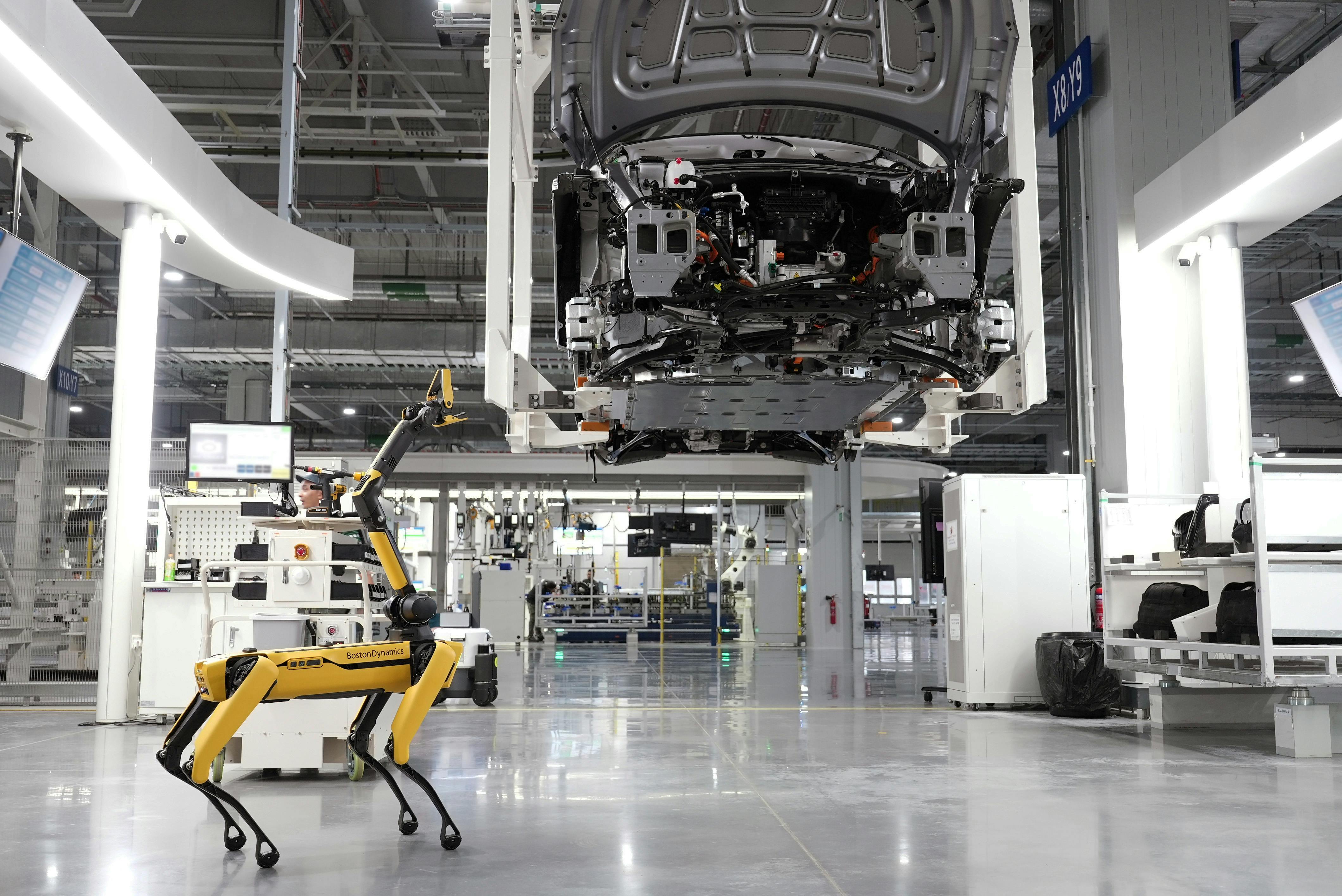
Traditional AI is great for prediction, but a new class of systems is emerging to act on those predictions. These are autonomous agents that perceive, reason, and act on your behalf to achieve specific business outcomes. Unlike automation that follows rigid rules, agentic AI independently executes complex, multi-step tasks, learns from feedback, and adapts to changing environments. This capability marks a shift from passive analysis to active, goal-oriented operations.
This article explores 10 practical agentic AI use cases delivering measurable results today. We will dissect how these agents work, providing a strategic blueprint for business and technology leaders. For each use case, we will illustrate:
- The Outcome: The direct impact on costs, efficiency, and revenue.
- How It Works: A simplified look at the agent's function and data needs.
- Getting Started: Actionable advice for a successful implementation.
The focus is on outcomes. While understanding the technology is important, and you can learn more about AI agent frameworks, our goal is to provide a clear guide for integrating autonomous agents into your operations to drive real business value.
1. Intelligent Customer Service and Support Automation
Agentic AI autonomously manages customer inquiries across chat, email, and phone. Unlike basic chatbots, these agents handle complex, multi-step tasks like processing returns, rescheduling appointments, or resolving billing disputes by accessing backend systems.

The Outcome: Faster Resolutions, Lower Costs
The primary outcome is a significant reduction in resolution time and operational costs. For example, a telecom company can deploy agents to troubleshoot common connectivity issues, achieving an immediate resolution for the customer without human intervention. Similarly, an AI phone answering service can handle thousands of inbound calls simultaneously, ensuring every customer is served instantly, 24/7. This frees up human agents to focus on complex, high-value interactions that drive customer loyalty.
Key Outcome: Reduce cost-per-contact by over 50% while improving first-contact resolution rates. The agent handles the high-volume, repetitive 80% of inquiries, letting skilled humans solve the critical 20%.
Getting Started: A Phased Approach
- Start Small: Automate 3-5 of your most common and simple inquiry types first. This ensures quick wins and provides a foundation for expansion.
- Design for Handoff: Ensure the agent can seamlessly transfer a conversation and its full context to a human when it reaches its limit.
- Centralize Data: Use a platform like Snowflake to unify customer data. This is vital for training the agent and improving its accuracy.
- Measure What Matters: Track metrics like customer satisfaction (CSAT) after an AI interaction and the escalation rate to human agents to measure true performance.
2. Autonomous Supply Chain and Logistics Optimization
Agentic AI autonomously manages complex supply chain networks. These agents monitor global operations in real-time, predict disruptions like weather delays, and dynamically reroute shipments to avoid them. They can also adjust inventory levels and coordinate with logistics partners automatically.

The Outcome: On-Time Delivery and Reduced Costs
This application delivers a direct competitive advantage through greater efficiency and resilience. For instance, an e-commerce firm uses agents to optimize last-mile delivery routes, cutting fuel costs and ensuring faster delivery times. A global manufacturer can use agents to manage just-in-time inventory, reducing warehousing costs and preventing production stoppages.
Key Outcome: Achieve a 15-25% reduction in shipping costs and a significant improvement in on-time-in-full (OTIF) delivery rates. The agent builds a self-correcting supply chain that adapts to real-world events.
Getting Started: A Methodical Rollout
- Start Regionally: Focus on a single distribution center or logistics corridor first to validate the agent's logic and measure its impact before scaling.
- Unify Your Data: Integrate real-time data from IoT sensors, GPS feeds, and warehouse systems into a central platform like Snowflake to give the agent full visibility.
- Automate Communication: Establish APIs or EDI protocols with logistics partners so the agent can autonomously coordinate pickups and share status updates.
- Monitor Core Outcomes: Track business-critical metrics such as on-time delivery rates, cost per shipment, and inventory turnover. Dive deeper by enhancing logistics with Python data analytics to build custom performance dashboards.
3. Automated Data Pipeline Management and ETL Operations
An agentic AI can automate the entire data pipeline lifecycle. These agents autonomously manage complex environments like Snowflake, orchestrating data workflows, detecting quality issues, and fixing errors without constant human oversight.
The Outcome: Reliable Data and More Productive Engineers
The result is improved data reliability and operational efficiency. Pipeline failures and bad data erode trust and delay critical business decisions. An agent acts as a 24/7 data steward. For instance, a financial services firm can use an agent to automate daily trade reconciliation, ensuring accuracy. This allows data engineers to stop fighting fires and focus on building new data products.
Key Outcome: Reduce data pipeline incidents by over 70% and free up data engineering teams to focus on high-value projects instead of manual maintenance. The agent ensures data is always accurate and available.
Getting Started: Focus on Critical Flows
- Target Key Issues: Identify the most common failure points in your data pipelines, like schema changes or validation errors, and build agents to solve those first.
- Map Your Data's Journey: Implement comprehensive data lineage so the agent can trace a quality issue back to its source and apply a precise fix.
- Use Native Tools: Combine the agent with your data platform's built-in features. For example, use Snowflake's TASKS and STREAMS for scheduling, while the agent provides intelligent monitoring and error handling.
- Define Escalation Rules: Set clear boundaries. The agent should know when to fix a problem autonomously and when to escalate to the data engineering team with all the relevant context.
4. Intelligent IT Infrastructure and Security Operations
Agentic AI can act as a tireless digital sentinel, autonomously managing IT infrastructure and security. These agents monitor networks and cloud environments, detect security threats, apply patches, and optimize resource usage without direct human intervention.
The Outcome: Faster Threat Response and Optimized Costs
The scale of modern IT environments makes manual oversight impossible. Agentic AI provides persistent, high-speed monitoring and response. For instance, a financial firm can use an agent to detect and contain a security breach in milliseconds. A cloud-native company can use an agent to automatically scale resources based on demand, preventing overspending while ensuring performance.
Key Outcome: Reduce Mean Time to Resolution (MTTR) for security incidents by over 60%. The agent doesn't just send an alert; it executes the first steps of an incident response plan autonomously.
Getting Started: A Trust-but-Verify Approach
- Start with Low-Risk Actions: Begin by allowing agents to perform non-disruptive tasks like logging events or flagging systems for human review. Grant more permissions only after validating their accuracy.
- Centralize Security Data: Unify security logs from firewalls, endpoints, and cloud services in a platform like Snowflake. This gives the agent the data needed to identify complex threat patterns.
- Codify Response Playbooks: Define clear, step-by-step incident response plans for common threats. The agent's job is to execute these pre-approved plans with speed and precision.
- Test and Validate: Regularly run simulations (red-team exercises) to test the agent's detection and response capabilities, allowing you to find and fix blind spots.
5. Autonomous Financial Operations and Accounting Automation
Agentic AI automates core financial tasks like processing invoices, reconciling accounts, and managing expenses. These agents can extract data from documents, validate transactions against company policies, flag discrepancies, and initiate payments, drastically reducing manual work.
The Outcome: Faster Financial Closing and Improved Accuracy
This application delivers a powerful combination of efficiency and improved financial control. For example, a large enterprise can use agents to process thousands of vendor invoices, reducing the payment cycle from days to hours. This is one of the most compelling agentic AI use cases for businesses focused on bottom-line results.
Key Outcome: Reduce invoice processing costs by over 70% and achieve a real-time view of financial health. The agent creates a self-auditing ecosystem, eliminating the wait for month-end reports.
Getting Started: A Focus on Control and Compliance
- Start with Volume: Automate the most repetitive, high-volume task first, such as standard vendor invoice processing, to deliver a quick and measurable win.
- Establish Strong Controls: Implement clear financial limits and immutable audit trails for every action the agent takes. Set strict rules for escalating any transaction that looks suspicious or exceeds a predefined threshold.
- Centralize Financial Data: Use a platform like Snowflake to create a single source of truth for all financial data. This is essential for accurate forecasting and training more capable agents.
- Create a Feedback Loop: Design a system where human accountants validate the agent's initial decisions on complex transactions. This feedback is crucial for continuous training and ensuring compliance.
6. Predictive Maintenance and Equipment Optimization in Manufacturing and Energy
In industries like manufacturing and energy, agentic AI monitors equipment in real-time to predict failures before they happen. By analyzing sensor data, these agents can autonomously schedule maintenance and optimize operational settings to prevent unplanned downtime.

The Outcome: Reduced Downtime and Extended Asset Life
This application directly addresses one of the largest costs in heavy industry: unplanned downtime. Shifting from reactive to predictive maintenance saves millions. For example, a power plant can use an agent to analyze turbine data and schedule repairs just before performance degrades, avoiding a costly shutdown.
Key Outcome: Reduce unplanned equipment downtime by 30-50% and lower maintenance costs. The agent turns maintenance from a cost center into a strategic driver of efficiency.
Getting Started: A Focus on Critical Assets
- Target Critical Equipment: Begin by deploying IoT sensors on your most valuable or failure-prone assets to focus your efforts on the biggest financial risks.
- Establish a Baseline: Collect performance data to define "normal" operation before allowing the AI to act. This is essential for accurate anomaly detection.
- Centralize Time-Series Data: Use a platform like Snowflake to store and analyze massive volumes of equipment telemetry. This data is the foundation for training accurate predictive models.
- Create Human-in-the-Loop Workflows: Design a process where the agent suggests maintenance actions, but a human engineer gives the final approval for major interventions.
7. Autonomous Network Operations and Telecom Management
Agentic AI systems are stepping in to autonomously manage vast telecommunications networks. These agents monitor thousands of nodes in real time, predict potential failures, re-route traffic to avoid congestion, and execute configuration changes to maintain service quality.
The Outcome: Maximum Uptime and Better Service
The complexity of modern 5G networks makes manual management impractical. Agentic AI helps create a Self-Healing and Self-Optimizing Network (SON). For example, a mobile carrier can use agents to dynamically allocate bandwidth during a concert, ensuring consistent service quality for thousands of users.
Key Outcome: Maximize network uptime and service reliability, which directly impacts customer retention. The agent moves network management from a reactive, break-fix model to a proactive, predictive one.
Getting Started: A Cautious, Simulation-First Approach
- Simulate Extensively: Before any live deployment, create a "digital twin" of your network to test the agent's decision-making logic in a safe, sandboxed environment.
- Start with Monitoring: Initially, deploy the agent in a read-only mode. Let it analyze data and make recommendations for human operators to approve. This builds trust and refines its accuracy.
- Centralize Network Data: Consolidate all network telemetry and performance logs into a unified platform like Snowflake to give the agent the context needed for smart decisions.
- Establish Clear Guardrails: Define strict rules for which actions an agent can take autonomously (e.g., re-routing traffic) and which require human approval (e.g., major software updates).
8. Smart Building and Facility Management Automation
Agentic AI systems can autonomously manage the complex operations of modern buildings. These agents learn occupancy patterns and react to real-time conditions, predictively adjusting HVAC, lighting, and security systems to optimize energy use and reduce waste.

The Outcome: Lower Energy Costs and Improved Sustainability
This application delivers significant cost savings and sustainability benefits. Reducing energy consumption by 25-30% in a large office building or data center goes straight to the bottom line. For insights into how this works, explore how AI transforms smart building operations.
Key Outcome: Cut energy costs by 20-35% through continuous, multi-variable optimization. A human can't process thousands of data points from sensors every second, but an AI agent can.
Getting Started: A Gradual Expansion of Control
- Start with Non-Critical Systems: Begin by automating lighting or basic temperature adjustments to validate the agent's logic in a low-risk environment.
- Deploy Comprehensive Sensors: The agent is only as good as its data. A dense network of IoT sensors for temperature, humidity, and occupancy is essential.
- Centralize Time-Series Data: Use a platform like Snowflake to aggregate building sensor data. This historical information is crucial for training models to predict future energy needs.
- Monitor Energy Metrics: Track key performance indicators like kilowatt-hours (kWh) per square foot to validate savings and fine-tune the agent's algorithms.
9. Intelligent Procurement and Vendor Management Automation
Agentic AI systems can autonomously manage procurement workflows, from finding the best suppliers to negotiating terms. These agents analyze market conditions, predict price changes, and manage vendor relationships to optimize spending without requiring human intervention at every step.
The Outcome: Reduced Spend and Strategic Sourcing
This application turns procurement from a cost center into a strategic value driver. AI agents can analyze vast datasets to find cost-saving opportunities invisible to human teams. For example, an agent could consolidate purchases across a large hospital system to negotiate better bulk rates.
Key Outcome: Reduce procurement costs by 10-20% and cut the purchase-to-pay cycle time in half. The agent proactively finds the best deal at the best time, optimizing the total cost of ownership.
Getting Started: A Risk-Managed Approach
- Start with Commodities: Begin by automating procurement for standardized goods where price is the main factor. This provides a safe testing ground for the agent's logic.
- Define Clear Guardrails: Establish explicit spending limits and approval workflows. Create clear rules for escalating any purchase that exceeds a certain cost or complexity.
- Centralize Procurement Data: Use a data platform like Snowflake to create a single source of truth for all supplier contracts, purchase histories, and performance metrics.
- Monitor Business Outcomes: Track KPIs beyond just cost savings. Measure metrics like supplier on-time delivery rates and compliance to ensure the agent's decisions align with strategic goals.
10. Autonomous Quality Control and Manufacturing Analytics
Agentic AI systems can dramatically improve manufacturing by monitoring production lines in real time. These agents analyze data from cameras and sensors to detect defects, classify issues, and even adjust machine settings autonomously to maintain quality and reduce scrap.
The Outcome: Fewer Defects and Higher Throughput
This application directly impacts the bottom line by improving product quality and efficiency. For instance, an electronics manufacturer can use agents to spot microscopic flaws on circuit boards, while a food and beverage company can ensure packaging integrity, making this one of the most valuable agentic AI use cases for any manufacturer.
Key Outcome: Reduce defect rates by over 30% and cut inspection costs. The agent moves beyond simple detection to proactive optimization, preventing defects from happening in the first place.
Getting Started: A Focus on Data and Collaboration
- Start with Detection: Begin by using agents to detect and alert only. Let your team validate the AI's accuracy to build trust before giving it control over machinery.
- Centralize Production Data: Use a platform like Snowflake to unify real-time and historical data from all machine sensors, quality tests, and operator logs.
- Establish Clear Thresholds: Define precise boundaries within which the agent can make autonomous adjustments. It must have a clear escalation path to human operators for complex issues.
- Maintain Feedback Loops: Create a formal process for manufacturing teams to provide feedback on the AI's performance. This human-in-the-loop approach is critical for continuous improvement.
Agentic AI: Top 10 Use Cases Comparison
SolutionImplementation Complexity 🔄Resource RequirementsExpected Outcomes ⭐📊Ideal Use Cases 💡Key Advantages ⚡Intelligent Customer Service and Support AutomationHigh — complex NLU, multi-channel integration, ongoing trainingModerate–High — conversational models, knowledge base, monitoring, secure data stores⭐ 24/7 availability; cost per resolution ↓50–70%; CSAT ↑15–25%High-volume support (retail, telecom, finance, healthcare)Scalable support; reduced wait times; consistent resolutionsAutonomous Supply Chain and Logistics OptimizationHigh — real-time routing, partner integrations, dynamic constraintsHigh — IoT sensors, GPS/telemetry, connectivity, forecasting models⭐📊 Delivery cost ↓15–25%; inventory ↓20–30%; improved on‑time ratesLogistics providers, e‑commerce last‑mile, manufacturing supply chainsBetter delivery performance; fuel savings; end‑to‑end visibilityAutomated Data Pipeline Management and ETL OperationsModerate–High — platform-specific orchestration, anomaly handlingModerate — Snowflake integration, monitoring, anomaly detection tooling⭐📊 Incident resolution time ↓70–80%; query times ↓20–30%; uptime ~99.9%Data‑heavy orgs (finance, healthcare, telecom) needing reliable pipelinesReduced engineering toil; faster root‑cause; improved data qualityIntelligent IT Infrastructure and Security OperationsHigh — security playbooks, many integrations, rigorous testingHigh — telemetry sources, detection models, orchestration and logging⭐📊 MTTD reduced to minutes; MTTR ↓60–75%; staffing needs ↓30–40%Finance, healthcare, cloud operators, critical infrastructureFaster threat response; 24/7 monitoring; fewer human errorsAutonomous Financial Operations and Accounting AutomationModerate–High — ERP/connectors, document variability handlingModerate — OCR/NLP, secure accounting integrations, audit trails⭐📊 Invoice cost ↓70–85%; processing time → same‑day; A/P productivity +40–50%Large enterprises, finance teams, retail/manufacturing accountingFaster close cycles; improved cash flow visibility; fraud detectionPredictive Maintenance and Equipment OptimizationHigh — sensor deployment, historical model training, safety controlsHigh — IoT sensors, time‑series DB (Snowflake), domain expertise⭐📊 Unplanned downtime ↓30–50%; maintenance cost ↓20–25%; asset life ↑10–15%Manufacturing, energy, wind farms, power plantsReduced downtime; targeted maintenance; safety improvementsAutonomous Network Operations and Telecom ManagementVery High — massive scale, simulation, rigorous validationVery High — network telemetry at scale, testbeds, OSS/EMS integration⭐📊 Uptime →99.99%+; operational cost ↓20–30%; outage response ↓70–80%Telecom operators, 5G networks, large ISPsImproved reliability; optimized bandwidth; faster restorationsSmart Building and Facility Management AutomationModerate–High — sensor/control integration, privacy & safety designHigh — sensors, building control systems, analytics platform⭐📊 Energy cost ↓20–35%; HVAC maintenance ↓25–30%; occupant satisfaction +15–20%Large campuses, data centers, healthcare, retail locationsEnergy savings; comfort optimization; proactive maintenanceIntelligent Procurement and Vendor Management AutomationModerate — ERP and contract system integrations, market data feedsModerate — spend data warehouses, negotiation/analytics models⭐📊 Procurement cost ↓10–20%; P2P cycle time ↓50–70%; supplier KPIs ↑15–25%Manufacturing, healthcare, retail, energy procurement teamsLower spend; faster cycles; improved supplier performanceAutonomous Quality Control and Manufacturing AnalyticsHigh — vision systems, real-time control loops, model retrainingHigh — cameras/sensors, edge/compute, integration with PLCs⭐📊 Defect rates ↓30–50%; inspection cost ↓40–60%; throughput +10–15%Electronics, automotive, pharma, food & beverage production linesFewer defects; real‑time detection; consistent product quality
Your Roadmap to Building an Autonomous Enterprise
These ten agentic AI use cases show a clear trend: moving from passive data analysis to active, autonomous operations is a strategic imperative. Agentic AI is the engine that translates data into direct business action, whether it's optimizing a supply chain or securing financial transactions.
This shift is the next stage of business automation. It's not just about processing data faster; it's about building systems that can act on that data intelligently. Success depends on a few key pillars seen across every use case.
Strategic Insight: Agentic AI implementation is a business transformation project, not a technology one. It requires aligning technology with precise operational goals and KPIs from day one.
From Blueprint to Reality: Your Actionable Next Steps
Embarking on this path requires a structured approach. Here is a practical roadmap to get started:
- Consolidate Your Data Foundation: An agent's effectiveness depends on its data. Centralizing your operational, customer, and financial data into a single source of truth like Snowflake is non-negotiable. This is the bedrock of your autonomous enterprise.
- Identify Your 'Keystone' Use Case: Don't try to boil the ocean. Start with one or two high-impact, well-defined problems like predictive maintenance or autonomous quality control, as they offer clear, quantifiable returns.
- Develop an Iterative Deployment Plan: Start small and scale smart. Begin with an agent in a 'human-in-the-loop' capacity, where it suggests actions for a human to approve. As you validate its performance, gradually grant it more autonomy.
- Measure, Monitor, and Refine: The goal is continuous improvement. For each of the agentic AI use cases you pursue, establish clear metrics for success—like reduced response times or lower energy use—and use them to constantly monitor and refine the agent's performance.
The Future is Autonomous, and It's Built on Data
The path to building an autonomous enterprise is a marathon, not a sprint. It demands commitment to data infrastructure, process re-engineering, and change management. The implementation strategies in this article serve as your initial blueprints for moving from concept to production.
Mastering these approaches is about building a more resilient, adaptive, and intelligent organization. By empowering autonomous agents to manage complex operational tasks, you free your people to focus on strategic growth, innovation, and customer relationships. The time to begin building this future is now, one well-defined, data-driven agent at a time.


