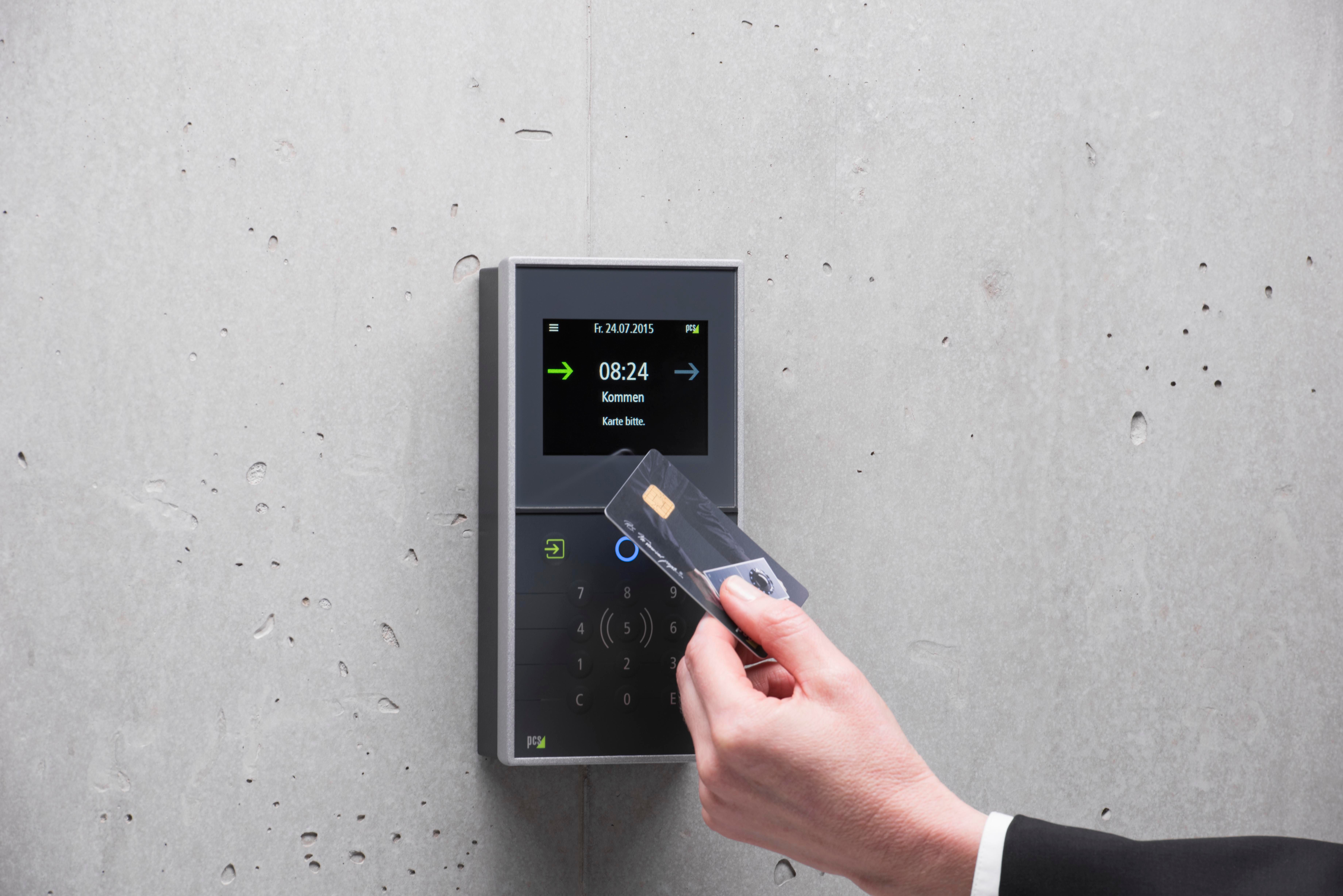
A new employee arrives at a regional office, but their badge doesn't open the right doors. At the same time, a former contractor still has access to a server room, while the security team can't quickly determine who approved either change. The business faces two risks at once: access that's too loose exposes sensitive assets, and access that's too rigid slows legitimate work.
That tension explains why access control solutions have become an enterprise integration challenge rather than a simple purchase of locks, readers, or badges. The strongest programs connect physical entry, digital identity, mobile credentials, policy engines, security operations, and data platforms. They help organizations protect critical resources while giving authorized people a reliable way to do their jobs.
The global market reflects that broader role. One industry estimate values the access control market at USD 10.76 billion in 2024, with a projection of USD 17.30 billion by 2030, implying an 8.4% CAGR from 2025 to 2030. A separate estimate focused on physical access control systems places the segment at USD 15.49 billion in 2024 and projects USD 21.45 billion by 2030 (market data from Polaris Market Research). The different estimates reinforce one point: demand spans hardware, software, biometrics, credentials, and orchestration.
Why Access Control Solutions Matter Right Now
A company can lose operational control through ordinary exceptions. An employee changes departments, but the old badge remains active. A visitor receives approval for one area and enters another. A remote administrator reaches a production system because the connection appears familiar. Each gap creates investigation work and leaves business owners unsure who can reach what.
Access can also become too restrictive. Rejected badges, slow visitor processing, and repeated authentication prompts encourage workarounds. Facilities teams manage physical credentials, IT manages digital accounts, and compliance staff gather evidence from separate systems. The result resembles several maps of the same building that do not align. No team can see the user's complete access path.
That fragmentation affects offices, cloud services, warehouses, campuses, and third-party environments. Access control now connects identity records, mobile credentials, physical devices, policy decisions, and data platforms. Market research identifies security threats, regulatory requirements, identity-fraud prevention, and enterprise digitalization as forces driving the category. Modern deployments include card readers, controllers, biometrics, and software platforms across commercial buildings, critical infrastructure, and enterprise campuses (physical access control market overview).
The business outcome is controlled movement
Effective governance should answer five questions:
- Who is requesting access?
- What resource or location do they need?
- Why should they receive it?
- Under which conditions should access be allowed?
- How can the organization prove what happened?
The request may concern a door, an application, a privileged database account, or a mobile credential. The control logic remains consistent: verify identity, evaluate policy, enforce the decision, and record the event. Integration determines whether that logic works across systems or stops at a single reader.
Organizations assessing physical controls can consult this guide to commercial security systems to understand how building systems fit within a wider security program. Leaders should then ask what the controls connect to, who owns the policies, and how quickly access changes propagate.
A practical program treats access control as governance supported by technology, not a product feature list. The following sections examine operating models, integration requirements, rollout decisions, and measures that show whether access is becoming safer and easier to manage.
Understanding How Access Control Solutions Work
Start with a building. The lobby confirms that you belong in the facility. A floor reader determines whether you're approved for a department. A vault requires stronger proof because the consequence of unauthorized entry is higher. Authentication establishes who you are, authorization determines what you're allowed to reach, and an enforcement point applies the decision.
Digital access follows the same pattern. A user presents a password, hardware token, mobile credential, biometric factor, or certificate. An identity and access management service evaluates the request against policy. An application gateway, database control, door controller, or privileged access system permits or rejects the action and records the result.
The important distinction is that a credential alone isn't authorization. A badge may identify an employee, but it doesn't automatically justify entry to every room. A valid cloud login may identify a user, but it shouldn't grant unrestricted access to every dataset.

From perimeter approval to resource decisions
Traditional systems often treated a trusted network or secured building as a safe boundary. NIST's Zero Trust Architecture guidance rejects that assumption. It says access shouldn't be granted implicitly because of network location. Each request should be explicitly authenticated and authorized, with enforcement centered on the resource rather than the perimeter (NIST Zero Trust Architecture).
Practical rule: Treat every access request as a decision, not as proof that a previous decision remains valid.
A modern access control solution therefore needs more than a reader or directory group. It needs a policy engine that can assess identity, device posture, requested resource, and context. A policy administrator defines and distributes the decision, while enforcement points apply it where the request occurs.
NIST's cloud-native model recommends combining network-tier and identity-tier policies with full telemetry. Events such as user requests and directory changes can help refine decisions, support step-up authentication, and trigger near-real-time policy updates (NIST cloud-native zero trust guidance).
That architecture also applies to wireless deployments. Teams comparing deployment options can consult this guide to wireless access control systems while asking a broader question: how will the wireless reader, credential service, identity provider, and security operations platform share state?
Comparing Types of Access Control Models
Enterprises often confuse the control type with the control model. Physical access control protects locations such as offices, laboratories, loading areas, and server rooms. Logical access control protects applications, systems, records, and data. A single worker may use both during the same workflow, so separate ownership can create gaps.
The models below describe how an organization decides who gets access and under what conditions.
ModelControl FocusBest FitOutcome DeliveredRBACPermissions based on job rolesStable teams with repeatable responsibilitiesConsistent provisioning and simpler reviewsABACPermissions based on attributes and contextDynamic environments with changing risk or conditionsMore precise, adaptive decisionsIAMIdentity lifecycle and access administrationWorkforce, customer, and application identity managementCentralized identity governancePAMHigh-risk privileged accounts and sessionsAdministrators, operators, and sensitive infrastructureReduced exposure from elevated privileges
RBAC provides a manageable baseline
Role-based access control, or RBAC, assigns permissions to roles such as payroll specialist, warehouse supervisor, or database analyst. It works well when responsibilities are clear and stable. An employee changes roles, and the organization updates the role assignment instead of manually editing every permission.
The weakness appears when roles become too broad. Two analysts may share a title but require different data access. A contractor may need the same application as an employee but only for a limited engagement. RBAC can still help, but the role catalog needs careful ownership and regular review. NIST SP 800-53 Revision 5 frames logical access around approved authorizations that follow defined access control policies, reinforcing the need for explicit rules and accountable administration (NIST SP 800-53 Revision 5).
ABAC adds context
Attribute-based access control, or ABAC, evaluates attributes such as department, employment status, location, device condition, data sensitivity, time, and requested action. It can permit a finance employee to view a report from a managed device while requiring stronger verification from an unfamiliar device.
ABAC offers precision, but it also creates policy complexity. Attribute sources must be accurate, consistent, and available at decision time. Teams should introduce it where context changes the risk materially, rather than adding conditions that nobody can explain during an audit.
IAM and PAM solve different operational problems
IAM manages identities and their lifecycle across systems. It connects joiner, mover, and leaver events to account creation, changes, and removal. PAM focuses on privileged access, often adding approval, credential vaulting, session monitoring, and time-limited permissions for sensitive administration.
IAM answers, “How should this identity receive and retain access?” PAM answers, “How should the organization control and observe this high-impact action?” Mature programs use both, with RBAC or ABAC supplying policy logic where appropriate.
How to Choose and Integrate the Right Solution
A security product can work well at one site and still fail across an enterprise if it creates another isolated console. Start with the business outcome: faster deprovisioning, clearer audit evidence, safer privileged access, or a consistent mobile experience. Hardware matters, but orchestration matters more when buildings, identity systems, and data platforms share responsibility.
Test the integration boundary before comparing devices. Check whether the platform connects with the identity provider, HR system, visitor management service, mobile credential app, security information and event management platform, and data warehouse. Confirm its handling of API access, directory changes, failed authentication events, policy updates, and offline operation. This guide on choosing an access control system offers a practical reference for evaluating those requirements.

Evaluate the control plane, not just the endpoint
Mobile credentials improve convenience, but governance must cover issuance, revocation, device loss, and recovery. Biometrics can strengthen identity assurance, while requiring review of privacy, fallback methods, enrollment quality, and local legal requirements. AI can identify unusual patterns or prioritize investigations, provided approved policies and human oversight remain in control.
A Snowflake integration requires the same examination. Access events, identity changes, facility activity, and application logs can support analysis in a central data platform when the solution exports useful, structured telemetry. The design should preserve data ownership and apply role-based controls to schemas, views, and objects. Organizations assessing custom data, workflow, and application integration can also review Faberwork's services alongside platform-native development options.
Decision AreaQuestion to AskDesired OutcomeIdentity integrationCan HR and directory events update access consistently?Fewer orphaned permissionsMobile credentialsCan the team revoke and recover credentials remotely?Safer flexible accessBiometricsWhat happens when biometric verification fails?Resilient authenticationTelemetryCan security operations correlate access events with cyber alerts?Faster investigationAI readinessCan models recommend actions without bypassing policy?Assisted analysis with governanceSnowflake integrationCan approved teams analyze access data without broad exposure?Reusable, controlled insightPrivileged accessCan administrators receive limited, reviewable permissions?Reduced exposure from privileged accounts
Build an event-driven connection
The strongest design connects systems through events. An HR change triggers an identity update, which updates physical and logical entitlements. The access platform sends the result to security operations and the data platform. A risk signal can then require step-up authentication or suspend a permission pending review.
This flow gives teams one accountable chain of decisions instead of separate versions of the truth. It also supports the NIST recommendation to combine policy with telemetry, rather than relying on static role assignments alone.
Implementation Roadmap From Assessment to Optimization
A successful rollout begins with the access decisions the business needs, not with a device catalog. Create a joint team from security, IT, facilities, compliance, HR, and business operations. Give the team a defined outcome, such as controlling sensitive zones, improving account removal, or making audit evidence easier to produce.
Phase one establishes the baseline
Inventory doors, applications, identities, credentials, privileged accounts, policy owners, and data flows. Mark dependencies that could interrupt operations, including fire safety, building management, network availability, and emergency access.
Then create risk zones. NIST SP 800-116 Revision 1 classifies facility areas as Controlled, Limited, and Exclusion, with increasing assurance requirements ranging from single-factor card access to multi-factor methods such as card plus PIN or card plus biometric (NIST facility access guidance). This gives leaders a practical way to match authentication strength to consequence.
Phase two turns risk into policy
Write policies in language that operators can apply. Define who may access each resource, what approval is required, which conditions trigger stronger authentication, how long access lasts, and who reviews exceptions.
Avoid policies that depend on one administrator's memory. Assign owners to roles, attributes, credentials, and exception queues. Create a test set that includes normal access, denied access, expired access, lost mobile devices, contractors, and emergency scenarios.
The next stage should be a contained pilot, not an enterprise-wide switch.
Phase three validates the operating model
Choose a representative site or user population. Test enrollment, mobile credential recovery, badge replacement, directory synchronization, visitor workflows, offline behavior, alert routing, and audit reports. Measure whether the pilot produces the intended decisions without creating unnecessary friction.
Phase four scales with handoffs
Expand by site, business unit, or resource class. Use a repeatable deployment package containing policy definitions, integration mappings, support procedures, rollback steps, and training. After each expansion, review exceptions before adding another population.
Optimization continues after deployment. Review policy drift, stale identities, failed requests, unusual access sequences, and operational feedback. Change policies through governance, not informal fixes at the help desk.
Measuring Success and Applying Access Control Across Industries
A secure system isn't successful merely because it denies unauthorized requests. Leaders should connect control activity to business outcomes and audit readiness. Useful measures include failed access attempts, policy violations, time-to-provision, time-to-deprovision, exception volume, privileged session activity, and unresolved access reviews.
Each metric needs context. A rise in failed attempts may indicate an attack, a broken reader, or an inaccurate role. A shorter provisioning time may improve productivity, but only if approvals and policy checks remain intact. The security team should review trends with facilities, HR, IT, and business owners instead of treating the dashboard as a standalone verdict.

Compliance becomes evidence
NIST SP 800-53 Revision 5 connects access decisions to approved authorizations and documented policy. That relationship helps organizations show not only that a control exists, but also that the organization can explain why a person or service received access and whether the permission remained appropriate.
In regulated environments, retain decision records with enough context to support review. That can include the identity, resource, policy version, approval, authentication method, decision, and relevant event. Limit access to the logs themselves because they may contain sensitive operational information.
The same control logic adapts by industry
- Logistics: Use identity, device state, and location context to protect warehouse zones, fleet applications, and dispatch workflows. Geofencing can help enforce rules around vehicle or worker access when location is relevant, while exceptions should remain visible to operations.
- Telecom and energy: Protect operational support systems, network management tools, and energy management environments with stronger controls for privileged operators. Separate routine monitoring from configuration changes, and send high-risk events to security operations.
- Healthcare: Restrict patient data and clinical systems according to approved roles, purpose, and device conditions. Hospital administrators need access evidence that supports privacy reviews without making urgent clinical work dependent on an opaque process.
Organizations exploring data-driven building operations can review this smart building AI success story for a related example of connecting facility data with operational decision-making. The principle is consistent across sectors: make the decision explainable, enforce it at the resource, and measure whether it protects work rather than obstructing it.
Next Steps to Strengthen Access With Faberwork
Begin with a focused improvement cycle. Select one access journey that causes visible risk or friction, such as employee onboarding, contractor access, privileged administration, mobile credential recovery, or entry to a sensitive facility. Document the current identity sources, approval steps, enforcement points, data stores, and audit gaps.
Then define a target outcome. You might want fewer orphaned permissions, faster approved onboarding, clearer access evidence, or a single operational view across physical and digital systems. Keep the scope narrow enough to test, but include the integrations that make the result durable.
A practical improvement cycle
First, establish the baseline. Identify the systems that issue identities, approve access, enforce decisions, and collect events. Record the manual handoffs and exceptions that create delay.
Next, connect the decision path. Link HR and directory changes to entitlement updates. Route physical access events, application events, and privileged activity into governed operational or analytical workflows.
Then, introduce adaptive controls. Add step-up authentication for higher-risk requests, use mobile credentials where the user experience benefits, and apply telemetry to investigation and policy review. AI can assist with classification, anomaly triage, and workflow recommendations, but approved policy should remain the authority.
Faberwork LLC works as a technology consulting and development partner across Agentic AI, custom software, and Snowflake-centered data solutions. Its services include AI-powered automation, mobile and web application development, database architecture, and test automation, with experience spanning healthcare, finance, retail, manufacturing, energy, logistics, and telecom. The company also provides 24/7 support for mission-critical environments.
The right partner should help you unify identity, access events, data governance, and automation without forcing every function into one product. If access control has become a collection of disconnected systems, contact Faberwork to map a focused improvement cycle and define an integration plan that strengthens security, simplifies administration, and supports measurable operational progress.


